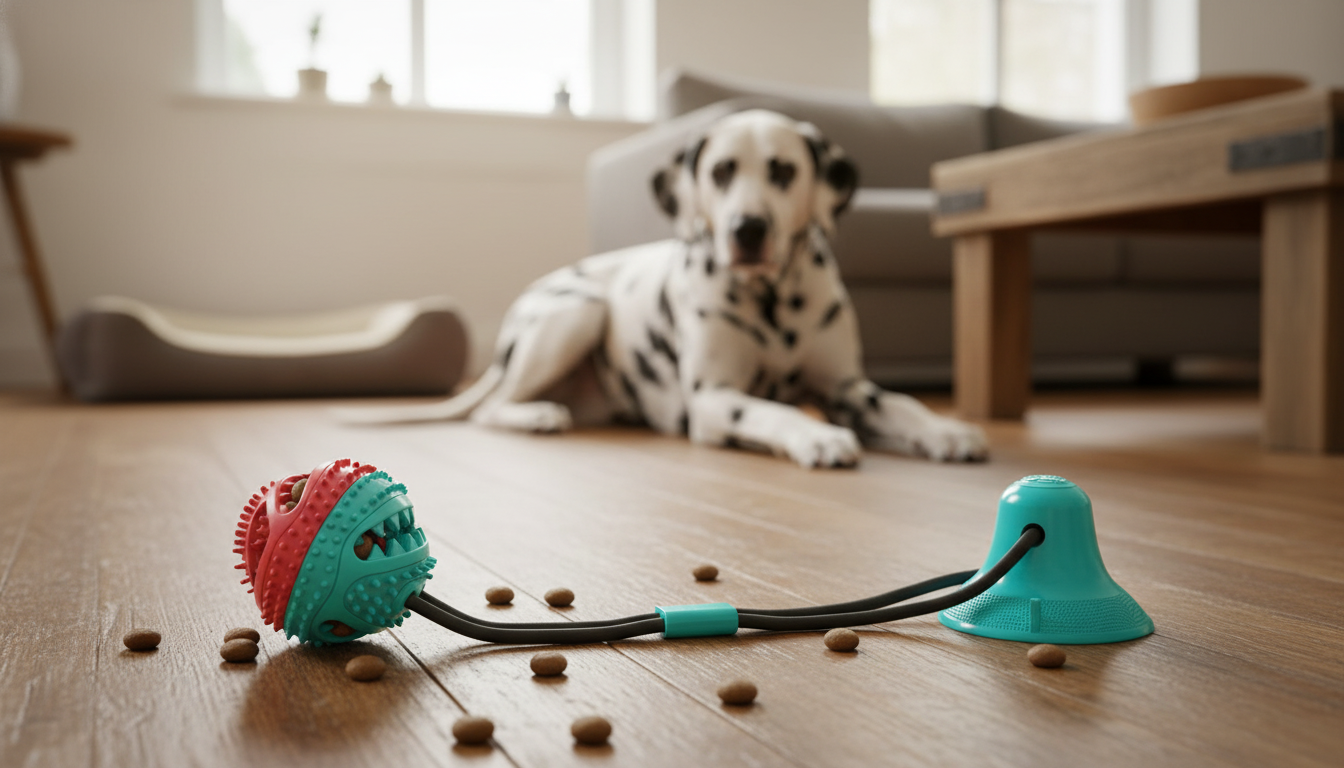
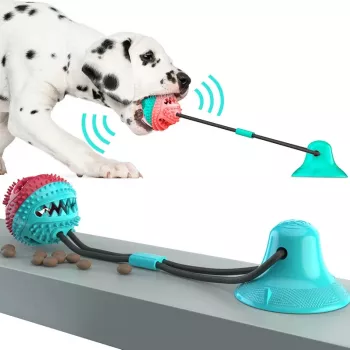
A sturdy, stay-put toy can turn chewing, tugging, and treat time into a longer-lasting game—especially for larger dogs that get bored quickly. This interactive suction cup dog toy combines a chew ball and a slow-feeding treat area to support daily enrichment, reduce idle energy, and make snack time more engaging.
If your dog loves resistance-based play but you’d rather not sacrifice sleeves, shoelaces, or furniture corners, a suction-anchored setup creates a clear “yes” outlet for chewing and tugging—while the slow-feeder section turns a small portion of food into a focused activity.
What This Toy Does (Suction + Chew + Treat Challenge)
- Anchors to smooth surfaces with a suction base to create resistance for tugging and chewing.
- Includes a chew ball element to keep jaws busy and redirect unwanted chewing.
- Built-in slow-feeder style treat area encourages licking and problem-solving rather than fast gulping.
- Designed for interactive play sessions or independent enrichment with supervision.
Because the toy stays put, it can help turn “drive” (tugging, grabbing, working for food) into a calmer, more structured routine—especially useful during downtime when large dogs tend to invent their own entertainment.
Best Use Cases for Large Dogs
- High-energy dogs that need a job during downtime (post-walk, rainy days, work-from-home hours).
- Chewers that target furniture, shoes, or baseboards—use as a structured alternative.
- Dogs that eat treats too quickly—use small portions to slow pace and extend engagement.
- Dogs that enjoy tug-style resistance but need a safer, stationary option than pulling on hands or clothing.
Mental stimulation is a meaningful part of day-to-day care. For more enrichment ideas to rotate into your routine, see the AKC’s guide to dog enrichment activities.
How to Set It Up for a Strong Suction Hold
- Choose a smooth, non-porous surface (tile, sealed wood, glass, metal, or smooth laminate).
- Clean and dry the surface; dust and moisture reduce suction performance.
- Press the suction cup firmly and remove trapped air by pushing from the center outward.
- Test with a light tug first; increase resistance gradually to avoid sudden release surprises.
- Rotate locations occasionally to keep the game novel and reduce wear in one spot.
If your home surfaces are mostly textured (matte tile, grout-heavy areas, or pebbled vinyl), try placing a smooth board or acrylic sheet on the floor and anchoring the suction cup there—then supervise closely as your dog learns the “rules” of the new station.
Treat and Feeding Ideas That Work Well
- Use small, soft treats or kibble-sized pieces for quick rewards and repeated engagement.
- For longer sessions, add smearable options in thin layers (dog-safe peanut butter, wet food, or yogurt-style dog treats if tolerated).
- Freeze prepared fillings for a longer-lasting challenge (start with short durations to avoid frustration).
- Keep portions modest; treat-based toys should complement meals rather than replace balanced feeding.
Using part of your dog’s daily kibble allotment is an easy way to extend play without stacking extra calories. For general feeding guidance, the AVMA’s resource on pet nutrition is a helpful reference point.
Treat Options and Session Length Guide
| Treat style |
Setup |
Typical engagement |
Notes |
| Dry kibble or small crunchy treats |
Sprinkle into the slow-feeder area |
Short |
Great for quick focus breaks |
| Soft training treats |
Press lightly so they don’t fall out |
Short to medium |
Useful for dogs that give up easily |
| Smearable filling |
Thin layer spread evenly |
Medium |
Reduces mess compared to thick blobs |
| Frozen filling |
Prepare and freeze before play |
Long |
Best with supervision and easy-clean surfaces |
Safety and Durability Considerations
- Supervise chewing sessions, especially for determined power chewers that may tear toys apart.
- Inspect regularly for cracks, loose parts, or sharp edges; replace if damaged.
- If your dog tends to swallow pieces, avoid leaving any chew toy unattended.
- For dogs with dental sensitivity, limit very hard chewing sessions and consult a veterinarian if signs of tooth pain appear.
As a general safety habit, keep play areas uncluttered and remove worn toys promptly. The ASPCA’s pet care resources are a solid place to review broader safety best practices.
Cleaning and Maintenance
- Rinse after each treat session to prevent residue buildup and odors.
- Wash with mild soap and warm water; use a small brush to reach grooves in the slow-feeder area.
- Dry fully before reattaching to surfaces to preserve suction performance.
- Store out of direct sun and extreme heat to reduce material degradation over time.
Quick Product Snapshot
Other In-Stock Finds
FAQ
Will the suction cup stick on textured floors or outdoor concrete?
Suction holds best on smooth, clean, non-porous surfaces, so textured floors and porous concrete usually reduce grip. If you need a workaround, place a smooth board or sheet on the ground and attach the toy to that surface instead.
Is this suitable for aggressive chewers?
It can work for many strong chewers with supervision, but no chew toy is indestructible. Check it frequently for damage and replace it if parts loosen, crack, or look like they could be swallowed.
How can treat time be extended without overfeeding?
Use thin smears, freeze small portions, and count treats as part of your dog’s daily calories (including using meal kibble in the slow-feeder area). Keeping sessions shorter but more frequent can also stretch engagement without adding extra food.
Recommended for you










Leave a comment