A rugged phone case has to do more than survive a single dramatic drop. Real life means repeated slips off a desk, bumps against door frames, and the occasional fumble while juggling keys or coffee. At the same time, most people rely on MagSafe to keep charging simple and to snap on accessories like wallets and car mounts. The good news: strong protection and MagSafe convenience can absolutely coexist when a case is engineered with the right materials, structure, and magnet integration. For more guidance, see Uag iPhone 17 case.
What “Military-Grade” Protection Usually Covers
When a case is marketed as “military-grade,” it typically references lab-style drop testing inspired by MIL-STD-810 methods (not a guarantee of invincibility, but a useful signal that repeated impacts were considered). The goal is practical resilience—helping reduce damage from everyday falls and hard knocks. For further reading, see 11 Best Eco-Friendly Phone Cases from Sustainable Materials.
- Drop resilience: Many brands use repeated drop sequences to simulate common accidents. If you want to look deeper into the framework, the U.S. Department of Defense publishes the standard at MIL-STD-810H.
- Shock absorption + structure: A softer inner layer (often TPU) helps disperse impact energy, while a tougher outer shell helps resist scuffs and direct hits to the back.
- Raised bezels: A raised lip around the screen and a raised ring around the camera help prevent glass and lenses from contacting a flat surface after a drop.
- Corner reinforcement: Corners tend to take first impact. Extra corner padding or air-pocket style geometry can make a meaningful difference in real-world falls.
MagSafe Compatibility Without Compromising Protection
MagSafe works best when magnets align precisely and the back surface stays stable against the accessory. A protective case can still deliver that “snap” feel and consistent charging—as long as the magnet ring is properly integrated rather than relying on a case being thin.
- Magnet alignment matters: Centering helps chargers stay in place for more reliable power transfer and steadier attachment on mounts.
- Integrated magnets: A built-in magnet ring can preserve a rugged build while keeping MagSafe performance dependable.
- Accessories that benefit: MagSafe chargers, wallets, stands, car mounts, and battery packs all rely on stable contact and good alignment. Apple’s overview is a helpful reference: MagSafe for iPhone.
- Mount stability: If a case feels “floaty” or slippery on a magnetic car mount, look for a flatter back panel and a magnet ring that sits evenly so the accessory doesn’t rock.
For wireless charging more broadly, MagSafe is built on Qi concepts; the Wireless Power Consortium is the authoritative source on Qi standards.
Everyday Carry Fit: Grip, Buttons, and Pocket Comfort
Protection isn’t only about surviving drops—it’s also about avoiding them. Daily usability details can be the difference between loving a case and removing it after a week.
- Grip and texture: A slightly tacky, grippy finish reduces slips when commuting, exercising, or using your phone one-handed.
- Button feel: Button covers should feel crisp and responsive. Overly stiff covers can make volume changes and side button use annoying in day-to-day routines.
- Port cutouts: Openings should be wide enough for common cable heads while still protecting the edges that tend to pick up scratches.
- Pocketability: The best rugged cases balance a protective frame with a shape that won’t snag or feel brick-like in jeans or a small crossbody bag.
Key Features to Compare at a Glance
If several cases all claim rugged performance and MagSafe support, a quick checklist helps separate marketing from practical design. Focus on the parts that take impact first (corners and lips) and the parts you touch most (buttons and grip).
Rugged MagSafe Case Comparison Checklist
| Feature |
Why it matters |
What to look for |
| Drop protection |
Reduces damage from everyday falls |
Reinforced corners, layered materials, impact dispersion |
| Screen bezel |
Prevents screen contact on tables and floors |
Raised lip around the front edge |
| Camera protection |
Reduces lens scratches and chipped edges |
Raised ring around the camera area |
| MagSafe magnet alignment |
Improves accessory hold and charger placement |
Integrated magnet ring, stable mounting on car/desk mounts |
| Grip and texture |
Helps prevent drops in the first place |
Non-slip finish, comfortable edges |
| Button feel |
Daily usability |
Crisp, easy-to-press covers |
| Pocketability |
Comfort for commuting and errands |
Slim profile without sacrificing corners and bezels |
Care Tips to Keep Protection and MagSafe Performance Consistent
A Rugged Option for iPhone 16e
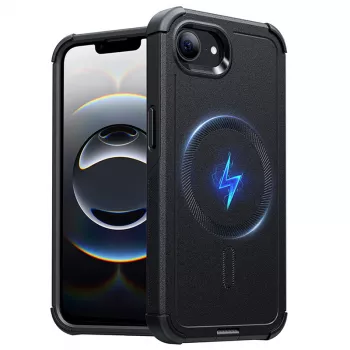
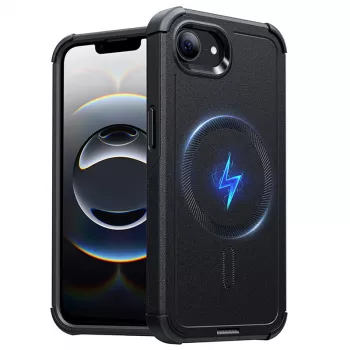
If you want everyday drop defense without giving up MagSafe convenience, consider the Military-Grade iPhone 16e Case with MagSafe Compatibility. It’s designed for the routine hazards of daily carry—commutes, travel days, gym sessions, and busy hands—while still supporting MagSafe chargers and magnetic accessories.
More In-Stock Picks for Everyday Routines
FAQ
Will MagSafe charging work through a military-grade protective case?
Yes, as long as the case is designed with MagSafe-compatible magnets and proper alignment. Charging consistency depends on how well the magnets are integrated and how much material sits between the charger and the phone.
Does a rugged case interfere with MagSafe wallets and car mounts?
It can if the magnets are weak or misaligned, or if the back surface is too slippery or uneven. A strong, well-positioned magnet ring and clean contact surfaces help wallets and mounts hold more securely.
What should be checked first after a hard drop?
Inspect the corners and edges first, then check the screen and camera bezels for cracks, warping, or looseness. If the case looks deformed or compromised, replacing it helps ensure future drops still get full protection.
Recommended for you











Leave a comment