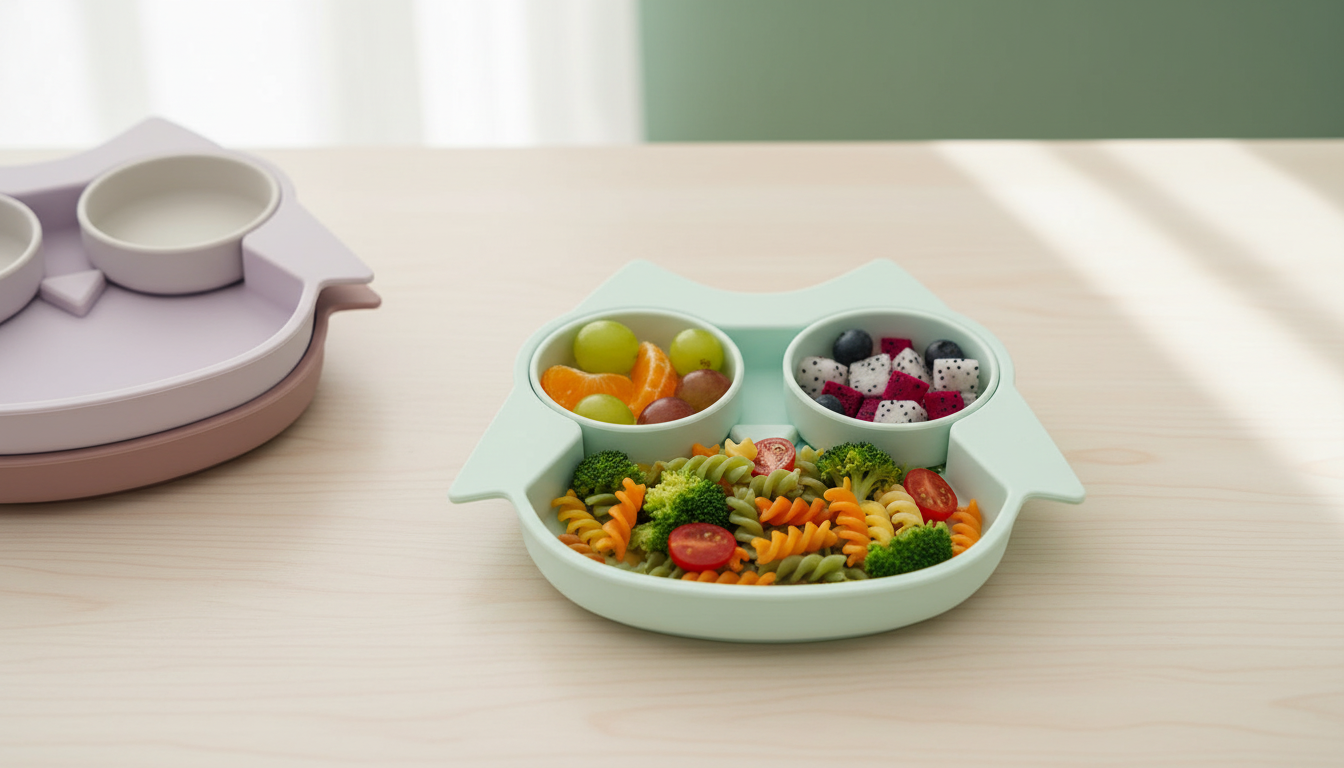
Mealtimes get easier when a baby’s dish stays put, portions are separated, and cleanup is simple. A playful plate can also help turn the high chair into a more familiar, low-stress spot—especially during the “new foods, new textures” phase. The Baby Silicone Owl Plate Feeding Set brings together an owl-shaped design, soft-touch silicone, and sectioned compartments that support early self-feeding at home or on the go.
For nutrition guidance as solids begin and routines shift, helpful references include the American Academy of Pediatrics (AAP) starting solids overview and the CDC infant and toddler nutrition resources.
What’s Included and What It’s Designed to Do
This feeding set centers around a cute owl-shaped plate that’s designed to feel approachable for little eaters while still working like an everyday, practical dish.
- Owl-shaped plate format: The friendly character look can build interest and help reinforce a “same place, same plate” routine.
- Silicone construction: Aims for durability, comfortable handling, and easier washing than many rigid materials.
- Portion areas: Separate sections help keep foods from touching—useful during picky phases and when introducing new textures.
- Baby-friendly feel: A soft, grippy surface can be easier for small hands exploring finger foods or learning utensil control.
Why Silicone Works Well for Early Feeding
Silicone is a popular choice for baby feeding items because it balances flexibility with toughness. It’s also a material many families reach for when they want quick cleanup and fewer worries about accidental drops.
- Non-porous surface: Often resists absorbing odors and stains compared with many plastics (especially helpful with tomato sauces or strongly colored purees).
- Drop-friendly: Flexible yet sturdy, so it typically handles the inevitable toss better than ceramic.
- Often dishwasher-friendly: Many silicone dishes can go in the dishwasher—always follow the care notes included with the set.
- Comfortable for exploring: Softer edges and surfaces feel more approachable as babies learn to scoop, pinch, and self-feed.
Silicone vs. Common Plate Materials for Babies
| Material |
Pros for babies |
Trade-offs |
| Silicone |
Grippy, durable, easy to wash, often dishwasher-safe |
May attract lint; can hold soap smell if not rinsed well |
| Plastic (melamine/poly) |
Lightweight, affordable |
Can scratch over time; heat limits vary by type |
| Bamboo/wood composites |
Looks natural, lightweight |
Often not dishwasher-safe; can warp or crack with soaking |
| Ceramic |
Stable and heavy |
Breakable; not ideal for tossing or travel |
When evaluating any feeding product, it can also help to understand how food-contact materials are regulated; the FDA’s overview of food contact substances is a useful starting point.
Owl Plate Design Benefits: Sections, Stability, and Routine
The owl design isn’t just about being cute. The shape and sections can make it easier to serve a simple, balanced meal while supporting a child’s growing independence.
- Separated areas: Great for offering variety without everything mixing together (a common preference for toddlers).
- Balanced plating made simpler: Use one section for protein, one for fruits/veggies, and one for carbs or snacks.
- More intuitive “food zones”: Consistent placement can help little ones learn where food belongs and where to scoop from.
- Helps reduce sliding: A stable, grippy base can help the plate stay in place on smoother high-chair trays; surface cleanliness and texture affect grip.
Age Range and When to Use This Set
This set fits nicely into the transition from parent-led feeding to early self-feeding. It works for several stages, from first tastes to more complex toddler meals.
- Transition to solids: Useful once a baby begins exploring purees and soft foods, alongside age-appropriate readiness signs.
- As textures advance: Handles purees, mashed foods, soft finger foods, and mixed meals as skills grow.
- Familiar plate away from home: Handy for daycare, travel, or grandparents’ homes—one consistent setup can smooth out routine changes.
- Safety basics: Always supervise meals and check feeding items regularly for wear, tears, or damage.
Cleaning and Care Tips That Keep Silicone Fresh
Silicone is easy to wash, but it can sometimes hold onto soap fragrance or food odors if residue remains. A few habits can keep it smelling clean and feeling smooth.
A Simple Mealtime Setup (Home and On-the-Go)
Product Snapshot
For families who want a cute, functional plate that supports early independence, the Baby Silicone Owl Plate Feeding Set is available now.
More In-Stock Finds for an Organized Home Routine
FAQ
Is a silicone plate safe for babies?
Silicone feeding products are commonly used for babies when they’re made for food contact and used as directed. Supervise during meals, check the dish regularly for damage, and replace it if you notice tears, cracks, or excessive wear.
How do you get soap smell out of silicone baby dishes?
Rinse thoroughly with warm water, then wash with a mild (ideally unscented) soap and rinse again. If the smell lingers, soak briefly in warm water (a baking soda soak can help) and let it air-dry fully before storing.
Do suction-style plates work on all high-chair trays?
Grip varies by tray material, texture, and cleanliness. Smooth, non-textured trays tend to work best; wiping the surface first (and sometimes slightly dampening it) can improve the seal, but some textured trays won’t provide strong suction.
Recommended for you










Leave a comment