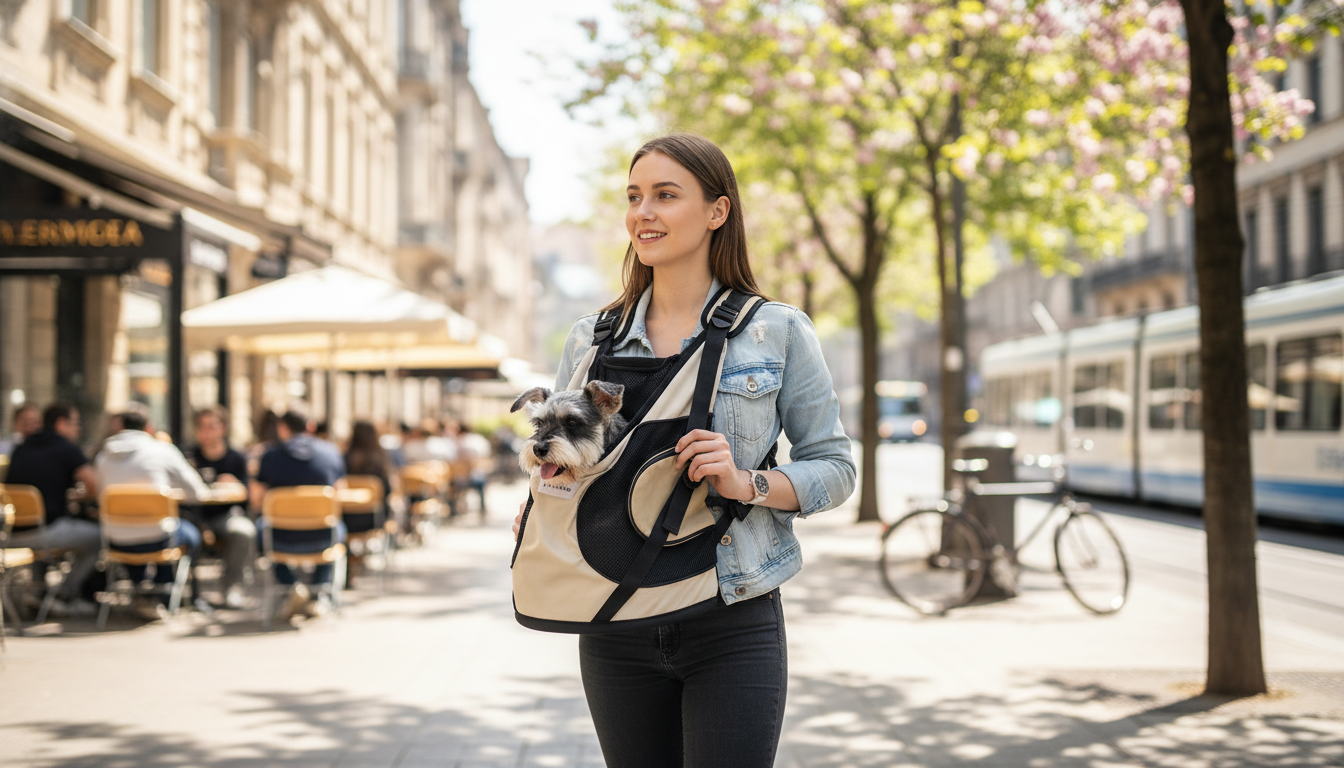
For city walks, transit rides, and quick errands, a carrier needs to balance comfort, airflow, and secure support—for both the pet and the person carrying them. A breathable backpack with crossbody straps is built for those real-life moments: climbing apartment stairs, hopping on a bus, navigating crowded sidewalks, and making short stops without juggling a leash, phone, and shopping bag all at once. With a structured shape, ventilated panels, and flexible carry positions, it helps keep small pets steady and calm while giving the wearer more ways to stay comfortable over longer outings.
What Makes This Carrier Easy to Wear All Day
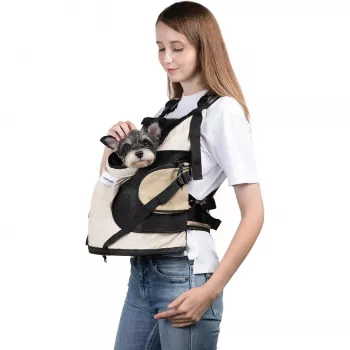
When a carrier feels good on your body, it’s easier to use it consistently—and that’s when it becomes part of your routine rather than an occasional backup. A backpack-style carrier supports steadier movement by spreading weight across both shoulders, which can be especially helpful during longer walks or when your route includes stairs and frequent stops.
The crossbody strap option adds a second carry position. On quick trips, switching to crossbody can make it easier to pivot, step around people, or keep your pet closer to your side. It can also help reduce fatigue by changing how pressure sits on your torso and shoulders. For daily commuting, dog training classes, or errands where you also need to carry other items, a hands-free setup keeps your posture more natural and your hands available.
A structured shape matters more than many people expect. When the carrier holds its form, your pet is less likely to feel squeezed when you shift posture, adjust straps, or turn your upper body to look around. That stable “frame” can make rides smoother and help nervous pets feel more secure.
Breathability and Comfort for the Pet
Breathable panels encourage airflow so heat doesn’t build up as quickly, especially during warm weather or indoor transit where temperatures can spike unexpectedly. Ventilation is particularly important for pets with thicker coats, senior pets, and anxious travelers who may pant more during movement.
A well-ventilated carrier can support calmer behavior by reducing stuffiness and allowing your pet to see and smell what’s happening around them. For many small pets, that extra sensory information can be reassuring—less “closed-in” feeling and fewer sudden surprises.
Breathability still matters in cooler months. Instead of blocking vents with a heavy cover, use a light blanket or thin layer that keeps your pet cozy without sealing off air exchange. If your pet seems chilled, prioritize gentle warmth that doesn’t restrict airflow.
Quick comfort check before leaving home
| Check |
What to look for |
Why it matters |
| Fit |
Pet can sit/stand naturally without pressing against panels |
Reduces stress and improves balance |
| Airflow |
Vent panels not blocked by clothing, bags, or blankets |
Helps prevent overheating |
| Stability |
Carrier sits flat against the body and doesn’t swing |
Protects pet’s joints and confidence |
| Secure closure |
Zippers/closures fully shut; openings not gaping |
Prevents escapes in busy areas |
| Leash attachment (if included) |
Clipped before opening outdoors |
Extra safety layer during loading/unloading |
Crossbody Straps: When They Help Most
Crossbody carry shines when your environment gets tight or unpredictable. In elevators, buses, and narrow store aisles, shifting from backpack mode to crossbody can bring your pet closer to the front/side of your body—making it easier to turn, step aside, and keep a comfortable buffer from foot traffic.
It can also help with pressure points. If one shoulder starts feeling tired after a long day, switching carry positions changes where the load rests. The best crossbody feel is snug rather than loose: a closer fit limits bouncing on stairs and curbs, which helps keep your pet steadier and more confident.
For smaller pets, crossbody can make loading and unloading smoother because the opening is easier to keep in view. That “eyes-on” angle can help you confirm closures are secure before stepping back into a busy environment.
Safety Features to Prioritize on Outings
On longer walks, plan short breaks. Find shade, offer water, and check that panting isn’t excessive. Avoid placing the carrier on hot pavement or in direct sun while waiting; heat can build quickly even with ventilation. For broader travel and hot-weather safety guidance, the AVMA’s traveling with your pet resource and AVMA hot weather pet safety tips are helpful references, along with the ASPCA’s general pet safety tips.
Best Uses: Travel, Errands, and Vet Visits
Care, Cleaning, and Long-Term Use
Product Options
FAQ
How do you know if a pet carrier backpack fits correctly?
Your pet should be able to sit and stand naturally without pressing hard against the panels, and the carrier should feel stable against your body without swinging. Check that ventilation openings stay unobstructed, and confirm sizing using the manufacturer’s guidance plus your pet’s current weight and measurements.
Can a pet overheat in a breathable carrier?
Yes—breathability helps, but it doesn’t eliminate overheating risk. Watch for heavy panting, drooling, lethargy, or weakness, and prioritize shade, water, and breaks while avoiding hot cars, hot pavement, and blocked ventilation panels.
Is crossbody carry safe for a small dog or cat?
It can be safe when the strap is adjusted snugly to reduce swinging, all closures are secured, and your pet is calm and supported. Practice at home first, and use a harness during transitions for better control.
Recommended for you










Leave a comment