Nike Men’s Cotton Socks: Everyday Comfort for Training, Work, and Weekends
A solid pair of socks does more than fill a drawer: it manages moisture, reduces friction, and helps shoes fit the way they’re supposed to. Nike men’s cotton socks are a go-to option for daily wear because they balance softness with support, making them suitable for everything from commuting and gym sessions to casual use. For more guidance, see s Socks Turquoise Nike Socks Socks Men Nike Mens Sports ….
What to Expect from Cotton-Blend Socks
Cotton-forward socks are popular for a reason: they feel familiar, they’re easy to wear all day, and they pair naturally with most casual footwear. For further reading, see MoMA Nike Everyday Socks – White.
- Soft, familiar feel against the skin with day-to-day comfort.
- Better breathability than many fully synthetic socks, with warmth that works across seasons.
- Blended fibers often improve stretch, shape retention, and durability compared with 100% cotton.
- Cushioning and ribbing can reduce pressure points and help keep the sock from sliding.
Because cotton can hold onto moisture longer than performance synthetics, the best “all-around” option is often a cotton blend that keeps the cozy feel while improving resilience and fit.
For a dependable rotation sock—something that can handle weekday wear, weekend errands, and the occasional training session—Nike men’s cotton socks are designed to feel comfortable without feeling sloppy.
- Designed for regular rotation: training, errands, and all-day wear.
- Cotton-forward comfort with supportive structure where it matters most (arch and ankle).
- A practical add-on for sneakers, trainers, and casual shoes.
Quick product details
Comfort and Fit: Getting the Feel Right
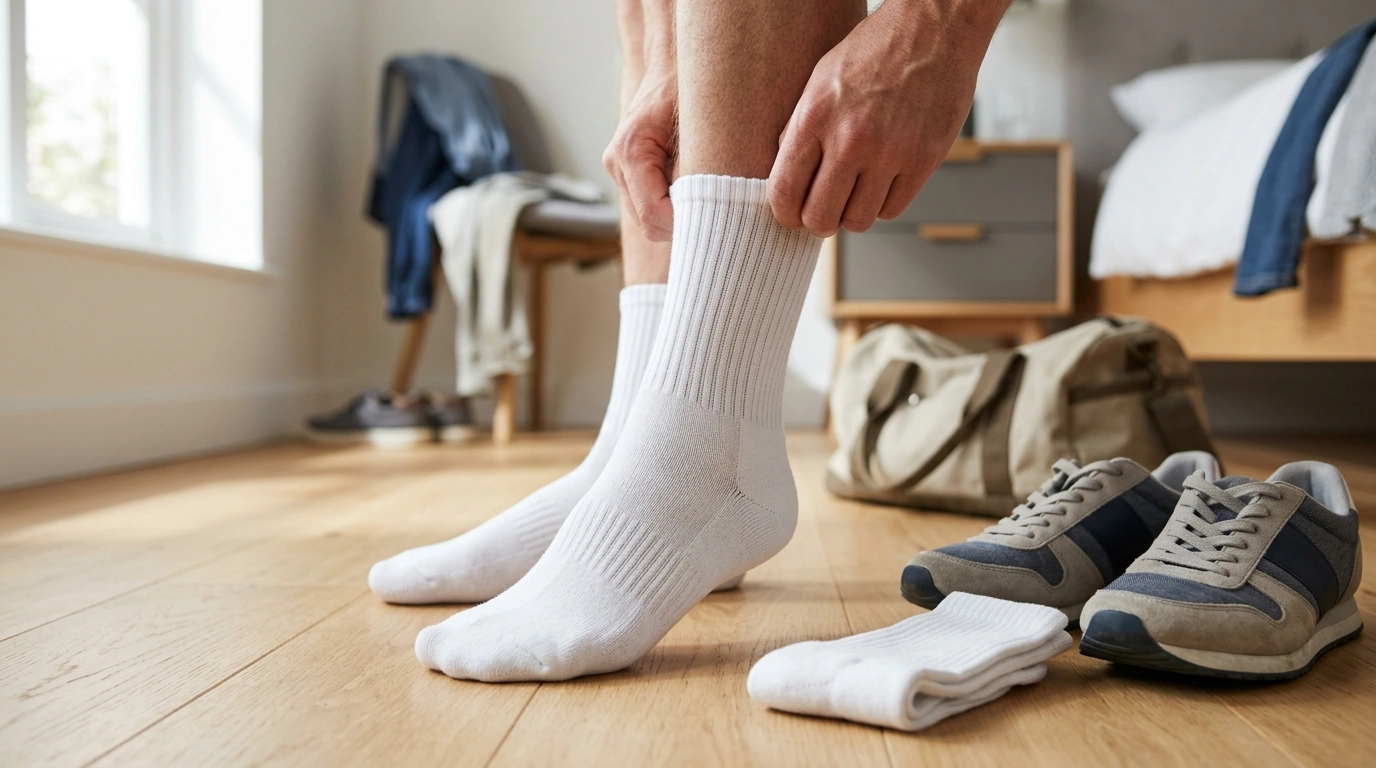
Even a premium sock won’t feel great if the fit is off. The goal is a secure, smooth feel—no extra fabric underfoot, no sliding at the heel, and no tight band that leaves deep marks by midday.
- Look for a snug midfoot/arch band: it helps prevent bunching and reduces friction during walking or training.
- A smooth toe seam (or a flatter seam) is helpful for longer wear and sensitive feet.
- Cushion placement matters: targeted cushioning under the heel and forefoot can improve comfort without making shoes feel tight.
- If shoes already fit snugly, lighter cushioning is often the safer choice to avoid a cramped toe box.
If blisters are a recurring issue, friction and moisture are usually the combination to watch. The American Academy of Dermatology Association notes that reducing rubbing and protecting skin are key parts of blister prevention—both of which start with socks that stay put.
When Cotton Socks Work Best (and When to Switch)
Cotton-blend socks shine when the day includes a mix of activities. They’re comfortable at a desk, forgiving in casual shoes, and supportive enough for lighter workouts.
- Best for: everyday wear, light-to-moderate activity, office-to-gym transitions, and casual sneakers.
- Good for: cooler days when a bit of warmth is welcome without heavy insulation.
- Consider alternatives for: very hot weather, long runs, or high-sweat sessions where moisture-wicking synthetics or merino wool may feel drier.
- If prone to blisters: prioritize fit and smooth interior finish; moisture management becomes more important as intensity increases.
For daily foot comfort, basic hygiene also matters. The CDC’s foot care guidance emphasizes keeping feet clean and dry—fresh socks are one of the simplest ways to support that routine.
Care Tips to Keep Socks Softer and Longer-Lasting
A few small laundry habits can help socks keep their shape, cushioning, and stretch—especially around the cuff and arch where elastic does the heavy lifting.
- Wash in cold or warm water and avoid overly hot cycles that can reduce elasticity over time.
- Turn socks inside out to help remove sweat and skin oils more effectively.
- Skip high heat when possible; air-drying or low heat helps maintain stretch and shape.
- Retire pairs that have thinning soles or loose cuffs; worn cushioning can change shoe fit and increase friction.
Simple Pairing Guide: Match Socks to Shoes and Plans
Choosing the right cut and cushion level can make the same pair of shoes feel noticeably better—especially on long walking days.
- Low-cut sneakers: choose a cut that stays hidden while protecting the heel tab from rubbing.
- Everyday trainers: a bit more cushioning can improve comfort for long walking days.
- Work boots: consider thicker cushioning and a higher cuff to reduce rubbing at the boot collar.
- Gym days: a secure arch feel and stable cuff help prevent sliding during lateral movement.
More In-Stock Everyday Essentials
If you’re rounding out practical, day-to-day staples beyond socks, these in-stock picks are available now:
FAQ
Are cotton socks good for workouts?
They can work well for light to moderate training, especially if the fit is snug and the sock doesn’t bunch. For long or high-sweat sessions, moisture-wicking synthetics or wool may feel drier and help reduce blister risk.
How often should socks be replaced?
Replace socks when the heel or forefoot looks thin, cushioning feels flat, the cuff won’t stay up, or holes appear. Frequently worn pairs often need replacing sooner, especially if they’re used for walking or workouts.
How should socks fit to avoid blisters?
Socks should feel snug without constricting, with no bunching under the arch and minimal movement at the heel. Smooth seams and a shoe fit that doesn’t crowd the toes also help reduce rubbing.
Recommended for you









Leave a comment