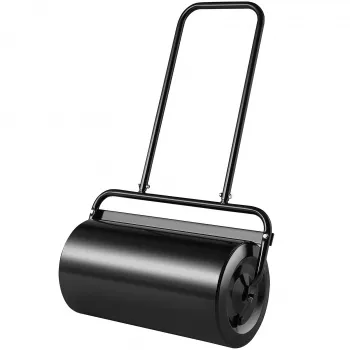
A heavy duty lawn roller helps press seed into soil, smooth minor bumps, and firm freshly worked ground for more even mowing. Used at the right time and with the right weight, it supports better lawn establishment without over-compacting the soil. The key is treating rolling as a finishing step for surface-level improvements—not a cure-all for drainage issues, deep low spots, or poor soil structure.
What a Lawn Roller Does (and What It Doesn’t)
A lawn roller is a simple tool, but it’s most effective when the goal is surface contact and light smoothing. Used occasionally and with restraint, it can help turf look more uniform and improve early establishment after seeding or sod installation.
- Firms the top layer of soil to improve seed-to-soil contact after overseeding or patching.
- Smooths small surface irregularities caused by frost heave, foot traffic, pets, or shallow ruts.
- Helps set newly laid sod by improving contact between sod and soil.
- Does not fix deep hollows or major grading problems—those require topsoil, leveling mix, or regrading.
- Overuse can compact soil, reducing air and water movement; timing and weight matter.
For guidance on compaction and cultural practices, university extension resources can be helpful, including University of Minnesota Extension lawn care resources and Penn State Extension lawn and turfgrass management.
Best Times to Roll the Lawn
Rolling works best when the soil is slightly moist and stable underfoot. If the ground is saturated, the drum can create ruts and squeeze out the pore space roots rely on.
- After seeding: lightly roll immediately after spreading seed to help it settle into the soil surface.
- After laying sod: roll once to press sod seams down and reduce air pockets (follow with thorough watering).
- Early spring smoothing: only when soil is moist—not wet—and the ground has thawed enough to avoid creating ruts.
- After topdressing or leveling mix: a gentle pass can help blend material and reduce footprints.
- Avoid mid-summer rolling: during heat stress; it can increase compaction and damage crowns.
Common lawn tasks and a practical rolling approach
| Task |
Soil condition |
Suggested approach |
Notes |
| Overseeding or patch seeding |
Slightly moist, crumbly |
Light rolling pass |
Follow with frequent light watering until germination |
| New sod installation |
Moist, firm base |
One steady pass in overlapping lanes |
Roll after laying; water deeply to settle |
| Spring frost-heave bumps |
Moist, not saturated |
Light-to-moderate pass |
If soil squishes underfoot, wait for it to dry |
| Minor mole/foot traffic ripples |
Dry to slightly moist |
Spot-roll affected zones |
For repeated issues, address the root cause first |
| Leveling with topdressing |
Dry to slightly moist |
Gentle pass, then rake/brush |
Avoid pushing sand/soil into thick piles |
What Makes a Roller “Heavy Duty” for Yard Work
Not all rollers handle real-world yards the same. A “heavy duty” build is less about maxing out weight at all costs and more about durability, control, and adjustability as conditions change through the season.
- Durable drum construction that resists dents when pulled over uneven ground.
- A stable frame and handle/tow connection for controlled passes and fewer wobbles.
- Fillable drum design (water or sand) to adjust weight for different seasons and soil conditions.
- Smooth drum surface for consistent contact and fewer gouges on turns.
- Leak-resistant fill cap and easy-drain setup for quick emptying and storage.
Choosing the Right Weight Without Over-Compacting
The best rolling outcome comes from the lightest effective weight. You’re aiming to improve surface contact—especially for seed or sod—not to compress the soil profile.
- Start lighter and increase only if needed; the goal is surface contact, not deep compression.
- Use a lighter fill for spring smoothing and seed work; use more weight mainly for sod setting on a properly prepared base.
- Avoid rolling when soil is saturated—if footprints sink or water pools, postpone.
- If the lawn has heavy clay or already feels hard, consider aeration instead of adding roller weight.
- For persistent bumps, add leveling mix and rake smooth before rolling rather than relying on heavy passes.
A practical test: walk the area first. If the soil deforms under your shoes or you can squeeze water out of a handful, wait. Rolling is most helpful when the surface is pliable but not muddy.
How to Fill, Use, and Store a Lawn Roller
Common Mistakes That Create Lawn Problems
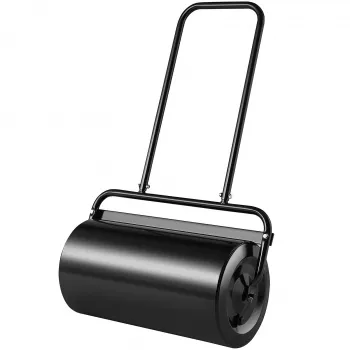
For seasonal smoothing, seed-to-soil contact, and sod-setting work, a fillable roller gives you control over how much pressure you apply. The Heavy Duty Lawn Roller is designed for these surface tasks when used with appropriate weight and proper soil moisture.
Quick product snapshot
More In-Stock Picks for Home Projects
FAQ
Should a lawn be rolled after seeding?
Yes. A light pass can improve seed-to-soil contact, which helps germination, but avoid heavy rolling and never roll wet soil. Water gently afterward so the seed stays in place.
Can a lawn roller fix bumpy ground?
It can smooth minor ripples and frost-heave bumps. Deeper low spots usually need leveling material or regrading because rolling alone won’t remove significant dips.
Is rolling bad for grass roots?
Excessive weight or rolling when soil is wet can compact soil and limit oxygen and water movement. When used occasionally with the right moisture and moderate weight, rolling is generally safe for surface tasks.
Recommended for you








Leave a comment