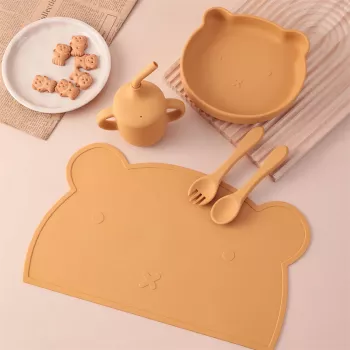
Mealtime tends to run smoother when little hands can grip, scoop, and sip with confidence—especially during the busy transition from first tastes to toddler-sized appetites. The Color Kids Baby Silicone 5PCS Tableware Set – Cute Bear Bowl, Plate, Spoon, Fork & Cup bundles everyday essentials into one coordinated set: a bowl, plate, spoon, fork, and cup. With playful bear styling, it’s designed to help keep routines simple at home and easy to pack for daycare, travel days, or meals with family.
What’s included in the 5-piece set
This five-piece silicone bundle covers the basics that come up at nearly every stage of early feeding—from smooth purees to finger foods and first utensil practice.
- Bowl for purees, oatmeal, yogurt, snacks, and small portions
- Plate for finger foods and mixed meals as textures progress
- Spoon sized for early feeding and parent-assisted bites
- Fork for practicing spearing soft foods as coordination grows
- Cup for introducing water and supporting independent sipping
- Cute bear styling adds a playful touch that can make mealtime feel less stressful
Why silicone tableware works well for babies and toddlers
Silicone has become a go-to material for early tableware because it balances comfort, durability, and everyday practicality. For many families, it’s a helpful middle ground: softer and quieter than rigid dishes, but still sturdy enough for regular use.
- Gentler feel: Soft-touch material is typically kinder on gums and developing teeth than hard plastics.
- Grip-friendly: The tactile surface can help reduce slips for small hands that are still learning control.
- Drop-ready durability: Built to handle the bumps and tumbles that happen around high chairs and kitchen floors.
- Easy to pack: Lightweight pieces fit well in diaper bags, daycare totes, and weekend travel kits.
- Less noise: Silicone tends to clatter less on hard tables than rigid plates and bowls—nice for early-morning breakfasts or shared spaces.
As a general feeding reminder, always match foods to your child’s stage and follow trusted guidance on starting solids, like the American Academy of Pediatrics’ overview on starting solid foods and the CDC’s infant and toddler nutrition resources.
Piece-by-piece uses and quick tips
Each item in the set can support a slightly different “learning moment,” whether that’s scooping, pinching finger foods, or practicing controlled sips.
- Bowl: Use for wet or semi-thick foods. Keeping portions small can reduce spills while your child learns to scoop.
- Plate: Great for finger foods. Serving a few pieces at a time helps keep the surface manageable.
- Spoon: Ideal for early purees. Loading smaller amounts encourages more successful self-feeding attempts.
- Fork: Introduce when soft foods hold their shape (banana slices, steamed veggies, pasta) to build coordination.
- Cup: Offer water during meals with modest refills to avoid big spills while learning.
Set components and practical mealtime roles
| Item |
Best for |
Helpful tip |
| Bear bowl |
Purees, oatmeal, yogurt, snacks |
Serve thicker textures first to make scooping easier |
| Plate |
Finger foods and mixed meals |
Offer small portions; replenish as needed to keep focus |
| Spoon |
Early self-feeding and parent-assisted bites |
Wipe the underside before handing back to reduce drips |
| Fork |
Soft foods that can be speared |
Start with easy-to-pierce foods to build confidence |
| Cup |
Water and supervised sipping practice |
Begin with a small fill line to limit mess |
Safety and mealtime readiness
Even with everyday tableware, readiness and supervision matter more than any single product feature. Keep these practical safety habits in rotation as skills develop.
- Always supervise babies and toddlers during eating and drinking.
- Inspect regularly: check utensils and edges; discontinue use if torn or damaged.
- Match foods to stage: cook, cut, and size foods appropriately to reduce choking risk.
- Stay close during cup practice: early sipping skills can lead to sudden spills or coughing if a child tips back too far.
For additional context on food contact materials and packaging safety frameworks, the U.S. FDA provides an overview of food contact substances.
Cleaning and care routine
A simple, consistent wash routine keeps the set fresh and ready for the next meal—especially for items used with dairy, purees, and thicker foods.
- Wash before first use and after each meal; pay attention to corners and utensil tips.
- Use mild dish soap and warm water; rinse thoroughly to remove residue.
- Let pieces dry fully before storing to help keep them fresh between uses.
- If odors develop over time, soak briefly in warm soapy water, rinse well, and air-dry.
- Store as a set so it’s easy to grab for breakfast, daycare, or travel.
When this set fits best
Product details at a glance
More in-stock picks
FAQ
How do you clean a baby silicone bowl, plate, and utensils?
Wash before first use and after each meal with mild dish soap and warm water, then rinse thoroughly and let everything air-dry completely. Check pieces regularly for tears or wear, and replace any item that looks damaged.
When can a baby start using a spoon and fork?
Many babies begin spoon practice early with purees under close supervision, often starting with parent-assisted bites and short self-feeding attempts. Fork practice usually comes later, once coordination improves and foods are soft enough to spear safely; readiness varies by child.
What should a first tableware set include for starting solids?
A practical starter set typically includes a bowl or plate for small portions, a baby-sized spoon, and a cup for supervised water practice; a fork can be added as skills grow. Look for pieces that are easy to hold, easy to clean, and durable enough for everyday drops.
Recommended for you










Leave a comment