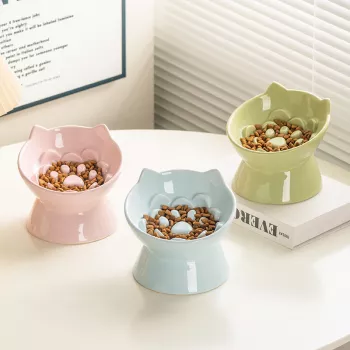
An elevated, slow-feeding bowl can make daily meals calmer and more comfortable—especially for cats that gulp, regurgitate, or strain their necks when eating from floor-level dishes. This ceramic design combines a raised eating angle with a slow-feed surface to support steadier pacing while keeping the bowl stable, hygienic, and easy to clean. For more guidance, see High-Leg Ceramic Slow-Feeding Bowl for Cats.
Why Elevation and Neck Support Matter at Mealtime
Many cats do fine with standard dishes, but floor-level bowls can encourage a deeper neck bend that may be uncomfortable for some cats—particularly seniors, cats with arthritis-like stiffness, or pets recovering from a sore shoulder or back. A raised eating height helps bring food closer to your cat’s natural line of movement, reducing the need to hunch over each bite. For further reading, see Choosing the Right Dog Bowl for Your Dog.
When posture is more comfortable, some cats eat more consistently and with less “drive-by” mess around the bowl area. Elevation can also make feeding stations easier to organize in multi-cat homes, where separating bowls by height and location helps reduce crowding and keeps routines predictable.
How the Slow-Feeding Surface Helps Cats That Gulp
Some cats eat fast because they’re enthusiastic, competitive, or simply habituated to scarfing meals. A slow-feeding surface uses gentle contours to break up access to food, encouraging smaller bites and more licking rather than big mouthfuls.
Slower pacing can reduce air swallowing and may help cats that tend to spit up right after meals. It also adds a small enrichment element to daily feeding without noise, moving parts, or complicated assembly—just a simple “work a little for each bite” experience that still feels like a normal bowl.
Ceramic Benefits: Hygiene, Taste Neutrality, and Daily Practicality
Material matters at mealtime. Non-porous glazed ceramic helps resist odors and residue buildup compared with some plastic bowls, which can hold onto smells over time. Since many cats are sensitive to lingering odors, a taste- and smell-neutral bowl can be a surprisingly helpful upgrade for picky eaters.
Ceramic’s heavier weight also improves stability. A bowl that doesn’t scoot or tip is easier for cats to use and helps keep food where it belongs—inside the dish. For wet food in particular, routine hygiene is essential; a smooth glazed finish helps prevent food from sticking in corners so rinsing and washing are simpler after every meal.
Everyday Use: Wet Food, Kibble, and Portioning
Slow-feeding designs work best when food is distributed across the contours rather than piled into a single mound. A few small serving habits can make the bowl feel intuitive instead of frustrating:
- For wet food: Press the food lightly into the slow-feed channels so it spreads thinly. This increases licking time without turning the meal into a struggle.
- For kibble: Pour a measured portion, then gently shake the bowl so pieces settle into the contours instead of stacking up in one heap.
- For mixed diets: Add wet food first, then sprinkle kibble on top. This can slow the initial rush and encourage chewing.
- If your cat seems annoyed at first: Start with a smaller portion and offer the remainder as a second serving. Most cats adjust quickly once they learn the “pattern” of the grooves.
- Hydration tip: Keep fresh water a short distance away from the feeding bowl to help maintain a tidier feeding zone and encourage drinking.
For general feeding guidance and balanced diet basics, the American Veterinary Medical Association (AVMA) pet nutrition resources are a helpful reference point.
Quick Fit Guide: Which Cats Benefit Most
Not every cat needs a slow feeder or elevated bowl, but certain mealtime patterns are strong indicators that a change could help:
Elevated Slow-Feed Bowl Match-Up
| Cat type |
Common mealtime issue |
What this bowl design can help with |
Starter tip |
| Fast eater |
Gulping, scarf-and-barf |
Slows intake with contours |
Spread food thinly across channels |
| Senior cat |
Neck stiffness, discomfort bending down |
More comfortable eating posture |
Place bowl on a non-slip mat in a quiet spot |
| Messy eater |
Food pushed out of bowl |
Heavier ceramic + stable base reduces sliding |
Offer smaller portions more often |
| Picky eater |
Avoids bowl after odors build up |
Ceramic is easier to keep odor-free |
Wash after each wet meal |
Care and Cleaning for Long-Lasting Use
If vomiting is frequent or worsening, it’s important to rule out underlying causes. Cornell’s overview on vomiting in cats is a useful starting point for understanding when to call the vet.
Product Snapshot
Shop In-Stock Picks
FAQ
Can a slow-feeding bowl help with vomiting after meals?
It can help some cats by slowing down eating and reducing gulping and air intake. If vomiting is persistent, frequent, or accompanied by lethargy or weight loss, a veterinary evaluation is important.
Is an elevated bowl safe for kittens and smaller cats?
Many kittens and smaller cats can use an elevated bowl if the height and access feel comfortable. Watch posture and ease of eating, and adjust placement or switch styles if your kitten seems to struggle.
How do you introduce a cat to a slow-feeding bowl without frustration?
Start with a small portion spread thinly across the channels, then offer the remainder as a second serving. A gradual transition over a few meals usually helps cats learn the contours without getting discouraged.
Recommended for you










Leave a comment