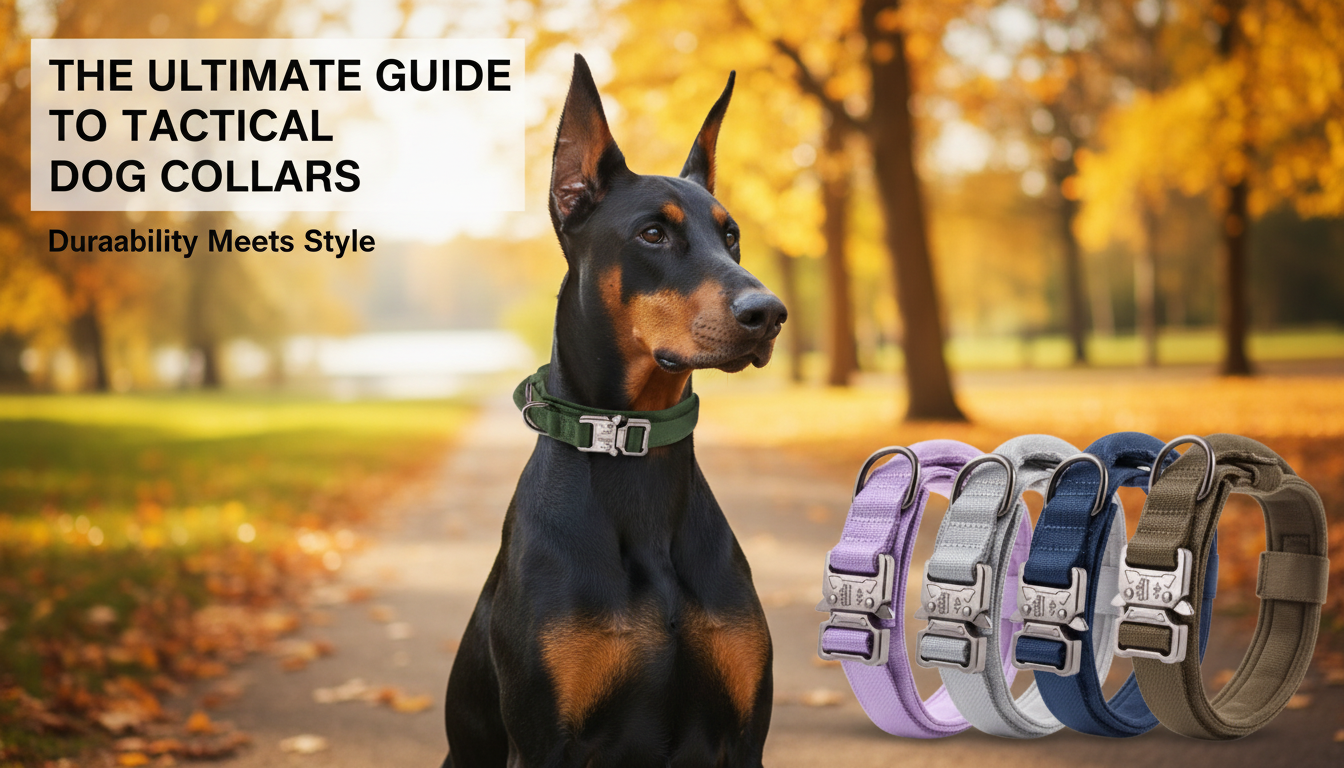
A sturdy collar is more than a place to clip a leash—it helps keep handling secure, improves control during training, and stands up to mud, water, and rough play. Tactical-style collars are built for durability and stability, with hardware and webbing designed to handle active dogs and changing conditions. For more guidance, see Review of Collars, Harnesses, and Head Collars for Walking Dogs.
What Makes a Tactical-Style Collar Different
Tactical-style dog collars are designed around reliability under movement and load. Compared with many everyday collars, they tend to feel more substantial in the hand and more stable on the dog’s neck. For further reading, see How Tactical Dog Gear Keeps Your Pet Safe and Comfortable Year ….
- Built with thick webbing and reinforced stitching to resist fraying and stretching.
- Typically includes strong metal hardware (buckles and D-rings) to reduce failure under load.
- Often wider than standard collars to distribute pressure more comfortably across the neck.
- Designed to stay stable during training cues, leash work, and high-movement activities.
Key Features to Look For Before Buying
Not all “tactical” collars are built the same. A few details make the difference between a collar that lasts through seasons of use and one that starts slipping, twisting, or wearing prematurely.
- Hardware: prioritize a solid D-ring and a secure buckle that won’t pop open during sudden pulls.
- Webbing thickness: dense nylon is common for durability; look for reinforcement at stress points.
- Comfort: smooth edges, optional padding, and a width appropriate for the dog’s size.
- Adjustment range: enough room to size correctly across seasons (coat changes) without maxing out.
- Attachment points: a reliable leash clip point; secondary points can be useful for training setups.
- Visibility: reflective elements or an easy-to-spot color help in low light.
For measuring and fit guidance, the American Kennel Club’s collar measuring tips are a helpful reference: American Kennel Club — How to Measure Your Dog for a Collar.
Choosing the Right Size and Fit
Durability doesn’t matter if the fit is off. Too loose and the collar can slip over the head; too tight and it can rub, pinch, or restrict comfort on longer walks.
- Measure neck circumference with a soft tape measure; if between sizes, choose the size with the best adjustment range rather than the tightest fit.
- Use the two-finger rule: the collar should be snug enough not to slip over the head, but loose enough to fit two fingers between collar and neck.
- For dogs with narrow heads (e.g., sighthounds), ensure the collar won’t slide off; consider additional safety measures when needed.
- Re-check fit after the first few walks—new webbing can settle slightly, and coats can compress.
Quick Fit Checklist
| Check |
What to Confirm |
Why It Matters |
| Snugness |
Two fingers fit under the collar |
Helps prevent slipping while staying comfortable |
| Position |
Sits high on the neck without pressing the throat |
Improves control and reduces irritation |
| Adjustment |
Strap is not at the last hole/limit |
Allows seasonal or coat changes |
| Security |
Buckle fully seated; D-ring rotates freely |
Reduces risk of accidental unclipping or twisting |
When a Tactical Collar Is a Good Choice
A tactical-style collar is especially useful when you want steady handling without constantly adjusting or worrying about hardware fatigue.
- Daily leash walks with dogs that pull or surge unpredictably.
- Basic obedience and structured training sessions where stable handling is important.
- Hiking, camping, and wet conditions where materials need to dry fast and resist odor.
- Households with large, energetic breeds that wear through lighter collars quickly.
If you’re comparing collars versus harnesses for different situations, this overview from the AVMA can help frame comfort and safety considerations: AVMA — Selecting and Using Collars and Harnesses.
Care, Cleaning, and Longevity Tips
Tactical collars are made to take a beating, but basic upkeep prevents small problems (abrasion, salt buildup, loose stitching) from turning into a failure point.
- Rinse after saltwater, sand, or mud to reduce abrasion and keep stitching intact.
- Hand-wash with mild soap; avoid harsh chemicals that can weaken fibers or coatings.
- Air-dry fully before storage to prevent odors and hardware corrosion.
- Inspect monthly: look for frayed webbing, loose stitching, bent D-rings, or buckle cracks.
- Retire the collar if hardware deforms or stitching at stress points shows separation.
For training routines that pair well with consistent gear, the ASPCA’s fundamentals provide a practical starting point: ASPCA — Dog Training Basics.
If the goal is a dependable collar that’s ready for daily walks, training sessions, and weekend outdoor time, Durable Tactical Dog Collar is a practical, no-nonsense option. It focuses on the core needs of a tactical-style collar: secure hardware, durable webbing, and an adjustable fit that can be fine-tuned as your dog’s coat or condition changes.
More In-Stock Finds
FAQ
Are tactical dog collars safe for everyday use?
Yes, when properly fitted and regularly inspected. Choose a width that suits your dog’s size, check for rubbing, and avoid leaving any collar on unsupervised dogs that might snag on crates, fences, or brush.
How tight should a dog collar be?
Use the two-finger rule: the collar should be snug enough that it won’t slip over the head, but loose enough to comfortably fit two fingers between the collar and the neck. Re-check after a few walks since webbing can settle and coats can compress.
Can a tactical collar replace a harness for a dog that pulls?
It can improve control for many dogs, but strong pullers may do better with a well-fitted front-clip harness and a consistent training plan. Choose the option that keeps your dog comfortable while giving you safe, reliable handling.
Recommended for you










Leave a comment