650W Airless Paint Sprayer (3000 PSI) for Home Projects and Furniture Finishing
A high-pressure airless sprayer can turn time-consuming brush and roller work into a smoother, faster finish—especially on furniture, cabinets, doors, trim, fences, and interior walls. This guide breaks down what 3000 PSI and a 650W electric stand design mean in real use, how to set up for clean results, and how to avoid common spraying mistakes.
What this sprayer is designed to do
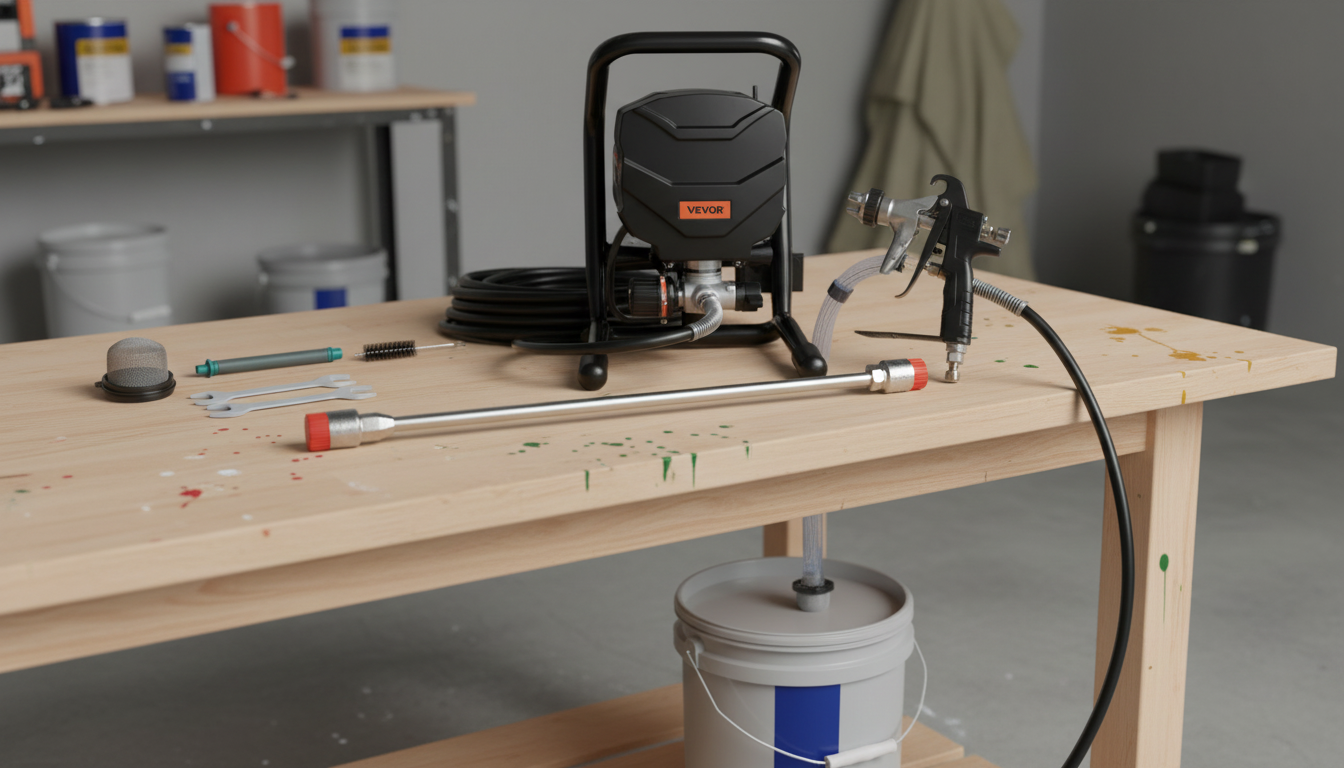
An airless paint sprayer pushes coating through a small tip opening at high pressure, creating a fine fan pattern without using compressed air. That basic design is why airless units can cover large areas quickly while still producing a “laid down” look when your settings and technique are dialed in.
- Delivers paint through high pressure for a fine atomized fan pattern without using compressed air.
- Stand-style body helps keep the pump stable and reduces the chance of tipping during pauses and refills.
- A practical fit for DIY upgrades: furniture refreshes, cabinets, doors, baseboards, and medium-size home surfaces.
- Best results come from correct tip choice, steady gun distance, and disciplined masking/prep.
How 3000 PSI and 650W translate to real-world performance
Pressure influences how well the sprayer atomizes thicker coatings and how consistently it holds a full fan as you move. Motor wattage supports the pump’s ability to maintain output; steady output is one of the biggest differences between a finish that looks even and one that shows striping, patchiness, or “dry” edges.
That said, maximum pressure is not a target. For furniture and cabinets, control beats brute force. Running at the lowest effective pressure that produces a clean, even fan often reduces overspray and makes it easier to keep edges crisp.
Quick guide: pressure and technique
| Goal |
What to adjust |
Practical tip |
| Smoother finish on furniture |
Lower pressure + smaller tip |
Spray light coats, overlap 50%, keep a wet edge |
| Faster coverage on walls/fences |
Moderate pressure + wider fan tip |
Keep consistent pace and distance to avoid banding |
| Reduce overspray |
Lower pressure + correct distance |
Stay about 10–12 in (25–30 cm) from the surface and mask thoroughly |
| Prevent tails/fingers at fan edges |
Slightly increase pressure or change tip |
If tails persist, check for a worn/clogged tip and filters |
Best uses around the home and on furniture
A 650W, 3000 PSI airless sprayer is a strong fit for DIYers who want to move beyond brush marks and roller texture on common household projects.
- Furniture: dressers, chairs, tables, bed frames—especially when spraying multiple similar pieces or intricate shapes.
- Cabinets and doors: consistent finish on flat panels and frames when combined with proper sanding, priming, and tack wiping.
- Trim and baseboards: faster coverage than brushing when masking is done carefully.
- Walls and ceilings: useful for renovations; plan extra time for masking and ventilation.
- Outdoor surfaces: fences, sheds, railings—choose exterior-rated coatings and watch wind direction to control drift.
Preparation that makes an airless finish look professional
Spraying is fast; prep is what makes it look expensive. If a surface has grease, dust, or gloss, the sprayer will simply apply paint “perfectly” over those problems—and they’ll show through.
If you’re renovating an older home, confirm whether lead paint may be present before disturbing old coatings. The EPA’s Renovation, Repair and Painting (RRP) guidance is a solid starting point: https://www.epa.gov/lead/renovation-repair-and-painting-program.
Setup and spraying workflow (from first pour to final pass)
Choosing tips, controlling overspray, and avoiding runs
Common finish defects and quick fixes
| Problem |
Likely cause |
Fix |
| Runs/sags |
Too slow, too close, or too much material |
Speed up, back away slightly, use lighter coats, reduce pressure |
| Orange peel |
Viscosity too high or drying too fast |
Use correct tip, adjust pressure, follow paint label for thinning/conditions |
| Dry spray/rough feel |
Too far away or windy/dry conditions |
Move closer within a safe range, reduce airflow, adjust pressure |
| Striping/banding |
Inconsistent overlap or speed |
Maintain 50% overlap and steady pace; keep gun perpendicular |
| Tip clogs |
Unstrained paint or debris |
Strain paint, clean filters, use proper cleanup routine |
Cleanup, storage, and safety essentials
For respirator selection and a compliant respiratory protection program, reference OSHA’s Respiratory Protection standard: https://www.osha.gov/laws-regs/regulations/standardnumber/1910/1910.134.
Specifications at a glance
In-stock picks for home upgrades
FAQ
Does an airless sprayer need paint to be thinned?
Often not for many latex paints, but it depends on the coating, conditions, and the tip you’re using. Follow the paint label guidance, strain the paint, and use the lowest pressure that still produces a clean, even fan.
Is 3000 PSI too much for furniture?
No—maximum pressure is simply the sprayer’s capability, not the required setting. Furniture usually sprays best at lower effective pressure with a suitable tip to improve control and cut down overspray.
How can overspray be minimized indoors?
Mask thoroughly, reduce pressure, choose the right tip, and keep a consistent 10–12 inch distance while maintaining steady movement. Ventilate well and avoid strong airflow that can carry mist beyond the work zone.
Recommended for you










Leave a comment