6-Piece Balance Beam Stepping Stones for Toddlers: Indoor & Outdoor Movement Play
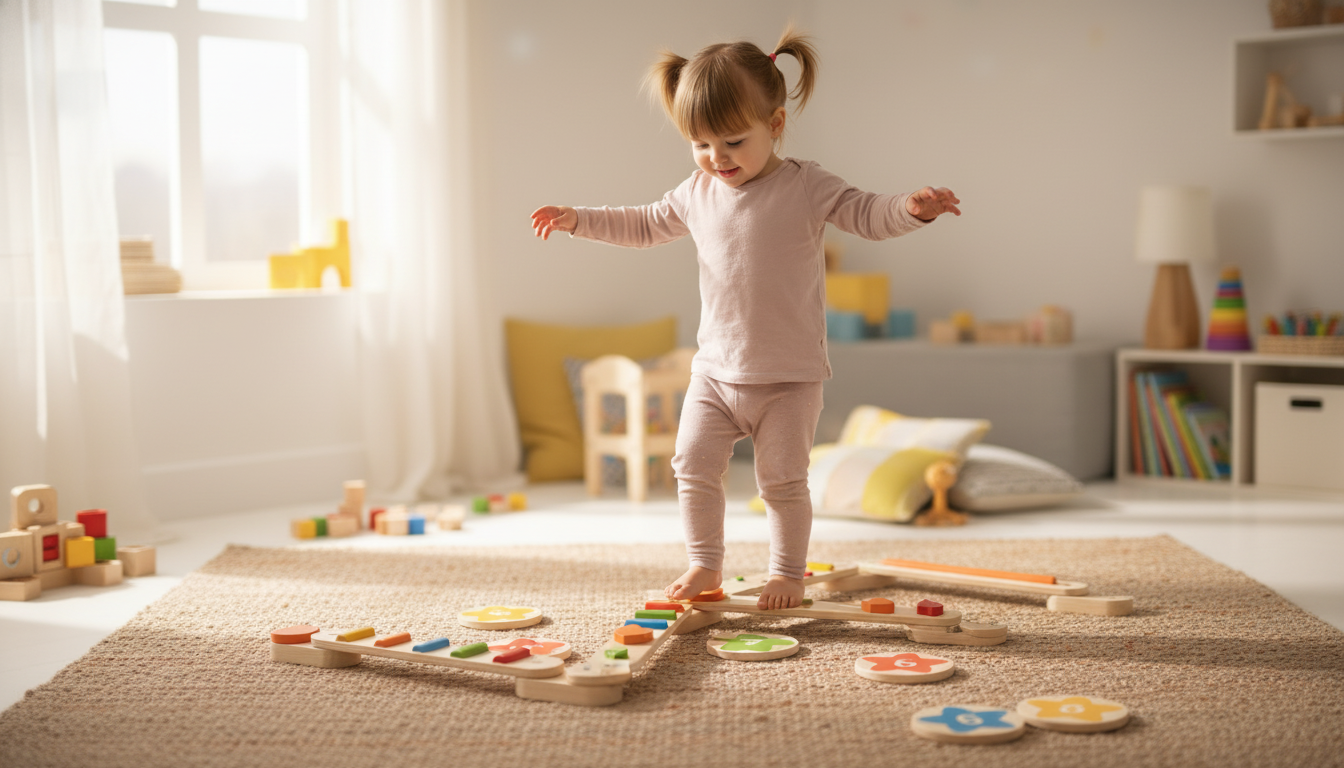
A six-piece balance beam and stepping-stone set creates quick, screen-free movement games that support balance, coordination, and confidence. With just a few pieces, toddlers can practice controlled stepping, pausing, and turning—then repeat the same “route” until it feels familiar and doable. The ideas below cover what the set helps kids practice, how to set it up safely, simple games that don’t require complicated rules, and easy ways to adjust the challenge level as kids grow.
What a 6-piece balance beam stepping-stone set helps kids practice
- Balance and body control: walking heel-to-toe, pausing on one foot, and making controlled turns.
- Gross motor skills: stepping, hopping, marching, and lateral (side) stepping.
- Coordination and planning: choosing the next step, judging distance, and navigating curves.
- Core strength and posture: staying upright while moving slowly and steadily.
- Confidence and independence: mastering small “missions” and repeating routes on purpose.
- Group play skills: turn-taking, following simple rules, cheering, and spotting safely.
For broader guidance on toddler development and age-appropriate expectations, see the CDC’s positive parenting tips for toddlers.
What’s included and how to use the pieces
Most six-piece sets are designed to be modular, so the same pieces can create different “paths” in seconds. That flexibility matters for toddlers: the layout can stay easy while a child learns the idea, then change slightly to keep things interesting without getting overwhelming.
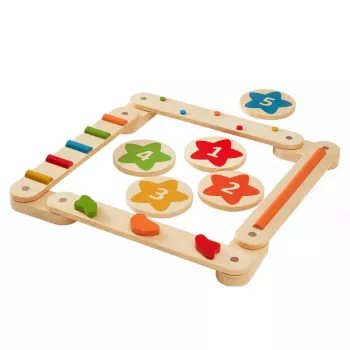
- Six modular pieces: arrange as a straight line, zigzag, circle, or mini obstacle course.
- Stepping-stone mode: place pieces as separate “islands” to step or hop between.
- Balance-beam mode: connect or align pieces closely to create a longer pathway.
- Progression-friendly: start with wide, stable layouts and increase difficulty gradually.
- Works in multiple spaces: playroom, living room, backyard, patio, or a daycare movement corner.
Quick setup ideas by skill level
| Level |
Layout |
Spacing & height challenge |
Simple game prompt |
| Starter |
Straight line (6 pieces) |
Pieces touching or minimal gaps |
“Walk like a turtle—slow and steady.” |
| Growing |
Zigzag path |
Small gaps between pieces |
“Stop on each piece and count to three.” |
| Confident |
Circle or oval loop |
Medium gaps + gentle turns |
“Do one lap forward, one lap backward.” |
| Advanced |
Island hop course |
Wider gaps + mixed directions |
“Hop to the next color without stepping off.” |
Safe setup checklist for toddlers
- Choose the right surface: flat ground indoors; outside, use level grass/patio and avoid slopes.
- Add traction: place on non-slip rugs/mats indoors when needed; keep surfaces dry.
- Create a clear zone: remove toys, cords, sharp-edged furniture, and low tables near the path.
- Start with supervision: keep an adult close for spotting, especially during new layouts.
- Footwear guidance: barefoot or grippy socks indoors; well-fitting sneakers outdoors.
- Teach safe rules: one child on the path at a time, no pushing, and step down if unsteady.
- Adjust to the child: keep early routes short; increase difficulty only after consistent success.
For additional safety reminders during active play, reference the American Academy of Pediatrics guidance on HealthyChildren.org.
Play ideas that keep toddlers engaged (no complicated rules)
For toddlers, the most successful games are short, repeatable, and easy to explain in one sentence. Rotate prompts every few minutes so kids practice the same movement skill in different “stories.”
- Animal walks: tiptoe cat, heavy elephant steps, or flamingo one-foot pauses.
- Color or number missions: call out a color/number to step on next (or place cards nearby).
- Treasure delivery: carry a soft toy from “home” to “cave” without stepping off.
- Freeze-and-balance: pause on each piece for a 2–5 second “statue.”
- Traffic lights: green = walk, yellow = slow motion, red = freeze.
- Rhythm steps: clap a pattern and have kids match steps to claps.
- Story trail: each piece is a chapter—“cross the river,” “climb the mountain,” “reach the castle.”
To support daily movement habits as kids grow, SHAPE America offers helpful physical activity resources: SHAPE America.
Adjusting difficulty as kids grow
- Spacing changes: increase or decrease the distance between pieces to match stride length.
- Direction changes: add turns, side steps, or backward walking only after forward walking looks steady.
- Carry challenges: hold a beanbag, small ball, or stuffed animal to encourage control.
- Timed but gentle: use a relaxed timer only for older toddlers; prioritize form over speed.
- Add choices: offer two route options—an “easy bridge” and a “curvy bridge”—to build independence.
- Rest breaks: short rounds help prevent frustration and reduce fatigue-related slips.
Where it fits best at home or in a classroom
Care, storage, and longevity tips
Product picks for easy movement play (in stock)
FAQ
What age is appropriate for balance beam stepping stones?
They’re commonly used with toddlers through preschoolers, especially once a child is walking confidently and can follow simple safety rules like “one at a time.” Start with low-challenge layouts (pieces close together and in a straight line) and increase difficulty only after steady success.
Can balance beams be used indoors without damaging floors?
Yes—use a flat surface, keep the pieces clean and dry, and add a non-slip mat or rug if you need extra grip. Before placing them on wood or tile, check for debris or rough areas that could scratch.
How can difficulty be increased without making it unsafe?
Make changes gradually: increase spacing a little at a time, add gentle turns before introducing hops, and keep one child on the course at a time. Stop the game when fatigue shows up—good form and control matter more than speed.
Recommended for you










Leave a comment