Leather Hand Sewing Kit with Needles, Waxed Thread & Awl for Tough Repairs
A compact hand-stitching set can solve the most common problems that machines struggle with: thick leather, layered canvas, webbing, and hard-to-reach seams. With the right tools and a steady rhythm, hand stitches can look clean, sit flat, and hold up under real load. Below is a practical breakdown of what’s included in a heavy-duty hand sewing kit, what each tool does, and how to get strong, neat results on repairs and small builds. For more guidance, see DIY Leather Craft Tools 23-Piece Sewing Awl Kit – Trails Council.
What This Heavy-Duty Hand Stitching Set Is Used For
- Repairing canvas and leather goods: bags, belts, wallets, sheaths, aprons, and tool rolls
- Fixing outdoor gear: torn seams on tents, packs, straps, and thick fabric panels
- Reinforcing stress points: corners, strap anchors, buckle areas, and handle attachments
- Small leathercraft projects that need controlled, hand-placed stitches
For work that sees pulling, flexing, and abrasion, hand stitching lets you place each stitch exactly where it needs to be—especially helpful when you’re matching existing holes or working around hardware. For further reading, see 14-Piece Leather Sewing Awl Kit With 8 Colors Waxed Thread.
What’s Inside and What Each Piece Does
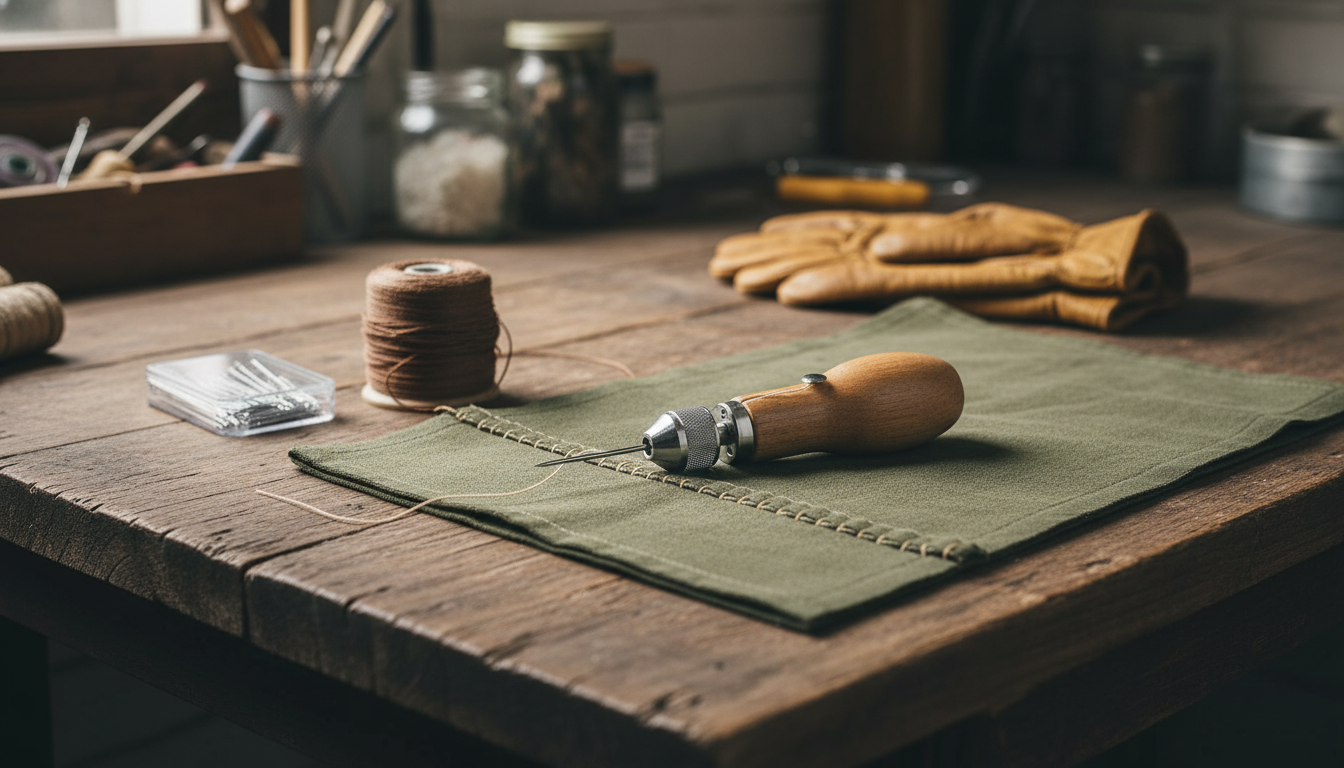
- Needles: carry the thread through pre-punched holes (or through fabric after you open a path with an awl). For dense materials, a stronger needle resists bending and stays easier to control.
- Waxed thread: grips fibers, resists fraying, and helps lock stitches in place under tension. The wax also reduces drag through tight holes so stitches seat neatly.
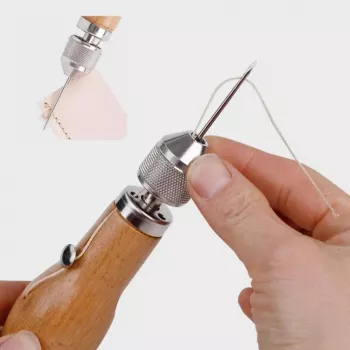
- Awl: creates or widens holes for cleaner passes through leather/canvas—especially on thick stacks where forcing a needle can distort the seam line.
- Heavy-duty stitcher concept: built for tougher materials where a standard household sewing kit tends to bend, snap, or leave uneven stitch spacing.
For a quick, portable setup that covers most heavy repairs, see the Leather Hand Sewing Kit with Needles, Waxed Thread & Awl – Heavy Duty Stitcher Set for Canvas, Leather, Fabric Repair.
When Hand Stitching Beats a Machine
- Thick or stiff materials that won’t feed evenly under a presser foot, causing short stitches, skipped stitches, or broken thread.
- Repairs on assembled items where the work can’t be laid flat (boots, bags, tubular handles, rolled edges).
- Controlled stitch placement around buckles, D-rings, rivets, snaps, and tight corners.
- Field repairs where portability matters and you want minimal setup and fewer moving parts to maintain.
Many leatherworkers rely on the saddler’s stitch for durability because it forms a strong, balanced seam when done consistently. For background on the method, see Saddler’s stitch (hand sewing method).
Quick Start: Strong Stitches for Leather, Canvas, and Fabric
If you’re new to leathercraft, step-by-step project guidance and best practices can be helpful for spacing, edge prep, and stitch consistency. Reference guides like the Tandy Leathercraft Library are a solid starting point.
Choosing Needles, Thread, and Hole Size for the Job
Material Setup Guide (Practical Pairings)
| Material |
Prep |
Needle & Hole Approach |
Thread Tips |
| Vegetable-tanned leather (medium) |
Mark line, use awl to open holes |
Use sturdy needle; keep holes evenly spaced |
Waxed thread; snug tension to avoid raised loops |
| Thick leather straps (multi-layer) |
Clamp if possible; open holes gradually |
Widen holes with awl before forcing needle through |
Use longer thread run; backstitch at stress points |
| Canvas or duck cloth |
Patch tears first if needed |
Awl can help start holes; avoid ripping fibers |
Waxed thread grips well; avoid over-tightening |
| Webbing/strap repairs |
Align layers and secure with clips |
Pre-open holes to prevent needle deflection |
Stitch box-X or multiple passes for strength |
| Mixed materials (leather + canvas) |
Test hole size on scrap edge |
Aim holes through leather side first for cleaner entry |
Use consistent pull to prevent puckering fabric |
Common Repair Scenarios (With Reliable Stitch Patterns)
Small setup details can make repairs cleaner: clips help hold layers aligned, and a small container keeps needles and thread from wandering off your bench. For tidy storage of small notions, the Striped Ceramic Seasoning Jar with Spoon – Hand-Painted Spice & Salt Container can double as a simple worktable caddy for thread spools, needles, and clips.
Care, Storage, and Safety
Product Option for Heavy-Duty Repairs
If you want a grab-and-go solution for tough materials, the Leather Hand Sewing Kit with Needles, Waxed Thread & Awl – Heavy Duty Stitcher Set for Canvas, Leather, Fabric Repair is a practical fit for quick fixes, reinforcement stitching, and small leathercraft tasks that benefit from strong thread and controlled hole-making.
FAQ
Can waxed thread be used on regular fabric, or is it only for leather?
Waxed thread works well on heavy fabrics like canvas and duck cloth because it grips fibers and resists fraying. On lightweight fabric, it can be too thick and may leave residue, so matching thread weight to the fabric is important.
Do holes need to be pre-punched when sewing leather by hand?
Pre-punching or opening holes with an awl generally improves consistency and reduces the chance of tearing the leather. Some thin leathers can be stitched carefully without pre-punched holes, but results vary and the seam is harder to keep uniform.
How do stitches stay secure without a sewing machine’s lockstitch?
Security comes from consistent tension, finishing methods like backstitching, and tying off cleanly on the inside of the repair. Waxed thread also helps by gripping within the holes so stitches are less likely to loosen over time.
Recommended for you









Leave a comment