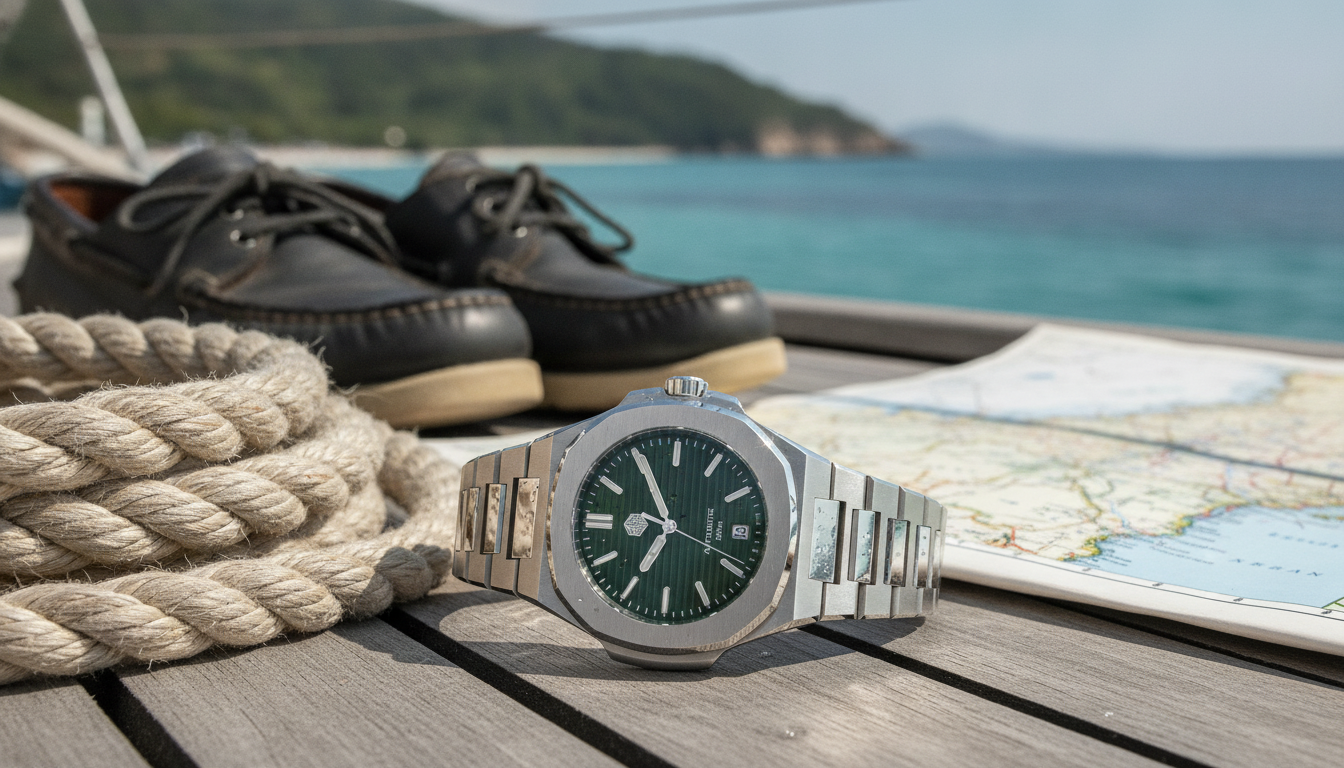
A well-built diver watch earns its place by staying legible, resilient, and comfortable from desk to dive boat. This 43mm automatic diver pairs a sapphire crystal with 200M water resistance and a bold tool-watch presence, balancing everyday wearability with features that matter when conditions get rough. If you want one sport watch that can handle travel days, pool time, and weekend shoreline runs without feeling delicate, this is the kind of spec sheet that tends to deliver.
What Makes a Diver Watch Feel Truly Premium
“Premium” in a diver watch usually shows up in the parts you interact with most: the crystal you look through, the case geometry you feel on the wrist, and the confidence you have around water. A luxury-leaning diver typically focuses on the following:
- Crystal strength and clarity: Sapphire is prized for its scratch resistance and long-term transparency, helping the dial stay crisp years into ownership.
- Water resistance that fits real use: A 200-meter rating supports swimming, snorkeling, and recreational diving when the crown and seals are used correctly.
- Case proportions and ergonomics: 43mm can wear sporty without feeling oversized when the lugs sit flat and the strap/bracelet balances the head.
- Movement choice: Automatic calibers appeal to anyone who enjoys mechanical timekeeping and battery-free day-to-day durability.
- Finishing details: Crisp edges, consistent brushing/polishing, and firm bezel/crown action are common hallmarks of an elevated diver.
For a deeper look at what defines a true diver standard, ISO’s overview of the diver-watch specification is a helpful reference: ISO 6425:2018 — Divers’ watches.
Quick Specs Snapshot
This is the short list that most buyers check first—size, crystal, water rating, movement, and availability.
- Case size: 43mm profile designed for sport readability.
- Crystal: Sapphire for improved scratch resistance compared to mineral glass.
- Water resistance: 200M rating aimed at active water use.
- Movement: Automatic (mechanical) for battery-free operation.
- Availability: In stock.
At-a-Glance Details
| Detail |
What to Know |
| Model |
Luxury 43mm Automatic Diver Watch |
| Case Size |
43mm |
| Crystal |
Sapphire crystal |
| Water Resistance |
200M |
| Movement |
Automatic mechanical |
| Price |
$504.17 USD |
| Stock Status |
In stock |
Sapphire Crystal: Why It Matters for Daily Wear
Sapphire is one of those upgrades that quietly improves the entire ownership experience. When a watch is worn as an everyday tool, the crystal takes constant “micro-abuse”: desks, jacket zippers, door frames, gym lockers, and travel gear. Sapphire’s key advantage is that it helps prevent the light web of scratches that can make a dial look hazy over time.
- Scratch resistance: Keeps the viewing window clearer through routine contact.
- Long-term legibility: Better clarity helps when you’re checking the time in harsh sun or reflective water-side light.
- Better-looking aging: A sapphire-equipped diver often keeps its “new watch” visual sharpness longer.
- Care note: Sapphire resists scratches extremely well, but sharp impacts can still chip an edge—so it’s wise to avoid direct knocks on corners.
200M Water Resistance: Practical Guidance
A 200-meter rating is a popular sweet spot: robust enough for active water use, while still very wearable day to day. The most important factor is not just the rating on paper, but how consistently the crown and seals are respected.
- Use cases: Commonly chosen for swimming, snorkeling, and recreational diving conditions.
- Before water exposure: Confirm the crown is fully secured (pushed down or screwed down, depending on design).
- After saltwater: Rinse with fresh water and dry with a soft cloth to help preserve seals and exterior components.
- Underwater operation: Avoid using the crown or pushers underwater unless the watch is explicitly designed for it.
- Keep it dependable: Periodic water-resistance testing helps confirm performance as gaskets naturally age.
For additional context on how manufacturers describe water-resistance ratings (and how real life can differ), see: Hodinkee: Understanding Water Resistance. And for general dive safety guidance beyond the watch itself, NOAA is a reliable starting point: NOAA: Scuba Diving Safety.
Automatic Movement: What Ownership Feels Like
An automatic diver brings a specific kind of satisfaction: it’s powered by motion, not by a battery schedule. Wear it regularly and it tends to stay ready, with the cadence of daily life doing the work.
- Battery-free operation: The movement winds through wrist motion.
- Easy routine if you rotate watches: If it sits for a few days, a brief wind and time/date set gets it back in sync.
- Long-term reliability: Mechanical movements benefit from periodic servicing to maintain performance and help protect water integrity.
- Accuracy realities: Daily variation can be influenced by magnetism, temperature swings, and how consistently it’s worn.
Fit and Presence: Wearing a 43mm Diver
Care Tips for Longevity
Where This Watch Fits in a Collection
In-Stock Picks to Pair with Your Everyday Setup
FAQ
Is 200M water resistance enough for diving?
A 200M rating is commonly used for swimming, snorkeling, and many recreational diving scenarios, assuming the crown is fully secured and the seals are in good condition. For ongoing confidence, periodic pressure testing is the best way to confirm the rating remains dependable over time.
Does sapphire crystal make a watch unbreakable?
No—sapphire is highly scratch-resistant, but it can still chip or crack from sharp impacts, especially on edges. Treat it like a tough tool surface rather than something indestructible.
How should an automatic diver watch be maintained?
Rinse it after saltwater or pool use, keep it away from strong magnets, and follow a simple wear-or-wind routine if it’s not worn daily. Over the long term, occasional servicing and water-resistance checks help maintain performance and seal integrity.
Recommended for you










Leave a comment