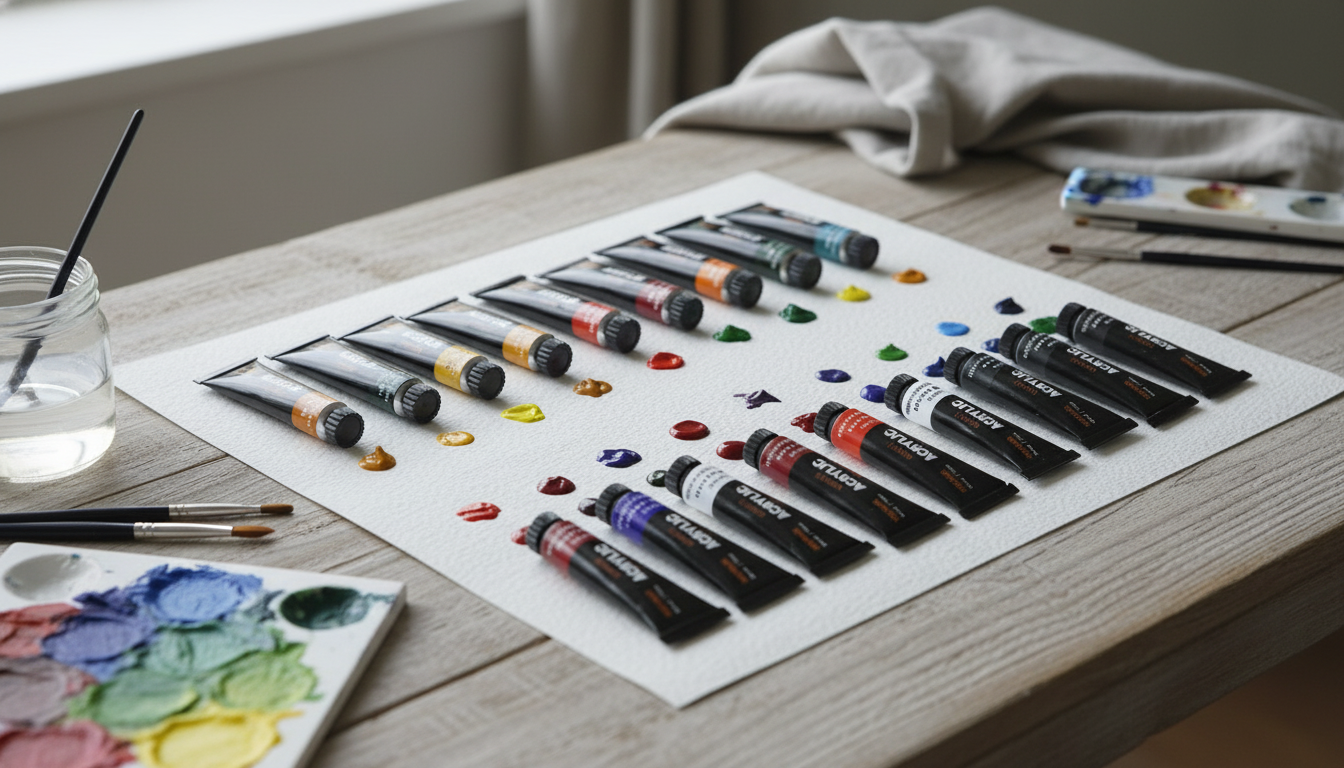
A compact acrylic paint set with a wide color range makes it easier to paint bold studies, detailed mini projects, and quick practice sessions without hauling large bottles. This 24-color set in 12ml tubes is sized for controlled dispensing, simple color mixing, and tidy storage—useful for beginners learning fundamentals and experienced artists who want a portable palette for sketchbooks, crafts, and small canvases.
What’s Included and What It’s Best For
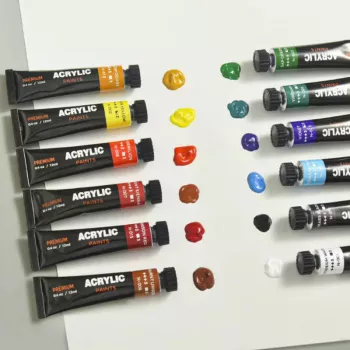
This set centers on variety without bulk: 24 individual colors packaged in 12ml tubes, giving you plenty of ready-to-use hues plus enough flexibility to mix your own in-between tones.
- 24 individual colors in 12ml tubes for a broad starter palette and flexible mixing.
- Small-tube format supports measured use: squeeze out a little at a time to reduce waste and keep colors cleaner.
- Works well for practice swatches, color studies, quick gifts, classroom activities, and craft painting where many hues are needed in small amounts.
- Ideal project sizes: mini canvases, paper pads made for acrylic, wood slices, decorative objects, and small panels.
At-a-Glance: Set Overview
| Feature |
Details |
Why it matters |
| Color count |
24 colors |
More ready-to-use hues; fewer mixes needed for basic projects |
| Tube size |
12ml each |
Portability and better control when dispensing paint |
| Best use |
Studies, crafts, small paintings |
Matches the amount of paint to smaller surfaces and practice work |
| Mixing approach |
Primary + secondary + accents |
Lets beginners practice mixing while still having convenient premixed colors |
Color Range Planning: How to Use 24 Colors Without Getting Muddy
Having lots of colors is a gift—until the palette turns into a gray-brown mystery. A little organization keeps mixes crisp and makes your brightest tubes go further.
- Group colors into families before starting: warm vs. cool, earth tones, and darks to reduce accidental overmixing on the palette.
- Limit mixing to 2–3 colors at a time; add white gradually to create tints without over-lightening too fast.
- Reserve one area of the palette for neutrals (grays/browns) so they don’t contaminate bright hues.
- When a mix turns dull, reset by remixing from clean base colors rather than “fixing” the muddy pile with extra pigments.
For quick harmony, pick a “mini palette” from the set for each piece—say 5 to 7 tubes plus white—then mix everything else from those choices. This prevents accidental rainbow mixing and keeps the painting’s color story consistent.
Opacity, Coverage, and Layering Techniques
Acrylics shine when used in layers: you can block in fast, adjust shapes, and build clean edges as you go. With 12ml tubes, it’s especially helpful to rely on thin, efficient coats rather than heavy squeezing and thick application.
- Start with thin underlayers: lightly diluted paint or a dry-brush pass can block in shapes without heavy texture.
- Build opacity with multiple thin coats rather than one thick coat to reduce streaks and improve edge control.
- For smooth gradients, work in overlapping bands while paint is still workable; soften transitions with a slightly damp (not wet) brush.
- Use white to boost opacity, but consider mixing with a lighter version of the hue to keep saturation (e.g., lighten red with a touch of yellow plus white instead of only white).
If you’re painting small objects or mini canvases, layering also helps with control: a thin base coat gives later details something even to sit on, so fine lines and highlights look sharper.
Surface Prep for Cleaner Results
Acrylic paint is versatile, but the surface matters. Prepping correctly improves adhesion, reduces patchiness, and helps bright colors stay bright.
- Paper: choose heavier paper intended for acrylic or mixed media to reduce warping; tape edges for crisp borders.
- Canvas/panels: a primed surface helps paint sit evenly; if absorbent, add an extra layer of gesso to improve coverage.
- Wood/crafts: lightly sand and wipe dust; prime for brighter color and better adhesion on raw wood.
- Avoid overly glossy plastic surfaces unless properly prepped; paint adhesion is more reliable on porous or primed materials.
For deeper reading on how acrylic behaves across surfaces and layers, see guidance from Golden Artist Colors — Acrylic Basics and practical tips from Royal Talens — Acrylic Paint Information and Tips.
Practical Ways to Make 12ml Tubes Last Longer
Small tubes are perfect for controlled painting, but they reward good habits. A little workflow discipline can stretch the set across many projects.
Quick Project Ideas for a 24-Color Set
Care, Storage, and Finishing
Product Options Available Now
FAQ
How many small paintings can 24 tubes of 12ml acrylic paint cover?
It often covers several mini canvases or many study sheets, especially if you paint in thin layers and focus on small-to-medium areas. Heavy backgrounds, thick texture, and large solid blocks of color will use tubes faster than detail work and glazing.
Can acrylic paint from small tubes be used on wood and canvas?
Yes. For wood, sanding and priming improves adhesion and keeps colors from looking dull; for canvas or panels, working on a primed surface helps paint spread evenly and reduces patchy absorption.
What’s the easiest way to keep acrylic paint from drying out while working?
Dispense small amounts at a time, keep tubes capped whenever possible, and lightly mist the palette if paint starts to skin over. For longer sessions, a stay-wet palette can dramatically reduce wasted paint.
Recommended for you












Leave a comment