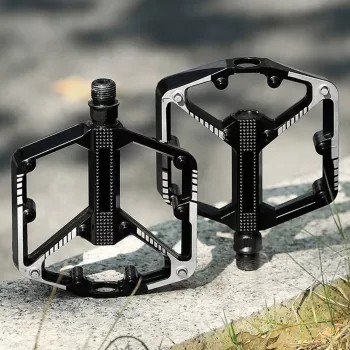
Wide platform pedals with a grippy surface can improve foot stability, confidence in rough sections, and comfort on longer rides. This aluminum alloy set uses DU bushings (bearing sleeves) to support smooth rotation, paired with a broad body and anti-slip traction for MTB and road use where consistent foot placement matters.
What These Pedals Are Built For
Flat pedals are all about reliable contact: when your shoes stay planted, your pedal stroke feels steadier and your body stays more relaxed—especially on chattery trails or stop-and-go city streets. A wider platform helps distribute pressure across more of the sole, which can feel more comfortable than narrow pedals that concentrate load under the arch or forefoot.
- Wide platform support for better shoe contact and reduced pressure hotspots
- Anti-slip traction to help keep feet planted on climbs, sprints, and rough terrain
- DU bearing/bushing-style support aimed at smooth spin with practical durability
- Alloy pedal body designed to balance strength with everyday weight considerations
- Suitable for riders who prefer flat/platform pedals over clipless systems
Key Features That Affect Ride Feel
Two pedals can look similar yet ride very differently. The details that most riders notice first are platform shape, grip, and how “tight” the spindle feels when you spin the pedal by hand.
- Platform width: a larger standing area can feel more stable with skate-style, MTB, or touring shoes.
- Grip elements: anti-slip pins/texture help prevent foot migration when pedaling hard or riding over chatter.
- Body material: aluminum alloy typically resists flex and holds up well to repeated impacts.
- Edge shape and clearance: a slimmer profile can reduce pedal strikes, while squared edges can offer more usable contact area.
- Spindle feel: smooth rotation and low play improve efficiency and reduce annoying wobble over time.
If you’ve ever had a foot slide forward mid-sprint or bounce off position on a rocky descent, you already know why traction and platform support matter. Grippy flats also make it easier to “reset” your foot quickly—handy on MTB lines where you may dab or reposition often.
DU Bearings Explained (And Why They Matter)
DU bushings are sleeve-style bearing materials designed to reduce friction between the spindle and the pedal body. Instead of relying solely on small ball bearings, the pedal rotates on a bushing surface intended to be smooth under load and tolerant of everyday riding conditions.
- DU bushings are sleeve-style bearing materials designed to reduce friction between the spindle and the pedal body.
- A well-fitted bushing can feel smooth under load and can be less finicky than some tiny cartridge-bearing stacks.
- Best performance depends on sealing, lubrication, and keeping grit/water out of the pedal body.
- Periodic inspection helps: check for side-to-side play, grinding feel, or squeaks that suggest cleaning or service is needed.
Quick comparison: common platform pedal support types
| Support type |
Typical feel |
Maintenance tendency |
Good fit for |
| DU bushing (sleeve) |
Smooth under load; consistent when clean |
Occasional clean/grease; depends on sealing |
Daily riding, mixed weather, value-focused builds |
| Cartridge bearings |
Very smooth; often “fast” free spin |
May need replacement when worn; sealing varies |
High mileage, riders who want easy swaps |
| Cup-and-cone |
Smooth when adjusted correctly |
Needs adjustment; more hands-on |
Service-minded riders, traditional designs |
MTB vs Road Use: Getting the Most from Wide Flats
Wide, grippy flats are versatile, but the benefits show up in different ways depending on where you ride.
- MTB: wider flats help with quick foot repositioning on technical sections and add confidence on descents.
- Road/fitness: flats can be comfortable for commuting and casual rides; grippy pedals reduce slip during accelerations.
- Shoe choice matters: flat-soled shoes typically maximize contact and traction compared with soft running shoes.
- Wet conditions: traction helps, but mud and water still reduce grip—clean the pedal surface and soles when needed.
For riders coming from basic OEM pedals, the most noticeable change is usually the “locked-in” feeling from a wider stance underfoot. Even without clips, strong traction can make seated climbing feel more consistent because your foot isn’t subtly creeping into a less efficient spot.
Fit and Compatibility Checklist
For installation basics and removal tips, Park Tool’s guide is a reliable reference: Park Tool — Pedal Installation and Removal. For deeper notes on threads and compatibility, Sheldon Brown’s pedal page is also helpful: Sheldon Brown — Pedals.
Installation and Care (Simple Routine)
Who These Pedals Suit Best
Product Details and Buying Option
More in-stock picks
FAQ
Do DU bearing pedals require regular maintenance?
Most riders only need periodic cleaning plus occasional lubrication, especially after wet or dusty rides. If you notice side-to-side play, squeaks, or a rough/grinding feel when spinning the pedal, it’s time to inspect and service the internals.
Are wide flat pedals good for road bikes?
Yes—wide flats work well for commuting and fitness riding, particularly with flat-soled shoes for stable contact. Some riders still prefer clipless for maximum pedaling efficiency, but flats are easier for frequent stops and casual rides.
How can pedal grip be improved in wet conditions?
Clean mud and film off the pedal surface and your shoe soles, since buildup reduces traction fast. Flat-soled shoes typically grip best, and worn pins/texture should be replaced or refreshed when possible—while still riding cautiously on slick surfaces.
Recommended for you











Leave a comment