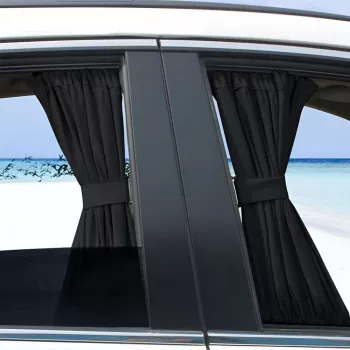
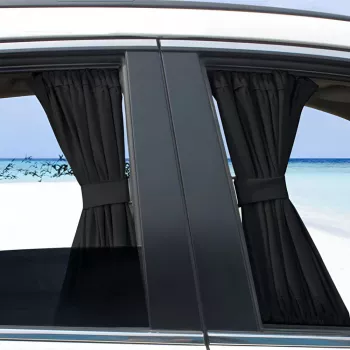
Universal adjustable car window curtains add instant privacy, reduce glare, and help keep the cabin cooler—useful for commuting, road trips, rideshare driving, or parking for a quick rest. The adjustable design is meant to fit a range of vehicle window sizes while staying easy to open, close, and remove.
What These Curtains Help With Day to Day
- Privacy when parked or in busy areas: Limits visibility into the cabin for passengers, bags, and valuables.
- Glare reduction: Softens harsh sunlight during morning/afternoon drives (especially helpful for rear-seat passengers).
- Comfort in heat: Blocks part of direct sun to reduce how quickly seats and armrests heat up.
- Better rest on the go: Creates a darker rear cabin for naps on long trips or during breaks.
- Kid-friendly rides: Reduces sun in the back seat without needing permanent tinting.
For hot-weather safety reminders—especially when stopping for gas, meals, or quick errands—see guidance on heat buildup from AAA. Even when curtains help with shade, they’re not a substitute for safe parking choices and never leaving children or pets unattended.
Universal Fit: How Adjustable Curtains Typically Cover More Vehicles
- Designed for flexibility: Adjustable rails/rods or expandable widths help cover different window spans across sedans, SUVs, and some vans.
- Best placement: Commonly used on rear side windows; front windows may be restricted by local laws and driver-visibility needs.
- Measure first: Note window width at the widest point and the vertical coverage needed for privacy (top edge to lower trim).
- Check clearance: Ensure the curtain does not interfere with window cranks, door handles, seatbelt routing, or airbag zones.
- Consider door frame shape: Strongly curved window frames may leave small gaps at corners; positioning and overlap can help.
Visibility and safety considerations matter most for the driver’s view. For general safety guidance related to vehicle equipment and visibility, consult resources from NHTSA and follow state/local rules.
Installation and Setup (Quick Routine That Avoids Common Mistakes)
- Clean mounting surfaces: Wipe dust/oil from the window frame or glass so attachments hold reliably.
- Dry-fit first: Expand/adjust to approximate width before fully securing to reduce strain on clips/suction points.
- Align for coverage: Center the curtain so it closes evenly and doesn’t bunch at one end.
- Test window operation: Raise/lower the window (if applicable) to confirm nothing binds or pulls loose.
- Do a visibility check: From the driver seat, confirm mirrors and sightlines remain clear and legal.
A quick extra step that helps: after installation, close the door gently once or twice and re-check tension. Door seals and trim can shift a curtain slightly, especially on the first fit.
When to Use Them: Practical Scenarios
- Family road trips: Reduce sun exposure and keep kids more comfortable during long stretches.
- Rideshare and taxi use: Adds a sense of privacy for passengers and helps keep the rear cabin cooler.
- Car camping or rest breaks: Helps darken the cabin for naps; pair with a windshield sunshade for better coverage.
- Urban parking: Limits visibility to reduce temptation for theft and keeps belongings less obvious.
- Pet travel: Reduces direct sun on pet carriers in the back seat.
If you’re using curtains during long summer drives, pairing shade with smart routing and breaks can reduce overall exposure. For broader everyday sun/UV awareness, the Skin Cancer Foundation offers practical guidance on protection and cumulative exposure.
Care, Cleaning, and Storage
- Shake out dust regularly: Prevents fabric from looking dull and reduces allergens.
- Spot clean first: Use mild soap and water on small stains; avoid harsh solvents that can weaken fabric or adhesives.
- Air dry fully: Moisture trapped during storage can cause odor or mildew.
- Store flat or loosely rolled: Tight folds can crease fabric and stress adjustable parts.
- Inspect attachment points: Replace worn suction cups/clips if grip weakens to prevent sudden drop while driving.
Safety and Visibility Notes
Quick Comparison: Curtains vs. Other Window-Shading Options
Options at a glance
| Option |
Privacy |
Adjustable coverage |
Best use |
| Adjustable curtains |
High |
High |
Rest breaks, privacy, flexible shade |
| Mesh/cling sunshade |
Low–Medium |
Medium |
Everyday glare reduction for passengers |
| Window tint film |
Medium |
Low |
Always-on sun control (within legal limits) |
| Magnetic shade |
Medium |
Medium |
Quick install on compatible frames |
If you want privacy and shade without permanent modification, Universal Adjustable Car Window Curtains offer a simple, budget-friendly way to cover rear side windows on many vehicles. The adjustable design aims to fit a variety of window widths, making it a practical option for commuters, rideshare drivers, and families who rotate between vehicles.
For trips where you’re also packing personal-care essentials, a compact organizer can help keep the cabin tidy. The Hair Dryer Stand with Vertical Storage Rack can be useful at home for staging travel items (tools, cords, grooming products) so they’re easy to grab before a long drive.
FAQ
Will adjustable car window curtains fit any vehicle?
They’re made to fit many cars, but not every window shape and trim layout. Measure your window’s width and desired height coverage, then confirm the mounting method works with your door frame and glass.
Can car window curtains be used while driving?
They can be used on rear windows for passenger comfort as long as they don’t block required visibility. Keep the driver’s sightlines and mirrors clear and follow local rules on window coverings.
Do curtains replace window tint?
Not exactly—curtains are removable and provide stronger privacy on demand, while tint is permanent and provides consistent glare reduction. Many drivers use both, depending on comfort needs and legal limits.
Recommended for you









Leave a comment