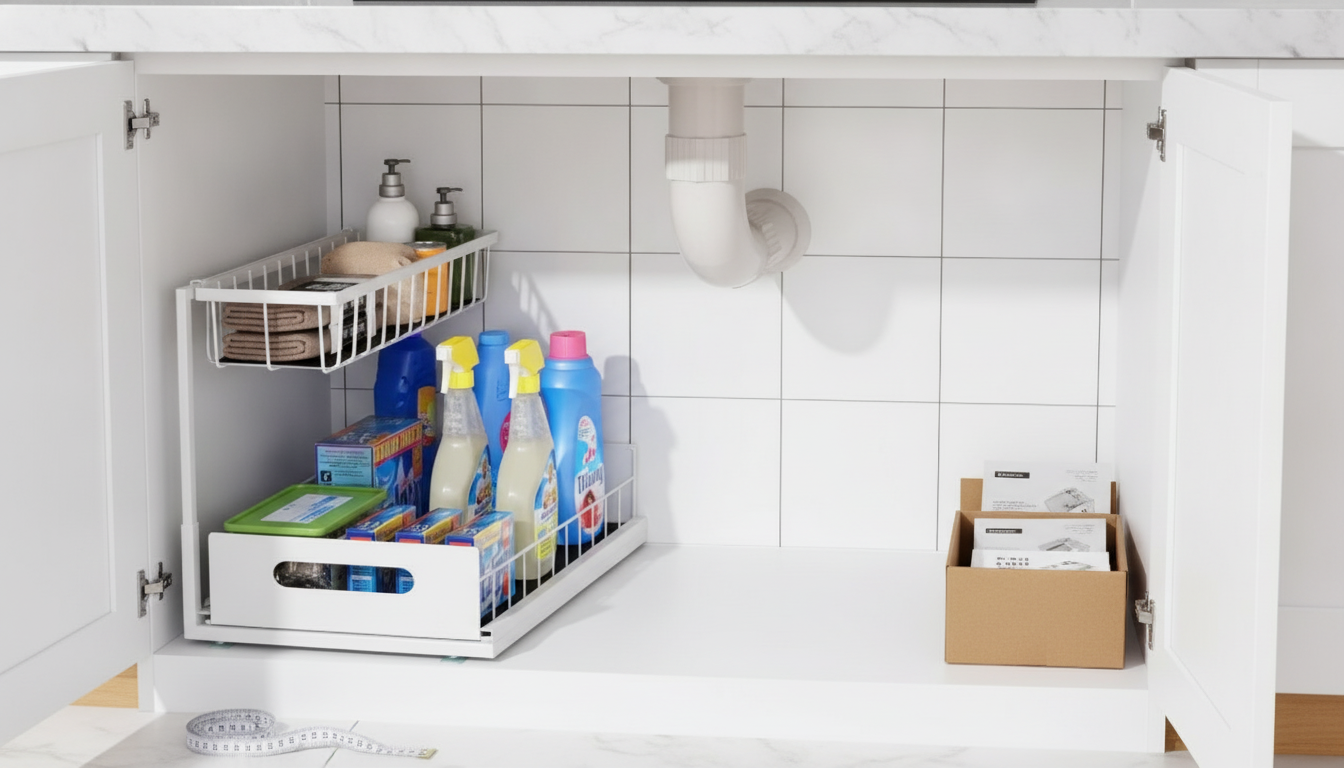
A two-tier sliding organizer turns the awkward space under a sink into easy-to-reach storage for cleaners, sponges, trash bags, and backup toiletries. The right fit comes down to cabinet width, plumbing placement, shelf clearance, and how smoothly the drawers glide once they’re actually loaded with real-life supplies.
Why under-sink storage gets messy so fast
Under-sink cabinets are a perfect storm: limited footprint, awkward obstructions, and products that don’t store neatly when stacked. A little disorder quickly turns into a hard-to-clean pile.
- Pipes and disposals steal space and block standard bins from sitting flat or sliding in.
- Tall bottles tip and leak when they’re crammed together on the cabinet floor.
- Hard-to-reach corners create “mystery inventory,” which leads to duplicates, half-used refills, and expired products.
- Moisture and spills are common, so wipeable, easy-clean materials matter more here than in most cabinets.
For safe storage and disposal of certain household chemicals, it’s worth reviewing guidance from the EPA on household hazardous waste.
What a 2-tier sliding organizer improves
A two-tier pull-out design adds structure without demanding a full cabinet remodel. Instead of stacking, you’re creating “zones” that stay visible and accessible.
- Two levels reduce visual clutter by separating daily-use items from backups.
- Pull-out drawers eliminate the deep-cabinet shuffle so items behind plumbing lines are reachable.
- Categories finally stick (cleaning, dishwashing, personal care), because each tier can serve a specific purpose.
- Restocking gets faster and forgotten bottles are less likely to expire in the back.
Fit and clearance checklist before buying
Most under-sink frustrations come from buying first and measuring later. A quick set of measurements helps avoid drawers that bump the door or frames that fight the plumbing.
- Measure interior cabinet width, depth, and height (inside the door frame, not the countertop).
- Map the plumbing footprint: where the P-trap, disposal, and supply lines sit relative to the cabinet floor.
- Check door swing and any center stile that could block a pull-out drawer.
- Confirm the cabinet floor is level; drawers glide best when the base sits flat.
- Decide what must fit: tall spray bottles, paper goods, dish pods, or toiletries.
Quick measuring guide for under-sink organizers
| Measure |
How to measure |
Why it matters |
| Interior width |
Side wall to side wall at the narrowest point |
Determines if the frame fits without rubbing |
| Interior depth |
Back wall to cabinet face/frame |
Prevents the organizer from hitting the door |
| Usable height |
Floor to the lowest obstruction (pipes/disposal/counter supports) |
Ensures both tiers clear and drawers can open |
| Plumbing offset |
Distance from left/right wall to the center of the P-trap |
Helps decide whether an adjustable layout is needed |
Key features that matter day to day
Two-tier sliding organizers can look similar at a glance. The difference shows up after a few weeks of pulling drawers in and out with heavy refills and damp bottles.
- Smooth slide rails: drawers should pull out without jerking, even when loaded.
- Stability: a rigid frame reduces wobble when one drawer is fully extended.
- Drainage and easy cleaning: wipeable surfaces help with leaks and drips.
- Tier spacing: enough vertical clearance for tall bottles on the bottom tier.
- Stops/guards: rails or edges help keep bottles from tipping out when you slide quickly.
For everyday handling and storage habits, the American Cleaning Institute’s cleaning product safety guidance is a smart reference, especially if children are in the home.
How to set it up for the most usable space
Even the best organizer won’t feel “bigger” if it’s packed with duplicates. A simple setup routine makes the two tiers do real work.
- Sort and purge first: dispose of empties, combine half-used duplicates (when appropriate), and wipe sticky bottles.
- Group by task: dishwashing, surface cleaning, trash bags, pest control, personal care.
- Put heavy items low: large refills and detergents on the bottom tier for stability.
- Keep daily-use items up front: sponges, sprays, and dish pods on the top tier where they’re easiest to grab.
- Add simple labels or small bins: it prevents “migration” when multiple people share the cabinet.
Where a 2-tier sliding organizer works best (and where it doesn’t)
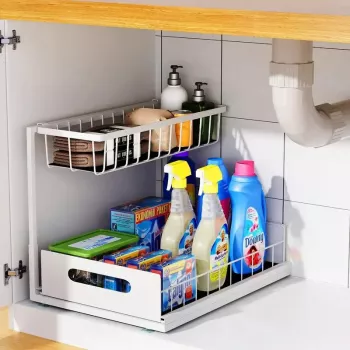
If the daily annoyance is reaching past pipes to find a specific bottle (or discovering three of the same product), the Under Sink 2-Tier Sliding Cabinet Organizer is a straightforward upgrade. Two accessible sliding tiers help separate everyday supplies from backups, keeping everything more visible and easier to restock.
At-a-glance details
More helpful home picks (in stock)
Care and maintenance for longer life
FAQ
Will a 2-tier sliding organizer fit around plumbing under a sink?
It can, but fit depends on your cabinet measurements and where the P-trap and supply lines sit. Measure interior width, depth, and usable height, then note the plumbing offset so the drawers and frame don’t collide with pipes.
How much weight can a sliding under-sink organizer hold?
Capacity varies by model and slide-rail design. Keep heavier refills on the bottom tier, balance weight across the drawer, and don’t force the pull-out if it starts to feel strained.
What’s the best way to organize cleaning supplies on two tiers?
Use the bottom tier for heavy or tall items like detergent and refills, and the top tier for daily-use items like sprays and sponges. Group by task and limit backups so the cabinet stays easy to scan at a glance.
Recommended for you












Leave a comment