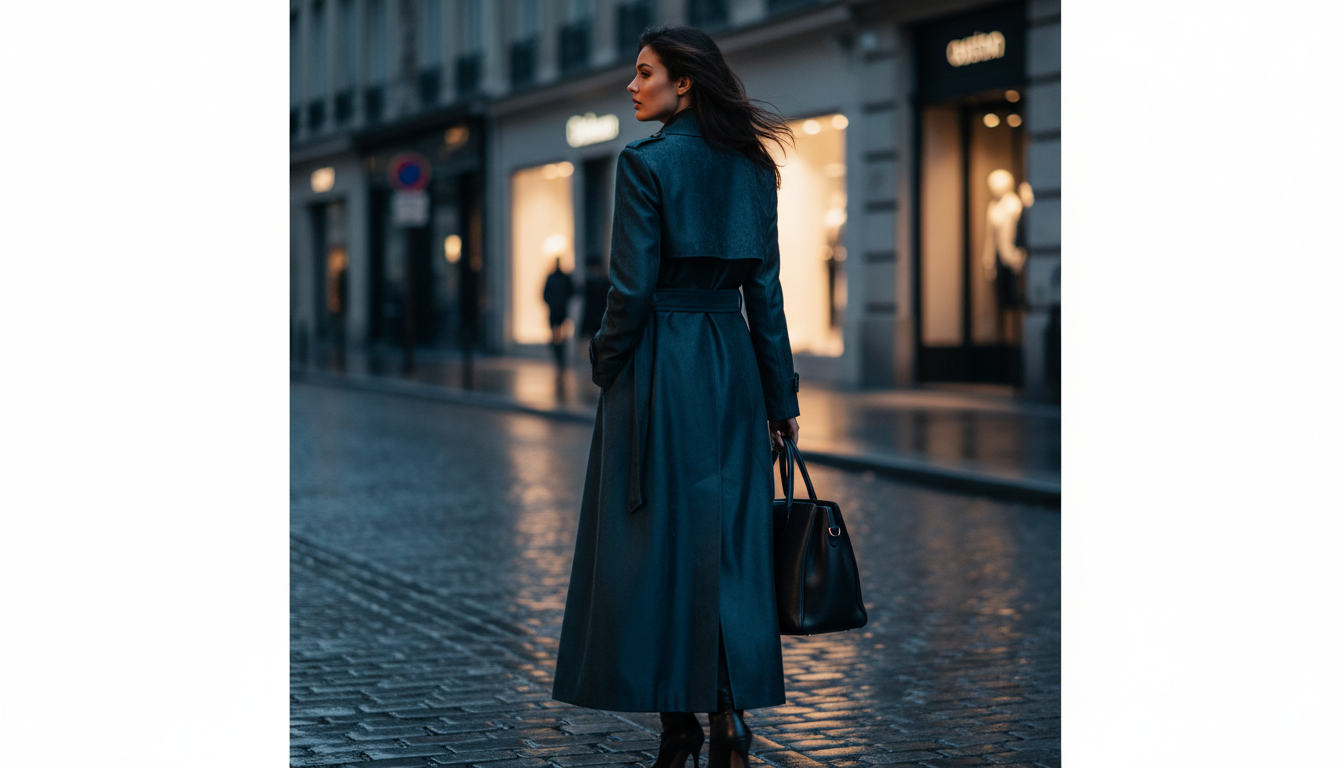
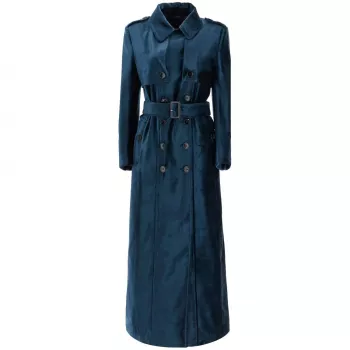
A velvet long coat with a double-breasted front is designed to make outerwear feel as intentional as the rest of an evening look. This piece leans into a formal silhouette, rich texture, and structured layering—suited to cold-weather events, dress codes that call for polish, and wardrobes built around statement tailoring.
Velvet’s character comes alive under low light, where the surface shifts between deep tone and subtle sheen. Paired with a long, tailored line and a symmetrical double-breasted closure, the result reads more “arrived” than merely “covered.” For background on velvet’s construction and why the pile behaves the way it does, see Encyclopaedia Britannica’s overview of velvet.
What Sets This Coat Apart
- Velvet texture brings depth and light-catching sheen that reads elevated under evening lighting.
- Double-breasted closure creates a structured, symmetrical front and a traditionally dressier stance than single-breasted styles.
- Long length adds coverage and a dramatic line that pairs naturally with tailoring and formal footwear.
- Best suited to occasions where outerwear is part of the outfit rather than an afterthought.
At-a-Glance Details
Brand and model name align with the product title. Pricing and availability can change, so confirm current details on the product page before checkout. Since velvet is pile-based, it benefits from mindful handling to avoid crushing and to keep the surface looking uniform.
Product snapshot
Fit and Silhouette Notes
- Double-breasted coats typically fit cleaner when shoulder width is correct; avoid sizing up so far that the lapels pull or the chest looks boxy.
- Long coats should break cleanly when walking—check sleeve length and overall length relative to footwear and hemline preferences.
- Layering matters: if worn over a suit jacket or blazer, ensure there is enough room through the upper arm and chest without distorting the front closure.
- If between sizes, prioritize shoulder fit first; tailoring can refine waist and sleeve length more easily than shoulder width.
A quick mirror check helps: fasten the coat as intended and look at the lapel line. If the chest looks strained or the front edge flares away from the body, the fit is likely too tight through the torso or upper arm. If the closure sits flat but the shoulders droop past the natural shoulder point, the coat can lose its sharpness—especially noticeable with velvet, which highlights shape under light.
How to Style It for Different Settings
- Black-tie or formal events: wear over a tuxedo or dark suit; keep accessories minimal so the velvet stays the focal point.
- Evening dinners and gallery nights: pair with a fine knit, tailored trousers, and sleek leather shoes or boots.
- Modern contrast: combine velvet outerwear with matte textures (wool trousers, crisp cotton shirt) to keep the look balanced.
- Color discipline: keep the palette tight—two to three tones—so the coat reads intentional and not costume-like.
Because velvet already carries visual richness, the best supporting cast is often quiet: smooth leather, crisp shirting, and refined knits. If the coat is the headline, let hardware and jewelry stay understated and keep patterns minimal. For brand reference and design context, visit TOM FORD’s official website.
Comfort and Cold-Weather Practicality
- Velvet outerwear tends to read warmer visually; real warmth depends on lining, insulation, and how much room exists for layering.
- A long hem helps reduce drafts, especially when standing outdoors between venues.
- Consider weather: velvet can show water spots and pressure marks; plan a backup option for heavy rain or slush conditions.
For cold nights that involve short outdoor stretches—arriving at a venue, waiting for a car, walking between dinner and a show—a long velvet coat often performs well when paired with smart layers. If conditions are wet, however, velvet’s pile can show tracking and spotting, so a weather-appropriate alternative is worth having on standby.
Care, Storage, and Travel Tips for Velvet
Velvet care is as much about prevention as it is about cleaning. Before doing anything beyond light steaming or blotting, check the garment’s care instructions. The Federal Trade Commission’s Care Labeling Rule explains why care labels matter and what they’re meant to communicate to consumers.
Authenticity and Quality Checks When It Arrives
Ordering and Return Considerations
Also In Stock
FAQ
How should a double-breasted long coat fit?
Start with the shoulders: they should align cleanly without drooping or pinching. When buttoned, the front should lie flat with no pulling across the chest, and you should be able to move comfortably through the upper arms—especially if wearing it over a blazer. Sleeve and hem length should look balanced with your usual footwear and formal pant break.
Can velvet outerwear be worn in rain or snow?
Light moisture may be manageable if you blot and air-dry promptly, but velvet can show water spotting and changes in the pile. Heavy rain, wet snow, and slush are risky because they can leave marks that are difficult to correct. In harsh conditions, switching to a weather-appropriate coat is the safer option.
How is velvet best stored to prevent crushing?
Use a wide, supportive hanger and leave space around the coat so the pile isn’t pressed flat. Avoid tight garment bags and long-term folding, which can set creases and distort the nap. If the surface looks compressed, gentle steaming from a safe distance can help lift the pile without pressing it.
Recommended for you









Leave a comment