A soft silicone band can make an Apple Watch feel lighter, more secure, and easier to wear all day—whether it’s for workouts, commuting, or sleeping. The right strap balances gentle skin contact, stable sensor readings, and a fit that doesn’t pinch when your wrist warms up or swells during activity. Below are the practical details that matter most, plus simple habits that help a silicone band stay clean, comfortable, and long-lasting.
Why Soft Silicone Works for Daily Wear
Silicone is popular for good reasons: it’s flexible, water-friendly, and easy to maintain. When you’re wearing a watch for hours at a time, small comfort issues add up—especially around the wrist bone and the underside of the watch where moisture can linger.
- Gentle feel on skin: Soft-touch silicone is often less irritating than harder plastics during long wear.
- Sweat-ready material: Silicone resists moisture absorption, making it a practical choice for exercise and warm climates.
- Easy cleanup: A quick rinse can remove sweat, sunscreen, and dust that can build up through the day.
- Flexible comfort: A pliable band can reduce pressure points compared with rigid straps, especially when typing or sleeping.
- Simple style: A minimal look pairs well with casual outfits, athletic wear, and work attire.
For Apple’s general guidance on safe wear and cleaning habits, see Apple Support: Wear and care for your Apple Watch.
Fit and Sizing: Getting the Right Match for Your Watch Case
The most comfortable band can still feel “off” if the case size or fit is wrong. Start with the watch case size (shown on the back of the watch or in the Watch app), then choose a band that’s designed for that size family—commonly grouped as 38/40/41mm and 42/44/45/49mm. If you’re unsure which model you have, Apple Support: Identify your Apple Watch is a reliable reference.
- Confirm the watch case size first: Check the engraving on the back or the Watch app.
- Match the size family: Use the band size group that fits your case (38/40/41mm or 42/44/45/49mm).
- Aim for a secure fit: Snug enough to prevent sliding, but not so tight that it leaves deep marks or causes tingling.
- Allow room for swelling: Wrists can expand during workouts, heat, or long days—an adjustable closure helps.
- If between sizes: Slightly looser for all-day wear; slightly snugger for workouts (without restricting circulation).
Quick Fit Checklist for a Comfortable Silicone Band
| What to check |
Good sign |
Adjustment tip |
| Sensor contact |
Heart-rate readings are steady and consistent |
Move the watch higher on the wrist during workouts (about a finger-width above the wrist bone) |
| Skin comfort |
No burning, itching, or persistent redness |
Loosen by one notch and clean both skin and band after sweaty wear |
| Stability |
Watch face stays centered, minimal rotation |
Tighten one notch for training; loosen afterward |
| Closure security |
Clasp/peg stays seated without popping out |
Check that the strap is fully pressed into the slot and sits flush |
| Breathability habits |
Wrist feels dry most of the day |
Rotate wrists/clean strap regularly; remove occasionally to let skin breathe |
Comfort Details That Matter (Especially for Sensitive Skin)
Two silicone bands can feel very different on the wrist. If you’ve ever had a strap that felt sticky, pulled at arm hair, or left a hot spot after typing, these small design cues usually explain why.
- Soft edges: Look for smooth, rounded edges that won’t rub during wrist movement.
- Finish and texture: A matte or soft-touch finish can reduce sticking when skin is damp; very glossy silicone may feel tackier.
- Weight and thickness: Thinner straps often feel lighter; thicker straps can feel sturdier but may trap more heat.
- Ventilation: Perforations or channels can help reduce sweat buildup during sports.
- Allergy awareness: If irritation occurs, clean the band more frequently, dry thoroughly, and consider alternating materials to give skin a break.
Durability and Everyday Performance
A daily band gets exposed to more than just sweat—think hand sanitizer, sunscreen, saltwater, desk dust, and the friction of taking it on and off. Silicone holds up well, but the way you wear it affects how long it stays looking and feeling “new.”
Care and Cleaning Routine
A Simple Option for Everyday Use
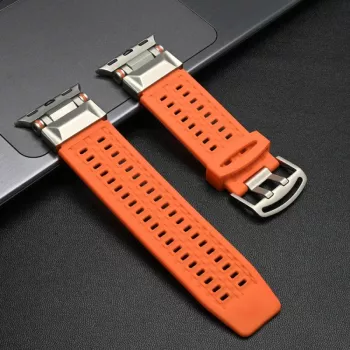
If you want a dependable, low-fuss strap for daily wear, a soft silicone option is hard to beat. The Soft Silicone Band for Apple Watch is a practical choice for daily comfort, workouts, and easy maintenance—ideal as a go-to band for commuting, gym sessions, and casual wear.
It can also help to keep a second strap in rotation so one band can fully dry after training. For a streamlined morning routine and easy storage at home, small organizers can make a difference too, like the Hair Dryer Stand with Vertical Storage Rack. If you prefer to keep grooming tools ready for travel or the gym bag, the Professional Electric Hair Clipper and Beard Trimmer Set for Men – Cordless Grooming Kit is another everyday-use add-on worth considering.
FAQ
How tight should a silicone Apple Watch band be?
It should feel snug and stable without restricting circulation. A good fit keeps sensor contact consistent but doesn’t cause numbness, tingling, or deep marks; many people tighten slightly for workouts and loosen afterward.
Can a silicone band cause skin irritation?
Yes, usually due to trapped moisture, sweat/soap residue buildup, or friction from a too-tight fit. Cleaning and drying the band, loosening by one notch, and taking occasional breaks often resolves the problem.
How do you clean a silicone Apple Watch band safely?
Wash it with mild soap and water, rinse thoroughly, and let it dry completely before wearing again. Avoid harsh chemicals, and clean after sweaty sessions to prevent residue and odor.
Recommended for you









Leave a comment