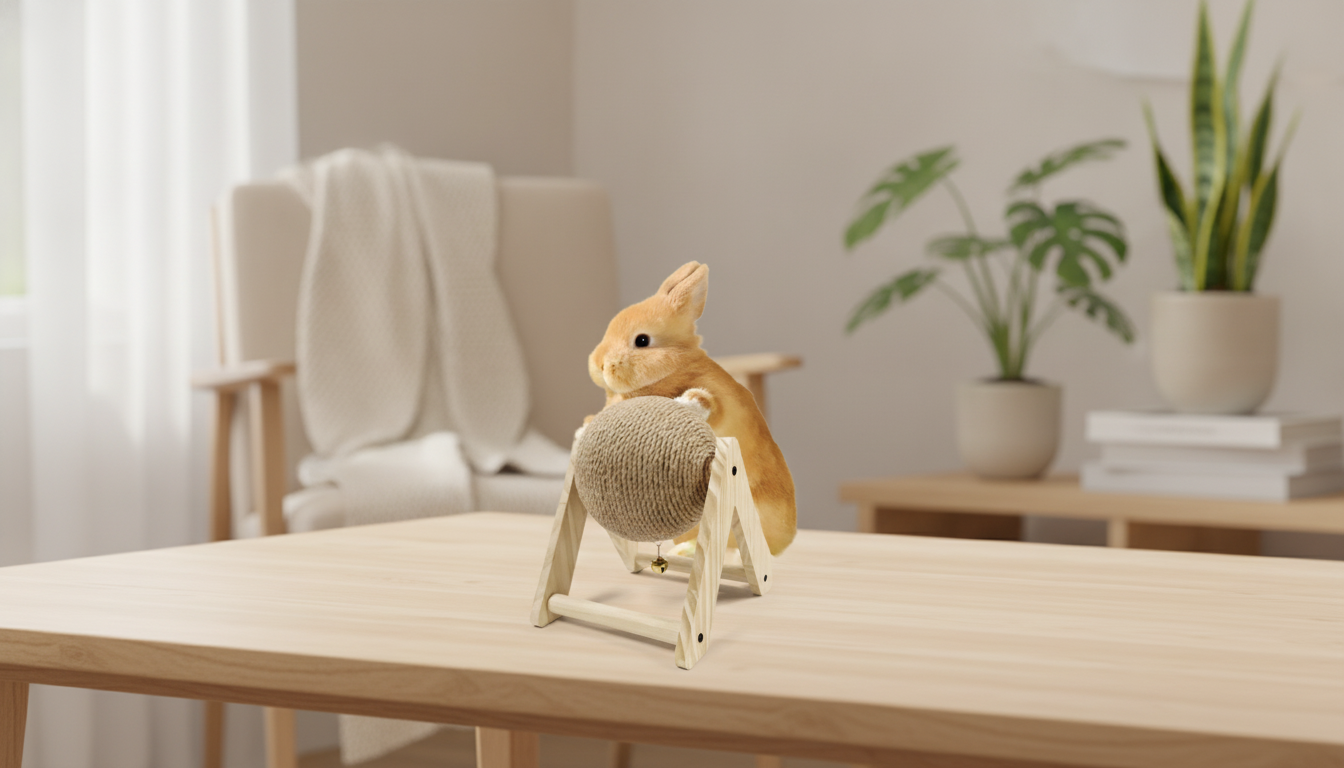
A simple, durable plaything can do a lot for indoor pets: give cats an approved scratching surface, keep rabbits busy with safe texture and movement, and reduce boredom-related habits. A sisal-wrapped ball adds satisfying resistance for claws and teeth, while the rolling shape encourages chasing, batting, nudging, and solo play—especially helpful in apartments or smaller homes where pets need enrichment without extra clutter.
What this toy is designed to do
- Provides a dedicated, rough-textured surface that cats can scratch instead of rugs and furniture edges.
- Encourages active play through rolling and unpredictable movement when batted or nudged.
- Supports enrichment for rabbits with a natural fiber texture to explore, mouth, and push.
- Helps channel energy into an acceptable activity, which can be useful for indoor or apartment pets.
- Works as a low-noise toy option compared with hard plastic balls on floors.
For many pets, the biggest benefit is that this style of toy combines two needs—scratch/chew texture and movement—so it can hold attention longer than a stationary scratch pad or a smooth ball alone.
Why sisal works for scratching and enrichment
- Sisal fiber is naturally coarse, creating the friction cats seek when they rake and pull with their claws.
- The texture can be more engaging than smooth fabrics because it offers resistance and a “grab” feel.
- A ball format adds variety versus flat scratchers by combining scratching with movement and pouncing.
- Natural-fiber toys can be a good fit for pets that prefer plant-based textures over slick synthetic materials.
- The goal is to offer an approved outlet; placement and consistency matter as much as the toy itself.
Quick suitability guide
| Pet type |
Common play style |
What to watch for |
Best use |
| Cats (kittens to adults) |
Bat, chase, scratch, bunny-kick |
Loose strands; supervise heavy chewers |
Daily play bursts and scratch redirection |
| Rabbits |
Nudge, roll, investigate, light gnawing |
Over-gnawing and fiber ingestion; remove if fraying heavily |
Enrichment time and exploration |
| Multi-pet homes |
Shared play in turns |
Resource guarding; keep duplicates if needed |
Rotate between rooms to reduce conflict |
For additional enrichment ideas, the ASPCA’s cat enrichment guidance offers practical ways to keep indoor cats engaged. For rabbits, the House Rabbit Society is a strong resource for play, housing, and safe toy habits.
Key features to look for in a scratching ball
- Tight, even wrapping: reduces early fraying and helps the ball stay interesting longer.
- Pet-safe construction: no sharp hardware, brittle plastics, or easily detachable small parts.
- Stable size and weight: heavy enough to roll predictably but not so hard it becomes a collision hazard.
- Surface grip: sisal should feel textured rather than overly smooth or waxy.
- Easy-to-clean surroundings: using a washable mat underneath can simplify cleanup in high-use areas.
Texture is the main “feature” pets notice. If the surface feels too slick, many cats will ignore it in favor of carpet or upholstery that offers better claw catch.
How to introduce it to cats and rabbits
- Start in a calm area with good footing (a rug or mat helps prevent slipping and encourages engagement).
- For cats: place it near an existing scratch target or favorite nap spot, then reward attention with treats or praise.
- For rabbits: offer during supervised free-roam time; let the rabbit approach and investigate without forcing interaction.
- Add novelty: rotate the toy between rooms or store it for a day or two to keep interest high.
- If either pet is hesitant, try pairing the toy with a familiar scent (rub gently on bedding) rather than using strong attractants.
Short sessions work best. A few minutes of focused play (especially for cats) can be more effective than leaving every toy out all day, which can make them “disappear” into the background.
Placement ideas that protect the home
Consistency matters more than perfection: keeping the toy visible and within a few steps of the “problem zone” often improves adoption. General pet-care basics (including supervision and safe environments) are also covered well by the AVMA.
Care, safety checks, and when to replace
Product details at a glance
For a compact, natural-fiber option that supports both play and scratch redirection, see the Natural Sisal Scratching Ball Toy for Cats & Rabbits. It’s designed to be easy to move between rooms, making it simple to place where your pets already like to scratch or explore.
Purchase information
More in-stock picks
FAQ
Is sisal safe for cats and rabbits?
Sisal is commonly used for cat scratching surfaces and can be a good natural texture for enrichment. Any toy can become unsafe if it frays heavily or if a pet starts ingesting fibers, so routine inspections and supervision for strong chewers are important.
How can scratching be redirected from furniture to a scratching toy?
Place the toy directly where scratching happens, reward your pet for using it, and offer multiple scratching surfaces (vertical and horizontal). Avoid punishment, keep the approach consistent, and make the approved option the easiest one to reach.
How long should a sisal scratching toy last?
Longevity varies with intensity of play—some last weeks with heavy daily use, while others last months with lighter use and rotation. Replace when wrapping loosens, long strands develop, or the surface becomes bald and smooth.
Recommended for you









Leave a comment