Baby Musical Piano Toy with Lights & Sounds: A Playful First Keyboard for Toddlers
A light-up piano toy can turn everyday playtime into early music discovery—pressing keys, hearing cause-and-effect sounds, and exploring rhythm. This guide covers what this baby musical piano offers, how it supports toddler development, and simple ways to use it for engaging, low-pressure learning. For more guidance, see 10 Best Toddler Pianos Reviewed in Detail [Jun. 2025] – Prime Sound.
What Makes This Piano Toy So Engaging
For many toddlers, the magic is immediate: touch a key and something happens. That simple loop—action, response, repeat—can hold attention longer than toys that require more setup. For further reading, see Musical Keyboard for Kids – Support Microphone Record Playback.
- Light-up feedback helps toddlers connect actions (pressing keys) with results (sounds and lights).
- Multiple sounds encourage experimentation—toddlers naturally repeat patterns they enjoy.
- Keyboard-style play builds early familiarity with musical notes and sequencing without needing formal instruction.
- Portable, quick-start fun fits short attention spans and frequent “reset” moments between activities.
Developmental Benefits During Everyday Play
Music toys can be more than entertainment. When used in small, playful bursts, a toddler keyboard can support skills that show up across daily life—like coordination, listening, and turn-taking.
- Fine motor practice: pressing keys, switching modes, and tapping patterns supports finger strength and hand control.
- Cause-and-effect learning: immediate sound/light response reinforces early problem-solving.
- Auditory development: exposure to different tones helps toddlers notice pitch changes and sound variety.
- Early rhythm and timing: simple repetition games (tap-tap-pause) introduce tempo and turn-taking.
- Language support: naming sounds, colors, and actions (“press,” “loud,” “soft,” “fast,” “slow”) builds vocabulary.
For a broader view of age-appropriate skills, the CDC’s milestone resources can help caregivers spot emerging abilities and choose play that matches a child’s stage: CDC: Important Milestones (Learn the Signs. Act Early.).
Quick Ways to Play (1–5 Minutes at a Time)
Short play “snacks” often work better than long sessions—especially with lights and sounds. Try one micro-game, stop while it’s still fun, and come back later.
- Copycat keys: press two keys slowly; have the toddler try to repeat the same two-key pattern.
- Color/Light hunt: ask the toddler to press keys until a certain light appears, then celebrate the “find.”
- Loud/soft practice: demonstrate gentle taps versus firmer presses; label the difference.
- Stop-and-go music: play a short burst, pause, then start again—use it as a self-control game.
- Story soundtracks: add “rain,” “marching,” or “sleepy” sounds while reading a short book together.
Safety and Comfort Checks for Toddler Music Toys
- Volume comfort: choose lower-volume options when possible and keep play sessions short if sounds are loud. For practical guidance on protecting little ears, see American Academy of Pediatrics: How to Keep Kids Safe Around Noise.
- Sturdy build: ensure the toy sits stable on the floor or table to reduce frustration and tipping.
- Smooth edges: avoid sharp corners and check for securely attached parts.
- Battery access: confirm the battery compartment is secured to prevent easy opening by small hands.
- Supervised play: especially for younger toddlers who mouth toys or toss objects.
Feature Snapshot: How Toddlers Use Each Part
Toddler-Friendly Play Ideas by Feature
| Feature |
What It Teaches |
Simple Game |
Ideal Moment |
| Light-up keys |
Cause-and-effect, attention |
Press until the light changes, then clap |
Transition time (before meals, after diaper change) |
| Multiple sounds |
Curiosity, listening skills |
Pick a “favorite sound” and repeat it together |
Independent play bursts |
| Keyboard layout |
Sequencing, patterning |
Two-key copycat, then three-key copycat |
Bonding play with a caregiver |
| Rhythm-like tapping |
Timing, turn-taking |
Adult taps a pattern; toddler answers |
Playdates or sibling turn-taking practice |
Who This Toy Is Great For
Product Details and Where to Get It
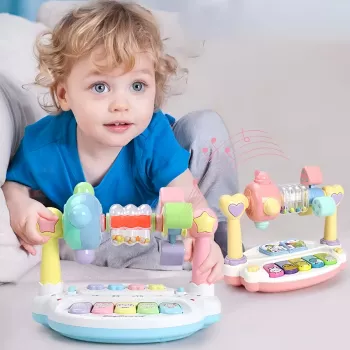
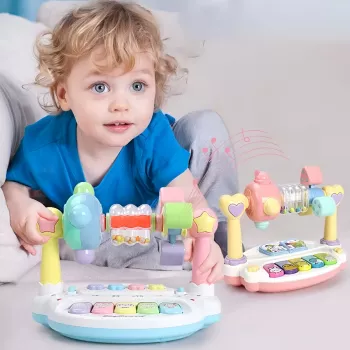
If you’re looking for a first keyboard-style toy that encourages tapping, listening, and simple pattern play, the Baby Musical Piano Toy with Lights & Sounds – Educational Keyboard for Toddlers is a playful option for everyday use at home or on the go. It can also pair nicely with calm-down routines when used in short, predictable play bursts (for example, the same two-key pattern each time before a book).
Simple Pairing Ideas for a Well-Rounded Play Basket
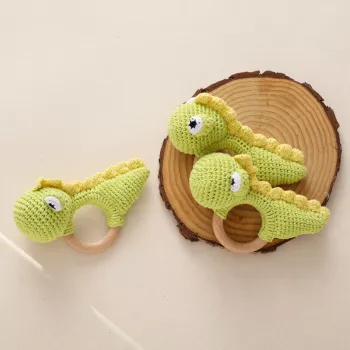
- Add a tactile item for balance: a teether or rattle complements music play with hands-on exploration. Try the Adorable Crochet Dinosaur Baby Rattle and Wooden Teether as a gentle follow-up activity after a noisy music burst.
- Rotate toys rather than offering everything at once: put the keyboard away for a while, then bring it back later so it feels “new” again.
- Create a mini routine: 2 minutes music, 2 minutes teether/rattle, then a short book—repeat once if your toddler is still enjoying it.
FAQ
What age is a light-up piano toy best for?
Many families introduce light-up music toys in late babyhood with close supervision, and they stay especially engaging through the toddler years as kids begin copying patterns and using the toy for pretend “performances.” Always supervise younger children who may mouth toys or explore parts with their hands.
How can a toddler use a piano toy for learning, not just noise?
Use tiny games that add a goal: copycat two-key patterns, loud/soft taps, stop-and-go “freeze” moments, a color/light hunt, or turn-taking where you play a pattern and your toddler answers. Keeping it playful and brief helps the toy feel structured without becoming a chore.
How long should music-toy play sessions be?
A few minutes at a time is often plenty, especially with bright lights and repeated sounds. Watch for signs of overstimulation (covering ears, throwing the toy, fussiness) and take breaks so the toy stays fun.
Recommended for you







Leave a comment