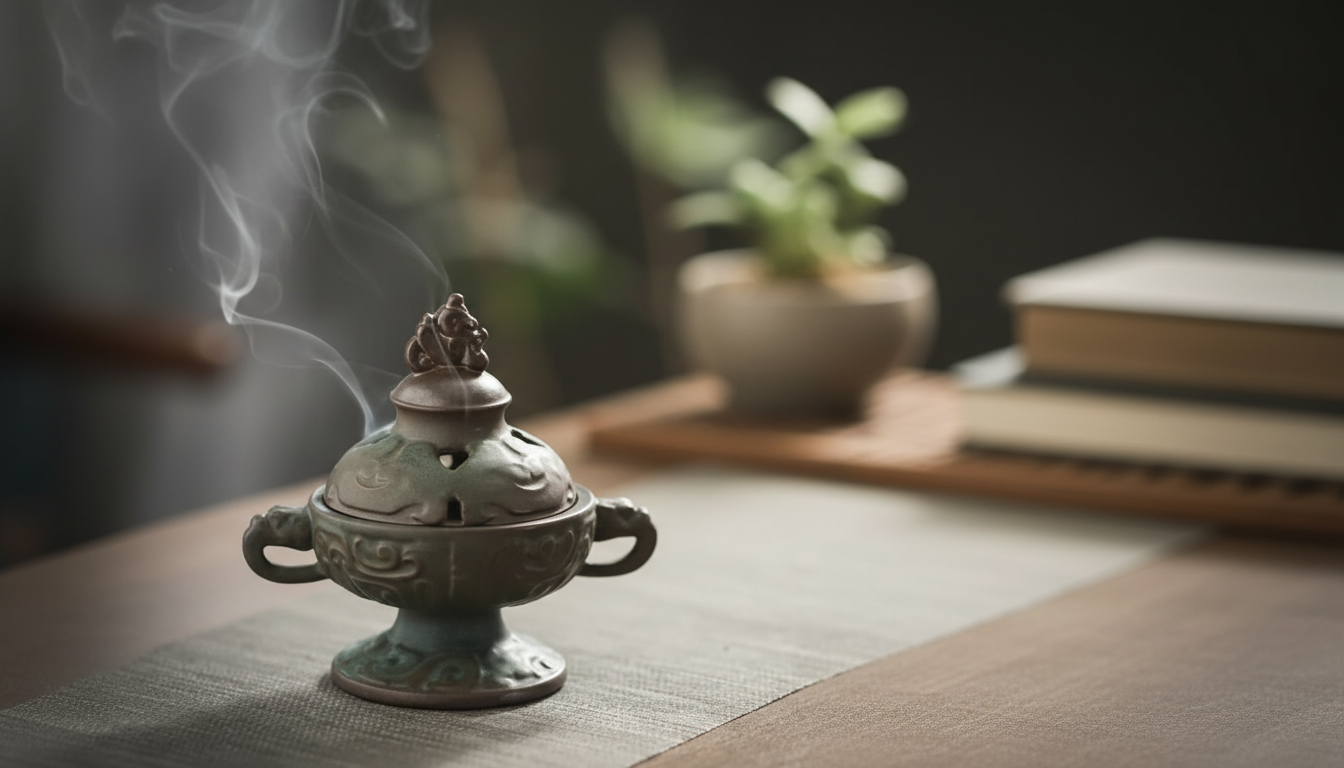
A lidded ceramic incense burner creates a more contained, soothing experience—helping guide smoke upward, keeping ash in one place, and adding a sculptural accent to a room. This piece is designed for everyday use, from short reset moments to longer meditation or evening wind-down routines. If you want incense to feel calmer (and cleanup to feel simpler), a ceramic burner with a fitted lid is one of the easiest upgrades to make.
Why a Lidded Ceramic Burner Changes the Experience
Incense has a way of changing the feel of a space in minutes, but the container you burn it in affects everything from smoke movement to how often you wipe down your table.
- More controlled smoke flow: A lid can help diffuse and direct incense smoke rather than letting it scatter immediately into random air currents. The result often feels softer and more intentional, especially in smaller rooms.
- Tidier surfaces: The lid-and-bowl form helps catch falling ash and reduces the chance of “ash confetti” on shelves, nightstands, and bathroom counters.
- Visual calm: Ceramic finishes tend to feel grounded and quiet (instead of reflective like polished metal), fitting minimalist, wabi-sabi, and modern interiors.
- A sense of ritual: Opening, lighting, and closing becomes a small routine—an easy cue to slow down, even when the day is busy.
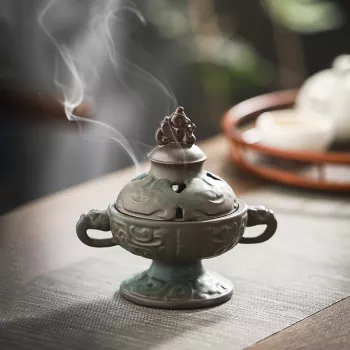
For a simple, daily-ready option, consider the Elegant Ceramic Incense Burner with Lid, designed to keep the burn contained while staying display-worthy between uses.
Design Details That Matter in Daily Use
Small construction details make a big difference when you’re lighting incense often. These are the practical features that tend to matter most after the novelty wears off.
- Lid fit and airflow: A well-seated lid should still allow oxygen flow. Look for openings or a lid shape that supports consistent burning without smothering the ember.
- Bowl depth: Deeper basins typically contain ash better and give more room for heat to dissipate away from surfaces.
- Base stability: A wider footprint helps prevent tipping—especially important on trays, side tables, and narrower bathroom ledges.
- Finish and glazing: Smooth glazed interiors are usually easier to wipe clean; textured exteriors add character but may require gentler cleaning to keep residue from settling in crevices.
If your goal is a calmer setup, it helps to treat the burner like a small “station”: stable, uncluttered, and easy to access when you want a quick reset.
How to Use It With Sticks, Cones, or Resin (Without the Mess)
A lidded ceramic burner can handle multiple incense styles, but the cleanest results come from matching the method to the design and allowing proper airflow.
- For incense sticks: Place the stick securely in the holder area (or into a small bed of sand/ash if the design allows), keeping the burning tip away from the lid. If the stick leans, adjust it so ash falls into the basin instead of onto the rim.
- For cones: Set the cone on a heat-safe surface inside the burner so ash drops straight down. Cones need steady oxygen; if the flame keeps going out, open the lid slightly or reposition the cone away from the tightest area.
- For resin: Use a dedicated charcoal disk and a layer of sand/ash beneath it to protect the ceramic from intense point heat. Resin burns hotter and can be more smoky, so keeping the lid slightly ajar often improves airflow and reduces sooting.
- Let it cool: Allow a full cool-down before moving or emptying. Ceramic can retain heat longer than it looks like it should.
For longer sessions indoors, basic air-quality habits make the experience more comfortable. The U.S. Environmental Protection Agency’s guidance on indoor air quality is a helpful reference point for keeping your space feeling fresh.
Placement, Ventilation, and Safe Burning Habits
Even with a lid, incense is still an open heat source. A few setup habits keep things safer and prevent common issues like tipping, scorching, or smoke collecting where you don’t want it.
Quick Safety and Setup Checklist
| Check |
Why it helps |
Good habit |
| Stable, nonflammable surface |
Reduces tip-over and heat transfer |
Use a ceramic/stone tray underneath |
| Clear space overhead |
Prevents heat/smoke contact with fabrics |
Keep 12–24 inches of clearance |
| Gentle ventilation |
Improves indoor air quality |
Crack a window during longer burns |
| Cool before handling |
Avoids burns and surface damage |
Wait 10–15 minutes after extinguishing |
For broader home fire-prevention habits around flame and embers, the National Fire Protection Association’s fire safety tips provide a solid baseline that also applies to incense use.
Cleaning and Care for Ceramic Burners
Styling Ideas: Making It Part of the Room, Not Just a Tool
For a cohesive, grounded look, pair your incense setup with warm ambient lighting like the Handmade Wabi Sabi Rattan Pendant Light, especially in a reading nook or bedroom where softer light enhances an evening wind-down routine.
A Simple Gift That Feels Considered
FAQ
Can a lidded incense burner be used with both sticks and cones?
Often yes, but it depends on the internal holder design and whether there’s enough airflow under the lid. Sticks need a secure holder (or sand/ash for stability), while cones need a flat, heat-safe spot so ash drops straight down without being smothered.
How do you clean an incense burner without damaging the ceramic finish?
Let the burner cool completely, empty the ash, and wipe it with a soft, slightly damp cloth. For residue, use mild dish soap and water, avoiding abrasives and avoiding rinsing a hot piece to prevent thermal shock.
Does burning incense indoors require ventilation?
Gentle ventilation is a good practice to reduce lingering smoke and particulates, especially during longer sessions. Cracking a window or running an exhaust fan helps keep the air feeling comfortable.
Recommended for you








Leave a comment