Wireless Multi-Platform Controller with Hall Effect Joysticks: Smooth Aim, Broad Compatibility, Simple Setup
A good controller should feel consistent across sessions, pair quickly, and keep aim steady over time. Hall effect joysticks are designed to reduce drift and maintain accurate input, while multi-platform support makes it easier to switch between devices without retraining muscle memory. Below is what to expect from hall sensing in daily play, what to confirm before pairing, and a simple setup routine that helps you start with clean, reliable inputs. For more guidance, see State Controller’s Office – CA.gov.
What Hall Effect Joysticks Change in Everyday Play
Traditional analog sticks often use contact-based potentiometers that can wear down and develop noisy readings over months of use. Hall effect joysticks use magnetic sensing instead, which helps maintain more consistent stick readings over time and lowers the odds of “scratchy” feeling input. For further reading, see Controller will not connect through usb-c cable.
Where this is most noticeable is in games that demand steady micro-movement: fine aim adjustments in shooters, smooth camera pans in open-world titles, and gentle steering corrections in racing games. The sensing method can help keep the signal stable, but it’s still smart to take advantage of any software calibration tools your controller or platform offers—especially after firmware updates or when switching modes.
Multi-Platform Compatibility: What to Confirm Before Pairing
“Multi-platform” can mean different things depending on whether you connect via Bluetooth, a 2.4G receiver, or USB. Before buying (or before your first pairing), check which platforms work on each connection type and whether the controller has distinct modes for different device families.
Also consider on-screen button prompts. Some games show ABXY prompts, others show PlayStation-style labels, and some titles let you choose a prompt style in settings. If prompts don’t match the controller’s labeling, remapping may be needed for comfort and consistency.
Compatibility checklist (quick confirm)
| Device |
Connection to prioritize |
What to test first |
| Windows PC |
2.4G or USB |
Input recognition + analog trigger range in controller tester |
| Android phone/tablet |
Bluetooth |
Button mapping in-game + deadzone feel |
| iPhone/iPad |
Bluetooth |
Pairing stability + prompt mapping in supported titles |
| Tablet/TV box |
2.4G or Bluetooth |
Range, interference, and wake/reconnect behavior |
If you’re setting up on phones and tablets, it helps to follow current platform guidance for Bluetooth pairing and troubleshooting. Helpful references include the Bluetooth Core Specification, Microsoft’s Bluetooth support for Windows, and Apple’s Bluetooth device connection guides.
Wireless Performance: Latency, Range, and Interference
Wireless feel comes down to latency consistency and connection stability. In many setups, a 2.4G receiver typically delivers lower latency and steadier performance than Bluetooth, especially in environments crowded with Wi‑Fi routers, smart home devices, and nearby gamepads. Bluetooth remains the most convenient choice for mobile devices, but performance can vary depending on the device’s radio, OS behavior, and background interference.
For best results, keep a reasonably clear line-of-sight when practical, and avoid plugging a wireless receiver directly next to noisy ports and cables. A simple fix is using a short USB extension to move the receiver away from USB 3.0 interference sources (like external drives or hubs).
When testing a new connection, skip the “it feels fine” guesswork and do a quick stress check in a fast game: rapid button taps, diagonal stick sweeps (to confirm diagonals register smoothly), and trigger feathering (to check analog ramp). If you notice intermittent drops, try relocating the receiver, switching USB ports, or changing the play area to reduce signal congestion.
Comfort and Control Layout: Fit for Different Hand Sizes and Genres
Even with excellent sensors, comfort still decides whether a controller is enjoyable past the first hour. Grip shape and surface texture affect how relaxed your hands stay, and the back shell contour can determine whether your wrists feel supported or tense.
Setup and Calibration: Getting a Clean Baseline
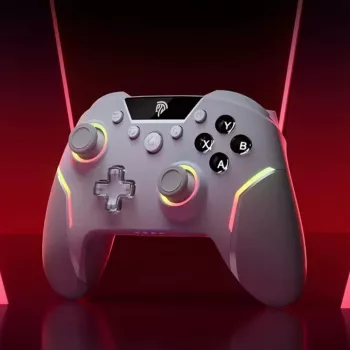
If you want one controller that can bounce between PC and mobile-style devices without constant re-pairing headaches, the Wireless Multi-Platform Gaming Controller with Hall Effect Joysticks is built around that idea: broad device switching, wireless flexibility, and hall effect sticks aimed at steady long-term input.
At-a-glance details
More In-Stock Finds
Care Tips to Keep Sticks and Buttons Feeling New
FAQ
Do hall effect joysticks completely prevent stick drift?
They significantly reduce drift risk caused by wear in contact-based sensors, but they can’t eliminate every drift-like symptom. Debris, mechanical centering changes, and software deadzones or calibration settings can still affect feel, so try recalibrating and checking in-game deadzone settings first.
What connection is better for fast-paced games: Bluetooth or 2.4G?
2.4G is usually the better choice for fast-paced play because it tends to deliver lower latency and steadier performance. Bluetooth is convenient and often fine for casual sessions, but it can vary more by device and environment, so a quick in-game latency/consistency test is worth doing on your setup.
How can pairing be switched between devices without hassles?
Use distinct connection modes if the controller supports them, and keep a consistent routine (disconnect on one device before pairing the next). If Bluetooth conflicts occur, remove the old pairing entry on the device and re-pair cleanly to avoid repeat connection loops.
Recommended for you











Leave a comment