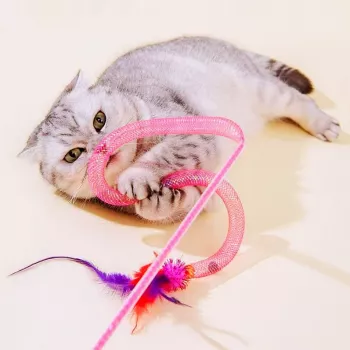
A teaser wand turns everyday play into a focused hunt—chasing, pouncing, and batting that helps burn energy and keep indoor cats mentally engaged. This wand combines a fluttery feather, a jingling bell, and a wool ball to vary the movement and sound, making short daily play sessions feel fresh and rewarding. For more guidance, see Download.
Interactive play is also one of the easiest ways to support healthy feline routines: a predictable “hunt” session can reduce restless nighttime energy, improve confidence, and give cats an appropriate outlet for their instincts. For additional guidance on enrichment, see the American Association of Feline Practitioners’ Feline Environmental Needs Guidelines and the ASPCA’s overview of cat toys and play. For further reading, see Small Pronouncing Dictionary.
What Makes This Teaser Wand So Engaging
Cats don’t just chase motion—they respond to a mix of texture, sound, and unpredictable “prey-like” behavior. This wand’s multi-part lure gives you more ways to keep a session interesting without needing a complicated setup.
- Three-part lure design: feather movement adds flutter, the bell helps grab attention, and the wool ball provides a satisfying texture for batting and brief “grabs.”
- Encourages natural hunting behaviors: stalk → chase → pounce patterns help indoor cats stay active and mentally engaged.
- Redirects energy to the right target: consistent interactive play can help steer attention away from ankles, cords, and furniture edges.
- Flexible for different households: works well for solo human-led play, multi-cat homes (with turn-taking), and quick “energy reset” bursts.
If you’re shopping specifically for a wand toy, you can find the Interactive Cat Teaser Wand with Feather, Bell and Wool Ball Toy in stock now.
Best Times and Ways to Use It
Most cats do best with short, focused sessions that end on a “win.” Keep the pace brisk enough to spark interest, then slow down to finish calmly.
- Aim for 5–15 minutes per session, 1–2 times daily, adjusting for age and fitness (kittens often prefer more frequent bursts).
- Mimic real prey: hide the lure behind a chair, drag it along the floor, then add short “escape” hops to trigger pouncing.
- Allow occasional captures: letting your cat catch it sometimes helps prevent frustration; end with a successful catch and a cooldown.
- Pair play with routine moments: morning before work or evening before meals can support more predictable behavior and better sleep.
Sample Play Patterns
| Pattern |
How to Move the Wand |
Best For |
Session Length |
| Ground Skitter |
Drag in short zigzags with brief pauses |
Shy cats and beginners |
5–8 min |
| Air Flutter |
Lift and flutter near furniture edges |
Jumpers and climbers |
5–10 min |
| Hide-and-Pounce |
Disappear behind objects, then dart out |
High-drive hunters |
8–12 min |
| Slow Stalk |
Creep the lure away while the cat watches |
Older cats and gentle play |
5–7 min |
Safety and Supervision Tips
Wand toys are designed for interactive play, not for unattended chewing or wrestling. A few simple habits keep sessions safer and help the toy last longer.
- Supervise play: use the wand as a human-led tool rather than leaving it out as an unsupervised chew toy.
- Inspect regularly: look for loose feathers, frayed string, or damaged parts; remove the toy if anything becomes a swallowable piece.
- Adjust for mobility needs: keep play low and controlled for kittens or cats with joint sensitivity; avoid high jumps if mobility is limited.
- Store between sessions: keeping it out of reach reduces chewing, tangling, and “self-play” accidents.
Who It’s Great For (and When to Choose a Different Toy)
This style of wand is a strong match for cats who light up at movement and sound, but every cat has preferences. A quick read of your cat’s play style can make sessions smoother and more satisfying.
- Great for: indoor cats needing exercise, playful kittens learning stalking skills, and bored cats that respond to fluttery motion and gentle noise.
- Helpful for timid cats: start with slow, predictable movements at a distance, letting them watch before you invite a chase.
- Consider alternatives if needed: noise-sensitive cats may dislike a bell (if removable or mufflable, that can help), while some cats prefer kicker toys and wrestling over chasing.
- Multi-cat homes: use separate turns to reduce resource guarding and ensure each cat gets a “catch” moment.
Care, Storage, and Keeping Play Fresh
Interactive toys stay exciting when they remain a little unpredictable. Instead of longer sessions, focus on variety and timing.
Product Details and Quick Buying Notes
At-a-Glance
More In-Stock Finds
FAQ
How long should a cat play with a teaser wand each day?
Most cats do well with 5–15 minutes per session, 1–2 times per day. Adjust based on age, health, and energy level, and pause if your cat is panting or getting overstimulated.
Is it safe to leave a feather wand toy out for cats to play with alone?
Supervised play is best, since feathers, strings, or small parts can be chewed off and swallowed, and cords can tangle. Store the wand out of reach between sessions.
Why does a cat lose interest in a wand toy after a few minutes?
Many cats lose interest if the movement becomes predictable or if they never “catch” the toy. Change your movement pattern, allow occasional captures, rotate toys, and end the session with a successful catch.
Recommended for you










Leave a comment