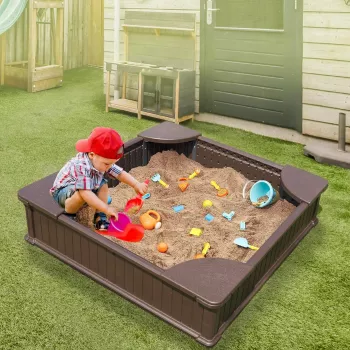
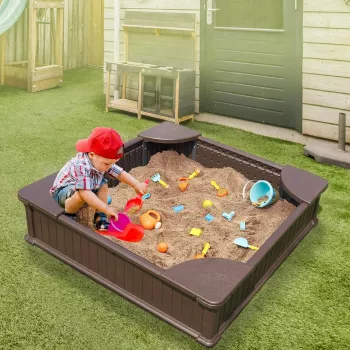
A backyard sandbox can turn everyday outdoor time into imaginative, screen-free play. A model with a fitted cover helps keep debris and critters out, while built-in seats give kids a comfortable spot to dig, pour, and build for longer stretches. If you want a ready-to-go option for outdoor play, see the Outdoor Kids Sandbox with Cover and Seats. For more guidance, see Sand Box With Cover Play Bench Seat Outdoor Canopy ….
Why a covered sandbox with seats works well outdoors
Outdoor play is messy by nature, but a thoughtful sandbox design keeps the mess manageable while making play more inviting. For further reading, see Kids Sandbox with Cover, 46\” Wooden Sand Box w ….
- The cover does real work: It helps reduce leaves, animal intrusion, and rainwater pooling so the sand stays cleaner between play sessions.
- Seats create a natural boundary: A defined play edge gives kids a stable place to sit and can help keep sand inside the box instead of scattered across the yard.
- A dedicated play zone encourages social play: A sandbox becomes a “shared project” space for sensory play, turn-taking, and cooperative building.
- Faster reset after playtime: Toys off the sand, quick rake, cover back on—done.
What to look for in the cover and seating design
Not all covers and seat setups perform the same once wind, rain, and daily use enter the picture. A few design checks can save ongoing frustration.
- Cover fit: Prefer a snug cover that won’t gap in the wind. Look for secure tie-downs, elastic edges, or a weighted design that stays put.
- Drainage approach: Even with a cover, moisture happens. Favor well-draining placement, breathable cover options, or a simple drainage layer beneath the sandbox.
- Seat comfort and safety: Smooth edges, stable attachment, and enough space for multiple kids to sit without tipping or flexing.
- Ease of use: The simpler the cover is to remove and replace, the more consistently it gets used (and the cleaner the sand stays).
Quick buying checklist
| Feature |
Why it matters |
What to confirm before purchase |
| Fitted cover |
Keeps debris and animals out; reduces cleanup |
Cover size matches the sandbox; has secure fastening or stays in place |
| Seat layout |
Comfortable play time and defined edge |
Seats are stable, smooth, and sized for children |
| Material & finish |
Durability outdoors and splinter-free play |
Weather-resistant surface; edges are rounded; hardware is rust-resistant |
| Ground setup |
Drainage and reduced weed growth |
Room for landscape fabric and a drainage layer (pea gravel) if needed |
| Capacity |
Enough room for digging and sharing |
Interior play area suits intended ages and number of kids |
Choosing sand and estimating how much to buy
The sand you choose affects comfort, cleanliness, and how well the sandbox “plays.”
- Choose play sand made for kids: Use bags labeled for children’s sandboxes. Avoid sand from unknown sources that could contain contaminants or sharp particles.
- Aim for a practical digging depth: Several inches is enough for scooping and molding; deeper sand supports tunnels and bigger builds but may require more raking and closer monitoring.
- Plan for top-ups: A little extra on hand is useful after heavy rain, energetic building, or routine refreshing.
- Store spare sand properly: Keep extra bags sealed and dry to prevent clumping and pests.
Best placement in the yard
Where the sandbox sits can matter as much as the sandbox itself. A well-chosen spot supports safer supervision and cleaner sand.
- Prioritize visibility: Place it where there are good sightlines from typical supervising areas like a kitchen window, patio seating, or deck.
- Look for partial shade: Morning sun and afternoon shade often keeps sand cooler during hot hours.
- Avoid low, soggy areas: Stay away from spots where water collects; well-draining ground helps prevent persistent dampness.
- Use a ground barrier: Landscape fabric beneath the sandbox can reduce weeds and discourage burrowing pests.
- Keep distance from hazards: Leave a buffer from grills, fire pits, and thorny landscaping.
Outdoor safety and hygiene habits
A few consistent rules do more than occasional deep-cleaning. For general outdoor safety guidance, see the American Academy of Pediatrics’ tips at HealthyChildren.org.
- Cover it every time: Keeping the cover on when not in use reduces the risk of animal contamination.
- No food in the sandbox: This simple rule helps deter pests and reduces contamination risk.
- Handwashing after play: Make it a routine before snacks and after outdoor play—CDC handwashing guidance is available at cdc.gov.
- Rake and sift: Remove twigs, stones, and debris regularly. Discard sand if it becomes persistently wet, foul-smelling, or visibly contaminated.
- Inspect edges and seats: Check for wear, loosening hardware, or rough spots and address promptly.
Maintenance routine that keeps it inviting
Play ideas that make the most of seats and a lidded setup
Shop related picks
For a backyard play upgrade, start with the Outdoor Kids Sandbox with Cover and Seats. If your sandbox area is near a covered porch or patio, a warm ambient light can make early evening supervision more comfortable—consider the Handmade Wabi Sabi Rattan Pendant Light.
FAQ
How often should sandbox sand be replaced?
For regular use, plan to top up sand as it disperses and refresh or partially replace it seasonally. Replace it immediately if it’s persistently wet, foul-smelling, or shows signs of contamination that can’t be cleaned out by sifting.
Is it okay to leave the sandbox uncovered overnight?
It’s best to keep it covered whenever it’s not in use, including overnight. Consistent cover use is one of the most effective ways to reduce animals, debris, and extra cleanup.
What kind of sand is safest for kids?
Choose bagged play sand labeled for children’s sandboxes, which is designed to be smoother and more consistent. Avoid sand from unknown or construction sources, and reduce dust during setup by working in calm weather and lightly dampening the sand if needed.
Recommended for you








Leave a comment