What “irritated skin” usually looks and feels like
Irritated skin is less about one exact diagnosis and more about a pattern: your skin feels reactive, looks inflamed, and suddenly can’t “tolerate” products that were fine before. Getting calm quickly starts with recognizing the common signals.
Typical sensations
- Stinging or burning (especially right after washing or applying products)
- Tightness, itch, warmth, or tenderness
- A “raw” feeling that makes even water feel uncomfortable
Common visible signs
- Redness, blotchiness, or swelling
- Dry patches, flaking, or a roughened texture
- Small bumps or a rash-like look
- Makeup that suddenly looks patchy or “grabs” onto dry areas
One helpful distinction: irritation often shows up quickly after an exposure (like over-exfoliating or using a strong cleanser), while an allergy can be delayed and may include hives or significant swelling. If you’re unsure, treat it as a barrier issue first and escalate to medical care if symptoms worsen.
Fast relief: a calm-down protocol for the next 24 hours
For the next day, the priority is to reduce inflammation and protect your barrier. That means fewer steps, gentler contact with the skin, and no experimenting.
- Stop all “active” products for now: exfoliating acids (AHA/BHA), retinoids, benzoyl peroxide, strong vitamin C, scrubs, peels, and “tingly” treatments.
- Cleanse gently (or just rinse): use lukewarm water, keep contact time short, skip cleansing brushes and washcloth friction, and pat dry.
- Moisturize immediately: choose a simple, fragrance-free moisturizer with barrier-supporting ingredients like ceramides, glycerin, dimethicone, or petrolatum.
- Seal if needed: apply a thin layer of petrolatum-based ointment on chafed spots to reduce water loss.
- Use a cool compress: 5–10 minutes with a clean, cool (not icy) damp cloth can calm heat and itch.
- Hands off: avoid rubbing, picking, or “testing” multiple products throughout the day—repeat exposure can keep inflammation going.
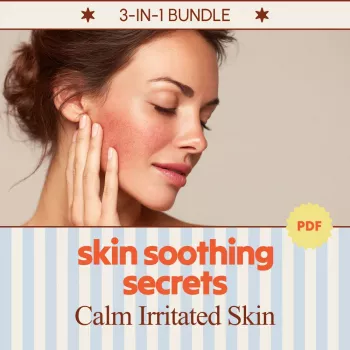
If you need a structured checklist you can repeat during flares, the Skin Soothing Secrets Bundle | How to Calm Irritated Skin Fast 3-in-1 Guides is designed around a barrier-first reset, trigger tracking, and a careful rebuild plan.
Common triggers that keep irritation coming back
Many recurring flares are less about a single “bad product” and more about stacking small stressors: too many actives, too much friction, and not enough barrier support. Use the table below to spot patterns and make quick adjustments.
Triggers and quick adjustments
| Trigger |
What it can feel like |
Fast adjustment |
What to avoid for now |
| Over-exfoliation |
Stinging, tightness, shiny redness |
Pause actives 7–14 days; moisturize + occlusive at night |
Scrubs, acids, retinoids, cleansing brushes |
| Fragrance/essential oils |
Burning or itch shortly after applying |
Switch to fragrance-free basics; patch test later |
Scented lotions, fragranced face mists, “tingly” products |
| Hot water & frequent cleansing |
Dryness and redness after washing |
Lukewarm rinse; gentle cleanser only at night if needed |
Long hot showers; foaming/stripping cleansers |
| Weather (cold wind/low humidity) |
Flaking, chapping, raw patches |
Thicker moisturizer; add ointment on exposed areas |
Alcohol-heavy toners; skipping moisturizer |
| Friction/shaving |
Tender bumps, burning, rash-like redness |
Pause shaving 48–72h; use bland moisturizer |
Aftershaves with alcohol/fragrance; harsh exfoliation |
Friction is a sneaky trigger: masks, collars, helmets, pillowcases, and even repeated towel-drying can keep a flare simmering. If shaving is part of your routine, reducing tugging and irritation can help prevent rebound sensitivity; a tool designed for controlled grooming (used gently and with clean blades) can be useful, such as the Professional Electric Hair Clipper and Beard Trimmer Set for Men – Cordless Grooming Kit.
A simple ingredient checklist: what tends to help vs. what often irritates
During a flare, “less is more” usually wins. Fewer ingredients can mean fewer chances to inflame reactive skin.
Barrier helpers to look for
- Ceramides, cholesterol, and fatty acids (barrier lipids)
- Glycerin and hyaluronic acid (best layered under a moisturizer)
- Squalane and dimethicone (slip + reduced friction)
- Petrolatum (strong water-loss reducer on chapped areas)
Soothers that are often well-tolerated
- Colloidal oatmeal
- Panthenol
- Allantoin
- Centella asiatica (some tolerate it well, but still patch test)
Be cautious with
How to reintroduce products after a flare (without restarting the cycle)
For many routines, the biggest long-term change is simplifying the “busy” middle steps and sticking to consistent basics. If bathroom clutter leads to over-layering or frequent product switching, keeping tools neatly organized can support better habits; a storage option like the Hair Dryer Stand with Vertical Storage Rack can help keep a streamlined setup easy to maintain.
When fast irritation might be something that needs medical care
If eczema/dermatitis is suspected, targeted diagnosis and prescription options can shorten the flare and prevent recurrence. Trusted references include the American Academy of Dermatology, Mayo Clinic’s contact dermatitis overview, and the NHS eczema guidance.
Using the Skin Soothing Secrets Bundle effectively (3-guide approach)
The most reliable way to calm irritated skin fast is to treat the flare like a short project: stabilize first, then rebuild. The Skin Soothing Secrets Bundle | How to Calm Irritated Skin Fast 3-in-1 Guides is most effective when you:
Practical routines for common scenarios (choose the closest match)
After over-exfoliation
After a new product reaction
After windburn or chafing
After shaving irritation
FAQ
How fast can irritated skin calm down?
Mild irritation can improve within 24–72 hours once triggers and actives are stopped and the barrier is supported. Deeper barrier disruption may take 1–2 weeks or longer depending on severity and ongoing exposure.
Should moisturizer sting on irritated skin?
Some brief stinging can happen when the barrier is compromised, but persistent burning is a sign to switch to a simpler, fragrance-free formula. Avoid acids, essential oils, and alcohol-heavy products during a flare.
Is it better to let irritated skin “dry out” or keep it moisturized?
Keeping skin moisturized usually helps barrier recovery by reducing water loss and friction. Very simple moisturizers and an occlusive layer on chapped areas can be especially helpful.
Recommended for you











Leave a comment