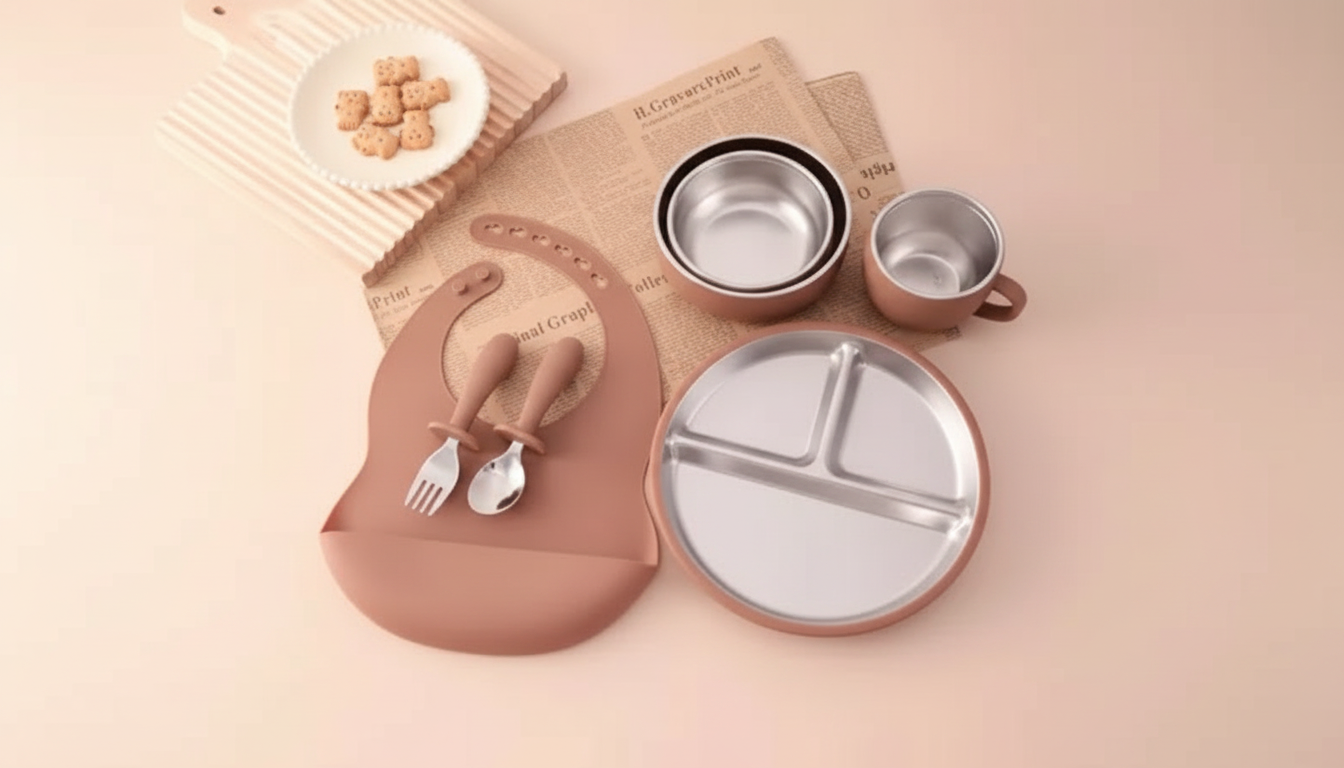
Starting solids is easier with a coordinated set designed for small hands and everyday cleanup. This 7-piece feeding set pairs durable stainless steel with soft, BPA-free silicone utensils to support early self-feeding, reduce mess, and simplify mealtimes at home or on the go.
What’s Included in the 7-Piece Set
A complete baby feeding kit takes the guesswork out of building a mealtime routine. Instead of mixing random bowls and mismatched utensils, a coordinated set keeps familiar tools in rotation—helpful for babies learning new textures and for caregivers aiming to keep things consistent across breakfast, lunch, and dinner.
- Complete starter assortment for baby-led exploration and parent-assisted feeding.
- Stainless steel components chosen for durability and long-term use through multiple stages.
- BPA-free silicone utensils designed to be gentler on gums during early bites.
- Works well as a single grab-and-go kit for daycare bags, travel, or grandparents’ houses.
Pieces and Practical Uses
| Piece |
Material |
Best for |
Stage/age notes |
| Utensils (spoon/fork style) |
BPA-free silicone |
First tastes, purees, soft solids |
Gentle for early teething and learning to scoop |
| Main dish/bowl components |
Stainless steel |
Everyday meals, warm or chilled foods |
Helps reduce staining/odor retention compared with some plastics |
| Supporting pieces (set accessories) |
Stainless steel + silicone |
Portioning, serving, and building routine |
Useful as baby’s coordination improves |
If you’re ready to streamline mealtimes with one matching kit, the 7PCS Stainless Steel Baby Feeding Set with BPA-Free Silicone Utensils is designed to stay in steady rotation—from early spoon practice to more confident toddler bites.
Why Stainless Steel + Silicone Works for Baby Mealtimes
Mixed-material feeding sets solve a common problem: parents want dishes that hold up to daily use, but they also want utensils that feel comfortable for a baby who’s still learning how to bite, chew, and maneuver a spoon.
- Stainless steel is resilient for daily use and less prone to absorbing odors or colors from foods like berries, tomato sauces, or curry.
- Silicone utensils offer a softer bite surface than metal, which can be helpful for sensitive gums.
- A mixed-material set can balance sturdiness (steel) and comfort (silicone) without relying on disposable items.
- The combination is well-suited for families aiming to reduce single-use feeding products.
For families thinking carefully about materials used around food, it can be useful to review guidance from reputable health sources. The U.S. Food & Drug Administration shares background on BPA and food-contact applications here: FDA — Bisphenol A (BPA): Use in Food Contact Application. The American Academy of Pediatrics also offers practical tips to reduce exposure to certain food additives: AAP — Tips to Reduce Exposure to Food Additives.
Safety and Material Notes to Keep in Mind
A feeding set is only as helpful as it is dependable. Materials matter, but everyday habits—inspection, supervision, and appropriate use—matter just as much when babies are learning to eat.
- BPA-free silicone utensils are intended to reduce exposure to BPA commonly discussed with some plastics used in food contact items.
- For any feeding set, inspect edges, seams, and utensil tips regularly; discontinue use if cracks, sharp points, or peeling appear.
- Use age-appropriate supervision during meals, especially when introducing new textures or finger foods.
- Avoid prolonged contact with extremely high heat unless the care instructions specify it; use gentle warming methods when possible.
For age-based feeding guidance and safe progression through textures, the CDC’s infant and toddler nutrition hub is a reliable starting point: CDC — Infant and Toddler Nutrition.
Helping Babies Learn Self-Feeding (Without the Stress)
Self-feeding is a skill, and skill-building is rarely tidy. A consistent set of tools helps babies focus on the motion—grabbing, scooping, bringing food to the mouth—rather than constantly adapting to new shapes and sizes.
- Start with thicker purees or mashable foods that cling to a spoon; this builds early success and confidence.
- Offer one utensil at a time and model the motion, then let baby explore; messy practice is part of the skill-building.
- Rotate between parent-assisted bites and baby-led attempts to keep meals moving while still encouraging independence.
- Use predictable routines: same seat, same bib, same core set of items—babies often respond well to consistency.
When mealtime feels chaotic, a simple shift can help: keep portions small and refill as needed. Less food on the tray often means less sweeping, wiping, and overwhelm for everyone at the table.
Cleaning and Care for Long-Lasting Use
Durable materials still benefit from gentle care. A few small habits can keep stainless steel looking polished and silicone smelling fresh, even through oatmeal mornings and pasta-sauce nights.
When This Set Makes the Most Sense
Product Details and Availability
Name: 7PCS Stainless Steel Baby Feeding Set with BPA-Free Silicone Utensils
Price: $32.51 USD
Availability: In stock
More In-Stock Home Finds
FAQ
Is stainless steel safe for baby dishes?
Stainless steel is widely used for food-contact items because it’s durable and resists staining and odor retention. Choose pieces with smooth edges, follow the care instructions, and supervise meals as babies learn new textures and utensils.
What does BPA-free silicone mean for baby utensils?
BPA-free means the utensils are made without bisphenol A, a chemical often discussed in relation to certain plastics. Silicone can also feel softer on gums than metal, which may be more comfortable during early bites and teething stages.
How should silicone baby utensils be cleaned to avoid lingering smells?
Rinse promptly after use, wash with warm soapy water, and let them dry fully before storing. If strong odors linger, an occasional soak in warm, soapy water can help; avoid harsh abrasives that can roughen the surface.
Recommended for you












Leave a comment