66W Spring Retractable USB‑C Cable for Car and Daily Carry
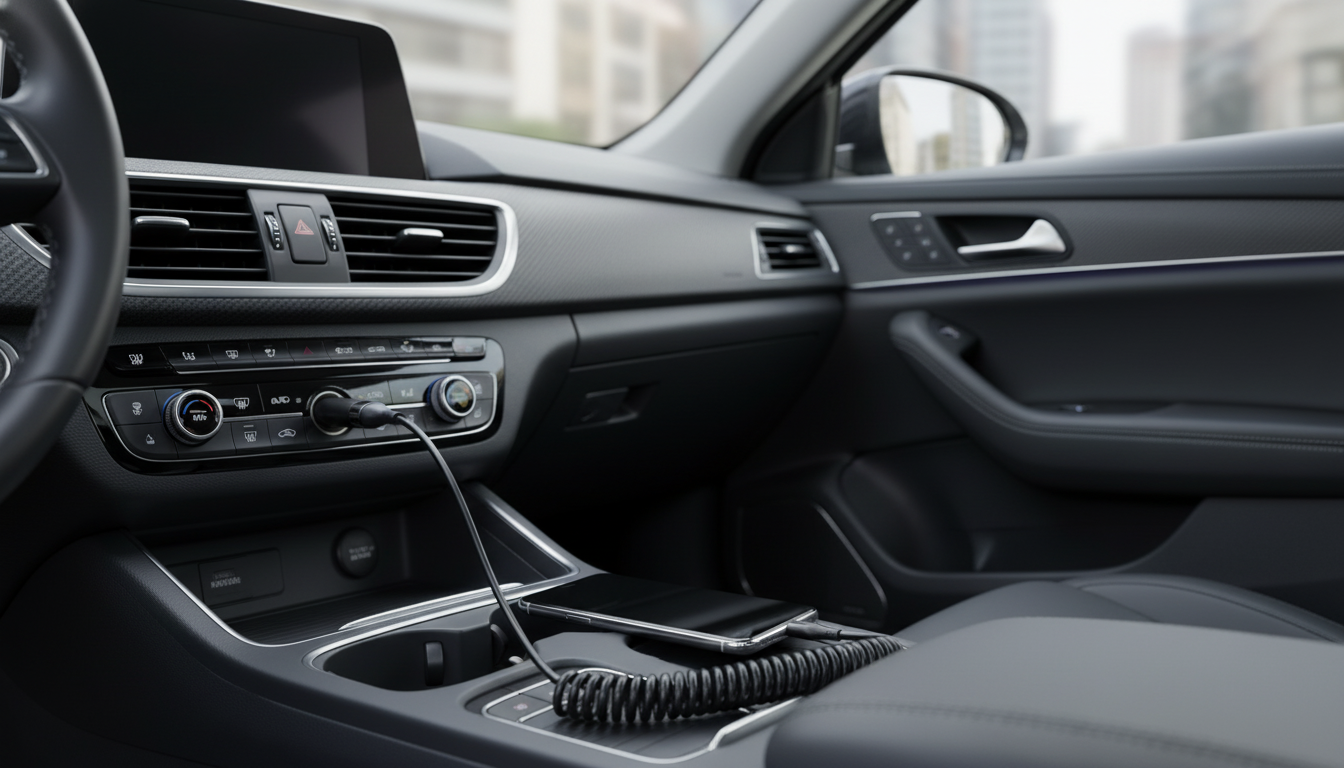
A retractable USB‑C cable keeps charging simple in tight spaces like a center console, cup holder area, or backpack pocket. This 66W, 5A spring-style cable is designed for quick top-ups while commuting, ridesharing, traveling, or moving between home, office, and car—without a long cord tangling around other essentials.
Why a spring retractable cable works better on the go
When the charging setup lives in a moving vehicle (or in a bag that gets opened and closed all day), cable management matters as much as charging speed. A spring retractable design helps keep the cable where it belongs: close to the ports you’re using.
- Reduces clutter in the car by keeping excess length coiled instead of draped across the shifter or infotainment controls.
- Helps prevent accidental snags when passengers enter/exit or when the phone is moved between mounts and pockets.
- Stores neatly in a glove box, door pocket, or travel pouch without knots.
- Useful for shared charging spots (rideshare, family car) where different seat positions need quick reach.
Instead of wrestling a long cable every time you park, a spring cable naturally “returns” to a tidy footprint, which is especially helpful if you swap between navigation mode, quick calls, and pocketing the phone at stops.
Charging performance and what “66W / 5A” means in practice
The “66W / 5A” rating signals that the cable is built to handle higher charging current than basic low-current options, which can help avoid bottlenecks when everything else in the chain supports fast charging. In a car, that chain usually includes a USB‑C car charger (often PD-capable), the cable, and a phone/tablet that negotiates fast charging.
- Designed for fast charging when paired with a compatible USB‑C car charger and a device that supports higher power input.
- 5A current rating supports higher-power charging scenarios compared with basic low-current cables.
- Best results typically come from using a quality PD-capable (or similar) USB‑C power adapter in the car.
- Charging speed depends on the phone/tablet, the car charger’s output, cable rating, temperature, and battery level.
For a deeper look at how compatible devices negotiate power levels, the USB Power Delivery (USB PD) specification overview is a helpful reference. And because heat and charge level influence charging behavior, Battery University’s overview of charging lithium-ion batteries explains why charging often slows down as the battery fills or temperatures rise.
Quick reference: what affects charging speed
| Factor |
What to look for |
Why it matters |
| Car charger output |
USB‑C fast-charging / PD support and sufficient wattage |
The charger must supply enough power for the device to fast-charge |
| Cable rating |
High-current capable cable (up to 5A) |
Helps deliver power safely without bottlenecking |
| Device compatibility |
Phone/tablet fast-charging standard support |
The device controls how much power it will accept |
| Heat and battery level |
Cooler temps; mid-battery range often charges faster |
Many devices slow charging to protect the battery |
Everyday use cases: car, commute, travel, and desk
A spring retractable USB‑C cable shines when your power source is close and you want a clean setup with minimal slack. Here are a few common ways it fits into real routines:
- Car phone mount setup: keeps the cable taut and tidy between the charger port and mount, so it doesn’t loop into controls.
- Passenger-friendly charging: quick reach for the front seat without leaving long slack that gets pinched in seat rails or caught in bags.
- Airport and coffee shop charging: reduces cable spill on small tables and helps prevent tangles in backpacks and carry-ons.
- Backseat charging with short reach: convenient when the power source is close, such as a rear USB‑C port.
Fit, durability, and cable care tips for longer life
Compatibility checklist before buying
At-a-glance compatibility
| Item |
Check |
Notes |
| Phone/tablet |
USB‑C port |
USB‑C devices only |
| Car charger |
USB‑C fast charging support |
A basic low-power adapter may charge slowly |
| Mount placement |
Reach from port to mount |
Spring cables are ideal for tidy, shorter routes |
| Data needs |
Charging vs. syncing |
Use cases vary; prioritize charging performance for car use |
Product spotlight: 66W 5A Fast Charging Spring Retractable USB Type C Cable
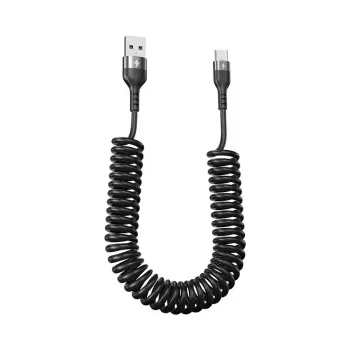
If you want a compact, car-friendly cable that’s easy to store and quick to deploy, the 66W 5A Fast Charging Spring Retractable USB Type C Cable – For Car & On-the-Go is built around a simple idea: keep the cord under control while still supporting higher-power charging when paired with compatible gear.
Other everyday add-ons (in stock)
FAQ
Will a 66W USB‑C cable fast-charge any phone?
Not always. Fast charging depends on your phone’s supported charging standard and the car charger’s output; the cable helps by supporting higher current, but the device ultimately controls how much power it accepts.
Do retractable or spring cables charge slower than regular cables?
Charging speed is mainly determined by the cable’s rating, the charger, and the device. A properly rated spring cable can perform similarly to a standard cable, while very low-quality retractables can limit power delivery.
Is it safe to leave a charging cable plugged into a car charger all the time?
It can be, as long as the charger is good quality and the setup isn’t exposed to extreme heat for long periods. If the cable or charger feels unusually hot, or the car sits in high temperatures, unplugging is a safer choice.
Recommended for you











Leave a comment