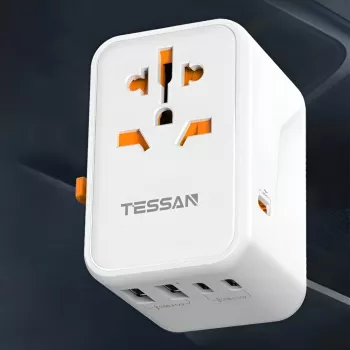
65W GaN International Travel Adapter: a smarter way to charge across borders
A compact GaN travel adapter can replace a bag of separate chargers and plug converters—if it delivers the right wattage, supports modern fast-charging standards, and matches the outlet types on the itinerary. This guide breaks down what a 65W GaN international travel adapter does well, how to use it safely across regions, and what to check before plugging in laptops, phones, and small electronics abroad.
What this travel adapter is designed to do
- Converts plug shapes to fit common international outlet types so devices can be connected in many countries.
- Provides USB-C fast charging up to 65W for compatible phones, tablets, and many USB-C laptops.
- Uses GaN technology to help keep the charger smaller and cooler than many traditional silicon chargers at similar wattage.
- Helps reduce cable clutter by powering multiple devices from a single compact unit.
Instead of packing a separate laptop brick, phone charger, and a plug adapter for each region, a single high-output USB-C travel adapter can consolidate the essentials—especially for carry-on-only travel and multi-city itineraries.
Where it works: global plug coverage and country planning
- Match the adapter’s plug options to the outlet types used in the destination countries (and any layovers where charging is needed).
- Confirm whether the destination uses grounded outlets and whether a ground connection is required for the device being charged.
- Plan for hotel rooms vs. airports: some public outlets are loose or recessed, so a snug-fitting plug design matters.
- Consider voltage differences and device labels: most modern chargers are dual-voltage, but some travel appliances are not.
Quick compatibility checklist before departure
| What to check |
Why it matters |
What to look for on the device |
| Input voltage range |
Prevents damage when traveling between 110–120V and 220–240V regions |
Label such as “100–240V~ 50/60Hz” on the device/charger |
| USB-C wattage needs |
Ensures laptops and tablets charge at full speed |
Laptop charger rating (e.g., 45W/60W/65W) |
| Fast-charge protocol |
Improves charging speed for phones and tablets |
USB-C PD support; device specs mention “PD” or “Power Delivery” |
| Outlet type at destination |
Avoids arriving with the wrong plug shape |
Country outlet type (A/B/C/E/F/G/I etc.) from a reliable guide |
| High-power appliances |
Travel adapters are not for hair dryers/kettles unless explicitly rated |
Appliance wattage (often 1000–2000W+) |
For country-by-country outlet formats, a reliable reference is the IEC’s guide to world plugs and sockets. When planning across regions, also keep an eye on the electrical system differences summarized by the U.S. Department of Energy.
65W USB-C fast charging: what it can power comfortably
- Phones and earbuds: typically charge fast with USB-C Power Delivery and compatible cables.
- Tablets and handheld gaming: often benefit from 30–45W USB-C PD for quicker top-ups.
- Ultrabooks and many 13-inch laptops: commonly run well on 45–65W USB-C PD; heavier laptops may need more than 65W.
- Charging while using: sustained workloads can exceed 65W on some laptops, which may slow charging or maintain battery level rather than increase it.
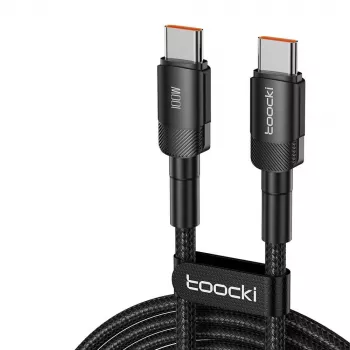
- Cable choice matters: use a USB-C cable rated for the intended wattage (e.g., 60W or 100W) to avoid slow charging.
USB-C Power Delivery is the key standard behind most modern fast charging, and the USB-IF’s USB Power Delivery overview is a helpful reference when comparing chargers and devices.
Safety and limitations to understand before plugging in
- A travel adapter changes plug shape and provides USB charging; it is not a voltage converter for single-voltage appliances.
- Avoid running high-wattage heating devices (hair dryers, curling irons, kettles) unless the unit explicitly supports that load and the destination voltage.
- Do not daisy-chain: plugging an extension cord or power strip into a travel adapter can overload outlets and increase heat.
- Use in dry environments and keep vents unobstructed; compact high-watt chargers can warm up under load.
- Check for built-in protections such as over-current, over-voltage, and over-temperature safeguards.
How to pack and use it efficiently on the road
What to compare when choosing a GaN travel adapter
Product snapshot
At-a-glance details
Travel-friendly add-ons (in stock)
FAQ
Will a 65W travel adapter charge a USB-C laptop and a phone at the same time?
It depends on how the adapter distributes power across ports. Charging two devices at once can reduce the wattage available to the laptop, so it may charge more slowly—especially during heavy use. Use a USB-C cable rated for 60W or 100W and prioritize the laptop if speeds dip.
Is a travel adapter the same thing as a voltage converter?
No—most travel adapters mainly change plug shape and may add USB charging, but they typically do not convert wall voltage for single-voltage appliances. Check your device or power brick for an input rating like “100–240V~ 50/60Hz,” and avoid high-watt heating tools unless they’re explicitly compatible.
Which countries will these global plugs work in?
Compatibility depends on the outlet types used in each country rather than the country name alone. Verify the socket type(s) for every destination and transit stop, since some regions use multiple outlet standards even within the same country.
Recommended for you












Leave a comment