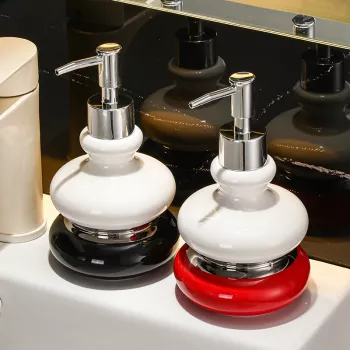
A ceramic dispenser gives the sink area a cleaner, more pulled-together look while keeping hand soap, dish soap, or lotion easy to reach. With a 350ml capacity, it hits a sweet spot: large enough to cut down on refill trips, yet compact enough to sit neatly beside most faucets. The result is a counter that feels calmer and more intentional—whether it’s a busy family bathroom or a kitchen sink that sees constant use.
What a 350ml ceramic dispenser changes at the sink
Switching from store bottles to a ceramic dispenser is a small upgrade that makes a daily difference. The first change is convenience: 350ml holds enough product for regular use without constant top-ups, which is especially helpful in guest bathrooms and powder rooms where you’d rather not keep backup bottles on display.
The second change is visual. Mismatched plastic packaging can make a countertop feel cluttered even when everything is “put away.” A single ceramic dispenser helps unify the sink zone, creating a more consistent look across your soap, lotion, and accessories. Finally, it supports everyday hygiene habits by keeping soap accessible and easy to use—something public health guidance continues to emphasize, including the CDC’s handwashing recommendations (Clean Hands Save Lives).
Key features to look for
Not all dispensers behave the same once they’re filled and in rotation. A few details determine whether it stays tidy and easy to use:
- Capacity: 350ml is a practical middle ground—space-saving, but with fewer refills than small countertop bottles.
- Material: Ceramic adds weight and stability compared to lightweight plastic, helping the dispenser stay put during one-handed pumping.
- Pump performance: A smooth pump makes portioning easier and can reduce drips by dispensing more consistently.
- Refill access: A wider opening makes refilling less messy and cleaning far simpler, especially if you switch products seasonally.
If you’re particular about what goes into the bottle (especially for kitchen use), it can also help to choose soaps and cleaning products with clearer ingredient standards—EPA’s Safer Choice program is a useful reference point (Safer Choice Standard).
Quick specs and everyday fit
A 350ml ceramic dispenser fits naturally into both bathroom and kitchen routines. It works well for hand soap, dish soap, body lotion, and hand lotion. Some people also use dispensers for sanitizer gel, but results depend on the product’s thickness and whether the pump is designed for that viscosity.
For placement, think in terms of “dry zones” and “reach zones.” A vanity tray or small riser helps keep the base drier, while a sink corner placement keeps the center area clear for washing. Design-wise, ceramic pairs easily with stone counters, stainless fixtures, warm wood accents, and neutral tile—so it doesn’t fight the rest of the room.
To see the current listing, visit the 350ml Ceramic Soap & Lotion Dispenser for Bathroom and Kitchen.
Bathroom styling ideas that stay practical
A bathroom sink can look styled without becoming fussy. Start by grouping essentials so they feel purposeful: pair the dispenser with a small tray to corral items like floss picks, a perfume roller, or a single hand cream tube. Keeping everything in one “zone” makes wiping down the counter faster.
- Aim the nozzle toward the basin: This reduces the chance of stray drips landing on the counter.
- Label if you have multiples: If you keep one for hand soap and another for lotion, subtle labels (or a discreet tag) prevent mix-ups for guests.
- Balance looks with access: Place the dispenser where it’s reachable with wet hands—convenience is what keeps the setup working long-term.
For a more organized getting-ready area nearby, a vertical tool organizer can keep cords and hot tools from crowding the vanity; the Hair Dryer Stand with Vertical Storage Rack pairs well with a neat sink setup.
Kitchen use: dish soap without the clutter
Decanting dish soap is one of the simplest ways to reduce visual noise at the sink. Instead of a branded bottle, sponge, scrubber, and hand soap all competing for attention, a ceramic dispenser streamlines the look while keeping soap ready for quick use.
- Place it strategically: Setting it on the side opposite the faucet handle can reduce splash buildup and keep the pump cleaner.
- Keep a consistent routine: Rinse the pump head occasionally to prevent sticky residue and keep dispensing smooth.
- Pair with a caddy: A sponge caddy next to the dispenser keeps the area feeling intentional instead of improvised.
If your kitchen is open to the dining area, softening the overall look with natural textures can help the space feel cohesive; a warm statement piece like the Handmade Wabi Sabi Rattan Pendant Light complements ceramic and neutral finishes nicely.
Care, refilling, and preventing clogs
Ceramic is low-maintenance, but a few habits keep the dispenser looking clean and pumping smoothly:
A simple upgrade for cohesive counters
FAQ
Can this dispenser be used for both soap and lotion?
Yes. It can be used for hand soap, dish soap, or lotion; thicker products tend to dispense best when the pump is kept clean and the formula isn’t overly viscous.
How often does a 350ml dispenser need refilling?
It depends on household size and how often the sink is used. In many homes, 350ml lasts noticeably longer than smaller countertop bottles while still fitting comfortably next to most faucets.
How can pump clogs be prevented?
Rinse the pump head periodically, avoid letting soap dry in the nozzle, and flush the pump with warm water if it starts pumping slowly or unevenly.
Recommended for you











Leave a comment