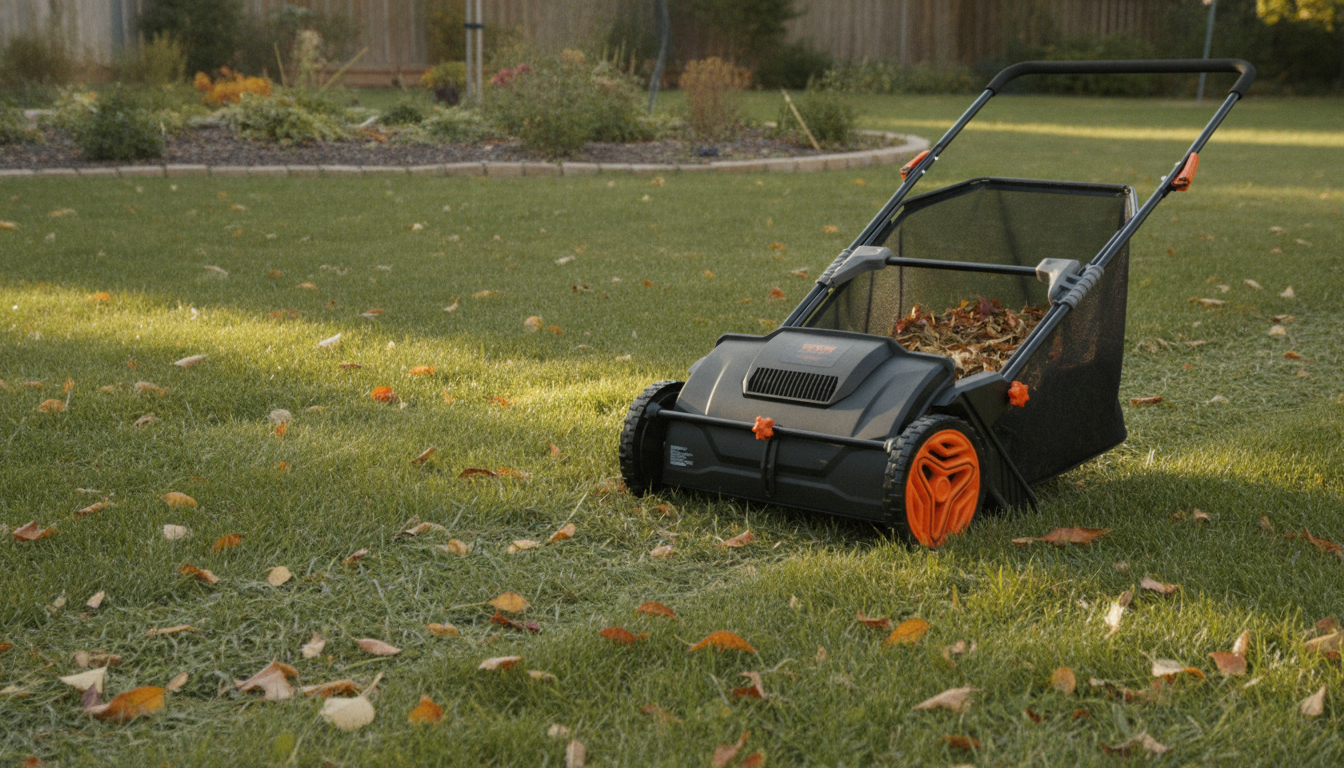
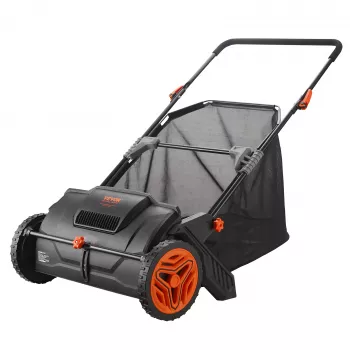
A push lawn sweeper is a low-noise, no-fuel way to pick up dry leaves, grass clippings, and light debris from lawns and driveways. This 21-inch model pairs a wide cleaning path with a large hopper bag so yard cleanup takes fewer passes and fewer stops to empty. For more guidance, see [PDF] study guide: AutOMOtiVe & OutdOOR POWeR eQuiPMeNt.
What This Lawn Sweeper Helps With
- Collects dry leaves, grass clippings, pine needles, and small twigs from turf and hard surfaces
- Reduces raking time on large yards by sweeping and bagging in one pass
- Keeps pathways and patios tidier without cords, batteries, or gasoline
- Works best on dry debris; damp, matted material may need multiple passes
Key Features to Look For in a 21-Inch Push Sweeper
- 21-inch sweeping width for quicker coverage on open areas
- Large hopper bag capacity to limit emptying trips
- Height adjustment to match turf thickness and surface type
- Handle design that allows comfortable pushing and steady tracking
- Tool-free or low-tool assembly for faster setup
- Easy-access hopper release for simpler dumping
Performance in Real Yard Conditions
Manual sweepers shine when debris is sitting on top of the grass and can be guided into the brush path. For many yards, that means predictable performance during regular weekly cleanup and especially during fall leaf drop. For further reading, see [PDF] FOR A CLEAN SWEEP.
- Best results on short-to-medium grass where debris sits on top of the blades
- On uneven lawns, a slightly higher setting can prevent scalping while still picking up leaves
- For heavy leaf fall, making two perpendicular passes (north–south, then east–west) improves pickup
- On driveways and sidewalks, steady walking speed supports consistent sweeping action
- Avoid very wet leaves; let debris dry when possible for easier collection
For the cleanest finish on a lawn with mixed debris (leaves plus clippings), start with a standard height that lets the brushes “tick” the surface rather than dig. If you hear or feel too much resistance, raise the brush height one step and try again—steady brush contact is more important than aggressive scraping.
Setup, Adjustment, and First Use
- Assemble the frame, handle, and hopper bag; confirm fasteners are snug before use
- Set sweeping height so brushes contact debris without digging into turf
- Do a short test pass and inspect the hopper to confirm pickup and airflow
- If debris is left behind, slow down slightly and recheck height and brush contact
- Empty hopper before it becomes overfilled to maintain suction and sweep efficiency
A simple first-use routine helps dial things in quickly: choose a small test area, make a 10–15 foot pass, then check what made it into the hopper. If leaves are collecting but light needles or small bits are left behind, slightly lower the brush height or reduce your pace so the brushes have time to lift and carry material into the bag.
Quick Comparison: Sweeper vs Other Cleanup Options
Yard Cleanup Tool Comparison
| Tool |
Best For |
Tradeoffs |
| Push lawn sweeper |
Dry leaves and clippings on lawns/paths; quick bagging |
Less effective on wet/matted debris |
| Rake |
Tight spaces, garden beds, small piles |
Slower on large lawns; more physical effort |
| Leaf blower |
Moving debris into piles; hard-to-reach areas |
No bagging; can be noisy and dusty |
| Mower with bagger |
Clippings during mowing; light leaf pickup while cutting |
Requires mowing; not ideal for paths/patios |
When bagging is the goal—especially to keep leaves out of beds and off walkways—a sweeper can be a practical middle ground: quieter than blowing, faster than raking, and useful even when the lawn doesn’t need mowing.
Tips for Better Pickup and Fewer Passes
- Sweep when debris is dry; mid-day often performs better than early morning
- Use overlapping passes (about 2–4 inches) to avoid streaks
- For heavy leaf layers, do one pass to gather and a second pass to finish
- Empty the hopper before it packs tightly; airflow helps keep material moving
- On windy days, sweep with the wind at your back so debris feeds forward into the hopper
If you’re dealing with lots of long needles or small twigs, keep an eye on the brush area. Clearing an occasional lodged twig early can prevent reduced pickup later in the session. Also, if you notice “skips” in collection, check that your walking pace is consistent—sweepers tend to perform best with smooth, uninterrupted forward motion.
Care, Storage, and Seasonal Maintenance
Collected yard debris can often be composted or managed as part of seasonal yard-waste routines. For guidance on responsible yard waste handling, see the EPA’s yard waste resource and UC’s overview of home composting basics.
Who This Sweeper Fits Best
In-Stock Picks
FAQ
Will a push lawn sweeper pick up wet leaves?
It works best on dry leaves and clippings. Wet, matted leaves may require multiple passes, a slower pace, and can reduce how efficiently material feeds into the hopper.
Can it be used on sidewalks and driveways?
Yes. Hard surfaces often sweep very cleanly; keep a steady walking speed and empty the hopper as needed so debris continues to move into the bag consistently.
How often should the hopper bag be emptied?
Empty it before it becomes overpacked. A moderately full hopper maintains better airflow and helps prevent clogs, improving pickup from start to finish.
Recommended for you









Leave a comment