Do floor lamps look good in a bedroom?
Yes—floor lamps can look excellent in a bedroom because they add height, warmth, and a finished “layered lighting” feel that table lamps alone sometimes miss. A well-chosen floor lamp can act like functional decor: it fills an empty corner, balances the visual weight of a bed and nightstands, and sets a calmer mood with softer, more directional light.
They’re especially flattering in bedrooms that need a little more vertical interest or where nightstand space is limited. A slim, modern base can keep the room feeling open, while a sculptural shade or unique silhouette can become a subtle statement piece without overwhelming the space.
What makes a floor lamp look “right” in a bedroom?
Proportion and placement do most of the work. A lamp that’s too tall or bulky can feel intrusive near the bed, while one that’s too small can look like an afterthought. Aim for a lamp that visually relates to the height of your headboard and other furniture, and choose a finish that echoes existing hardware or accents (like black, brass, or wood tones).
Where should a floor lamp go?
Common placements include: beside an accent chair for reading, tucked into a corner to brighten dead space, or positioned near the bed if you want a softer alternative to a harsh overhead fixture. If it’s near the bed, keep the base out of the main walking path and ensure the shade doesn’t glare directly into your eyes when you’re lying down.
What style works best for a relaxing bedroom?
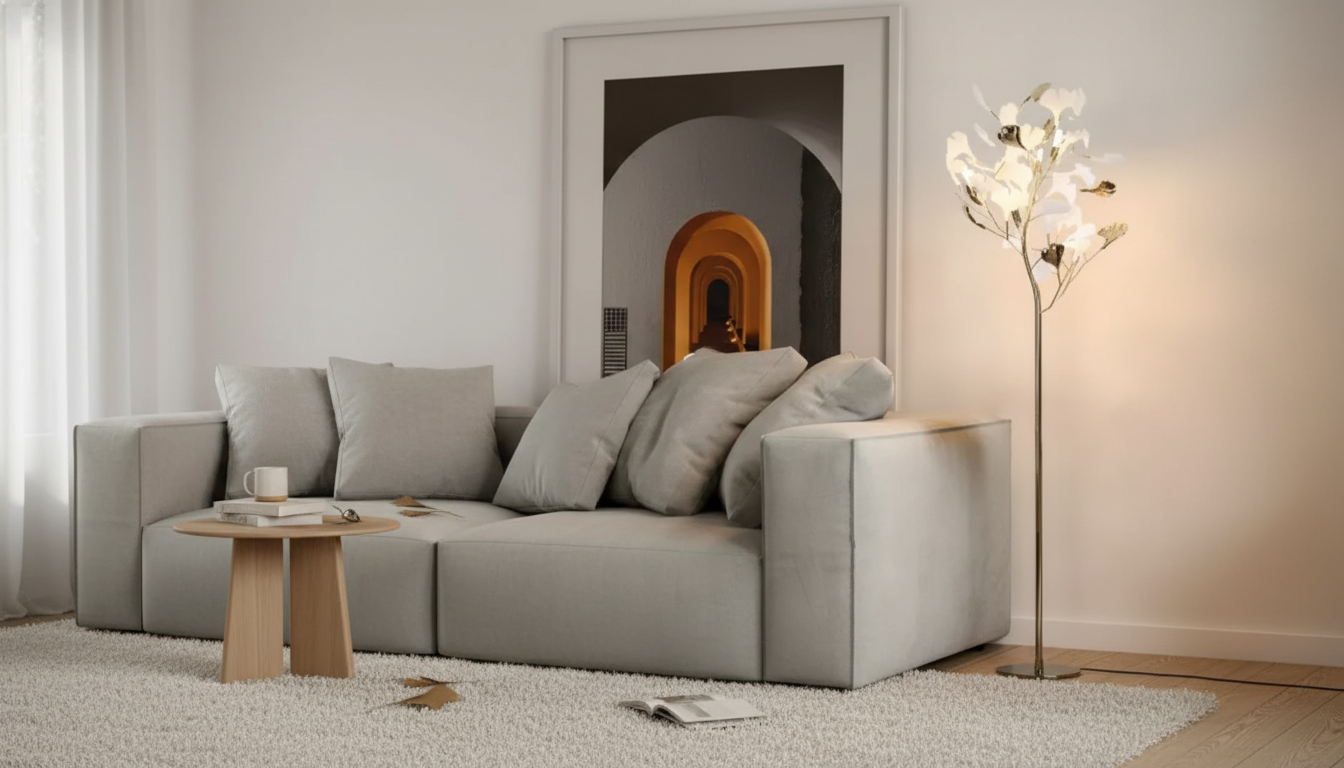
Look for warm, diffused light and shapes that feel calm—think linen shades, frosted globes, or gently curved designs. Nature-inspired silhouettes can also soften modern rooms. For a visual example of a sculptural, bedroom-friendly option, see the styling ideas in this Ginkgo Leaf LED floor lamp guide.
FAQ
What color temperature is best for bedroom floor lamps?
Warm white (around 2700K to 3000K) is usually best for bedrooms because it feels cozy and helps the room look restful instead of clinical.
Recommended for you













Leave a comment