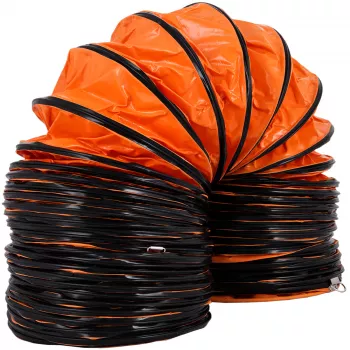
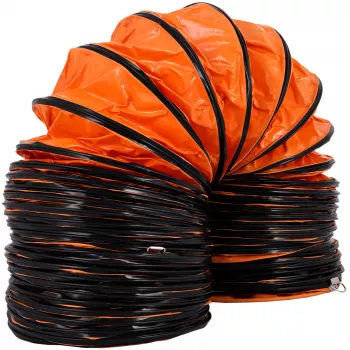
A long, flexible ventilation duct helps move air where it needs to go—out of a workspace, through a temporary setup, or away from dust, fumes, and heat. This 32-foot PVC duct hose is designed to pair with 12-inch exhaust fans to extend reach, route airflow around obstacles, and support cleaner, more comfortable air circulation in garages, workshops, grow spaces, and job sites.
What This Duct Hose Is Built For
When a fan can’t sit exactly where you want the air to exit (or enter), flexible ducting becomes the bridge between “good enough” ventilation and a setup that actually reaches the problem area.
- Extending the effective reach of a 12-inch exhaust fan when the fan can’t be mounted directly at the discharge point
- Routing air through doorways, windows, partitions, tents, or temporary walls without rigid ductwork
- Supporting ventilation in spaces that need frequent layout changes (mobile equipment bays, temporary work areas, seasonal setups)
- Helping direct unwanted air—heat, humidity, odors, light smoke, dust—toward an exterior outlet when paired with a suitable fan
For general ventilation safety and planning guidance, review established resources like OSHA’s ventilation overview and ASHRAE’s information on ventilation and indoor air quality.
Key Features at a Glance
- Length: 32 feet for long runs that reduce the need for extensions
- Material: flexible PVC construction suited to repeated repositioning and storage
- Compatibility: intended for 12-inch exhaust fans (match duct diameter to the fan outlet/inlet)
- Use cases: exhaust or intake routing depending on fan direction and setup goals
- Simple handling: flexible body makes it easier to snake around corners and tight spaces than rigid pipe
Quick Reference: Common Setup Checks
| Item to Check |
Why It Matters |
What to Look For |
| Fan size |
Prevents leaks and poor fit |
12-inch outlet/inlet matches duct diameter |
| Run length & bends |
Affects airflow and fan load |
Shortest practical route; minimize sharp turns |
| Outlet location |
Controls where air ends up |
Discharge outdoors or to a safe, approved area |
| Clamps & sealing |
Reduces air loss and rattling |
Snug clamps; seal gaps if needed |
| Support points |
Prevents sag and kinks |
Straps or hangers every few feet on long runs |
Where a 32-Foot Flexible Duct Makes the Biggest Difference
The main advantage of a 32-foot run is flexibility in real spaces—especially when the “best” discharge point is far from where the fan must sit.
- Garage or workshop: route fumes and heat away from work zones, especially when doors must stay partially closed
- Grow tents and indoor horticulture: manage warm, humid air by sending exhaust to a window or vent port (follow local rules and equipment guidance)
- Basements and crawlspaces: temporary venting during maintenance, cleaning, or drying projects
- Construction and restoration: flexible routing around framing and obstacles for spot ventilation
- Equipment rooms: guiding warm air away from sensitive storage or toward an exit path
Getting Better Airflow: Practical Routing Tips
Flexible ducting is convenient, but airflow is still governed by resistance. A fan may be rated for high flow in open air, yet deliver much less through long, twisty ductwork.
- Keep the path as straight as possible: every sharp bend increases resistance and can reduce effective airflow
- Avoid crushing or kinking: maintain the duct’s full diameter to help the fan perform closer to its rated flow
- Shorten when possible: if the full 32 feet isn’t needed, reducing length can improve airflow and reduce noise
- Secure the duct: use straps, hooks, or supports so the run doesn’t sag and create low points that trap dust or moisture
- Plan the discharge responsibly: vent to an appropriate outdoor area or approved exhaust point; avoid venting into enclosed attics or shared indoor spaces
Installation Basics and Fit Notes
A clean installation helps prevent leaks, rattling, and premature wear. Most issues come down to fit, support, and avoiding damage along the route.
- Confirm diameter match: measure the fan collar or flange and verify the duct size before installing
- Attach with clamps: use a properly sized hose clamp or band clamp for a secure connection
- Seal for efficiency (optional): foil HVAC tape or appropriate sealant can reduce leaks at joints (ensure materials are suitable for the environment)
- Provide strain relief: avoid letting the full duct weight hang from the fan outlet; add a nearby support point
- Check for safe clearances: keep ducting away from sharp edges, high-heat surfaces, and moving equipment
Care, Storage, and Longevity
Because flexible duct is often repositioned, routine checks matter—especially after a busy project, a move, or storage.
Product Option
At-a-Glance Product Details
More In-Stock Picks for Setup and Organization
FAQ
Will this duct hose fit any 12-inch exhaust fan?
It’s intended to match a 12-inch fan connection, but “12-inch” should match the fan’s actual collar or flange diameter. Measure the fan outlet/inlet and use properly sized clamps to get a snug, low-leak connection.
Does a longer duct reduce airflow?
Yes—longer duct runs and sharp bends increase resistance, which can reduce the airflow you actually get at the outlet. For better performance, keep the route as short and straight as practical, support the duct, and avoid kinks or crushing.
Can it be used for intake as well as exhaust?
Yes, it can route air in either direction depending on fan orientation and your setup. Just make sure the intake and discharge locations are chosen to avoid pulling contaminants into occupied areas or exhausting air into an unsafe space.
Recommended for you











Leave a comment