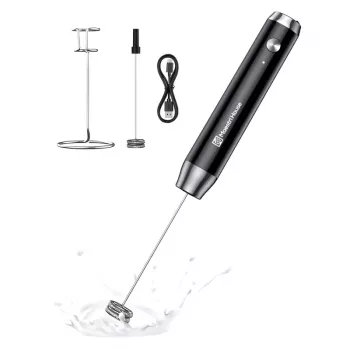
Creamy foam can elevate everyday drinks from simple to café-style in seconds. An electric milk frother with a detachable whisk adds a practical twist: quick frothing with easier rinsing, fewer sticky crevices, and simpler storage—ideal for lattes, cappuccinos, matcha, hot chocolate, and protein shakes. If a daily coffee routine (or an afternoon matcha) is part of the schedule, this small tool can make drinks feel more finished without pulling out a blender or setting up complicated equipment.
What Makes a Detachable Whisk Useful
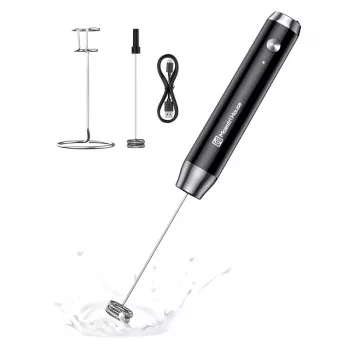
A detachable whisk is one of those features that sounds minor—until it saves time every day. Because the whisk is the part that actually touches milk, sweeteners, cocoa, and powders, being able to remove it makes a noticeable difference in both hygiene and convenience.
- Easier cleanup: remove the whisk to rinse thoroughly and dry faster.
- Less buildup over time: fewer hard-to-reach spots where dried milk can cling.
- Convenient storage: detached whisk can be stored separately to help prevent bending.
- Practical for shared kitchens: swapping and cleaning between users is faster.
At-a-Glance Details
Whether it’s morning cappuccinos, iced lattes, or a quick matcha before a workout, an electric frother is designed to be fast and low-effort. The detachable whisk supports simpler washing after dairy or sweetened drinks, and the compact size fits easily on a coffee station, countertop corner, or in a drawer.
Quick overview
If you’re ready to streamline home drinks, the Electric Milk Frother with Detachable Whisk is an easy upgrade that keeps daily cleanup simple.
How to Use It for Café-Style Foam
Great foam is less about fancy technique and more about a few controllable variables: milk choice, cup shape, whisk position, and timing. With a handheld electric frother, small adjustments can shift the result from airy foam to smoother microfoam.
- Start with the right milk: cold milk typically foams more consistently; higher-protein options often create more stable foam.
- Fill wisely: use a deeper cup and leave headroom to prevent splashing as volume increases.
- Angle and depth: keep the whisk just below the surface to incorporate air, then slightly deeper to smooth the texture.
- Timing: short bursts help control foam density for cappuccinos (thicker) vs lattes (silkier).
- For hot drinks: warm milk separately to your preferred temperature, then froth—avoiding overheating helps texture and taste.
For broader coffee prep basics (grind, brew ratios, and common methods), the National Coffee Association is a helpful reference point, especially when dialing in a consistent daily cup.
Drinks and Uses Beyond Coffee
A frother isn’t just for milk foam. It’s a quick mixer for small servings where a full blender feels excessive, and it can improve texture in drinks that often clump or separate.
- Matcha: pre-mix with a small amount of water, then top with milk and froth for an even, clump-free finish.
- Hot chocolate: blend cocoa powder or syrup into warm milk for a smoother, frothy texture.
- Protein shakes: help emulsify powders and reduce clumps in smaller servings.
- Golden milk and chai: quickly combine spices with warmed milk for a more uniform drink.
- Cooking helpers: light mixing for dressings or whipped beverage toppings when you don’t want to wash extra equipment.
Cleaning and Care for Longer Lifespan
Milk and sweeteners leave residue quickly, and a frother performs best when it’s cleaned before buildup has a chance to harden. The detachable whisk makes this routine easier, especially when switching between dairy, plant milk, and flavored drinks.
- Rinse immediately after use, especially after sweetened drinks, to prevent sticky residue.
- Detach the whisk and wash it thoroughly; dry fully before reattaching or storing.
- Avoid submerging parts not intended for full immersion; follow any included care directions.
- Deep clean periodically by spinning the whisk briefly in warm water with a small drop of mild dish soap, then rinse and spin in clean water.
- Store safely: keep the whisk protected from bending and avoid crushing the tool in a packed drawer.
For general kitchen and dairy-handling safety guidance, the U.S. Food & Drug Administration’s food safety resources offer practical reminders for handling perishable ingredients.
What to Look For When Choosing a Frother
Not all frothers feel the same in daily use. A few design details can make the difference between “occasionally used” and “used every day.”
Common Mistakes That Cause Thin or Bubbly Foam
Build a Simple Coffee Corner
A small upgrade can make a routine feel intentional. Pairing a compact frother with a dedicated drink station—mugs, tea tins, and a clean counter spot—keeps everything easy to reach. For a warmer, styled look over a coffee nook or breakfast bar, consider the Handmade Wabi Sabi Rattan Pendant Light to add soft, natural texture above the space.
FAQ
Does a detachable whisk make cleaning easier?
Yes. Removing the whisk lets you rinse and dry the part that collects most of the milk and sweetener residue, which helps reduce buildup and makes routine maintenance faster than many fixed-whisk designs.
Can it froth non-dairy milk like oat or almond?
It can aerate and mix non-dairy milks, but foam volume and stability vary. Barista-style oat or almond milks typically foam better because they’re formulated with more foam-friendly proteins and fats.
How do you get microfoam instead of big bubbles?
Start with cold milk in a narrow, deeper cup, and keep the whisk just below the surface briefly to introduce air. Then move slightly deeper to “polish” the texture, using short bursts to avoid oversized bubbles.
Recommended for you










Leave a comment