Loose undercoat and everyday shedding can quickly turn into tangles, hair on furniture, and uncomfortable mats. A pet hair removal comb helps lift dead hair before it spreads, while keeping grooming sessions gentler and more predictable for both cats and dogs. With the right approach—short sessions, light pressure, and attention to sensitive zones—most pets can learn to tolerate (and sometimes enjoy) quick coat maintenance that pays off all week.
What a pet hair removal comb does (and what it doesn’t)
A hair removal comb is designed to pull up loose, dead hair from the coat—especially the undercoat that tends to “let go” after naps, seasonal changes, or active outdoor time. Used consistently, it can lower the amount of fur that ends up on clothing and furniture because you’re removing hair before it falls out naturally around the home.
Regular combing also supports coat health by separating hair and helping spread natural oils along the fur. That can improve shine and reduce the “clumpy” feel that often shows up when shed hair gets trapped close to the skin.
What it doesn’t do: it isn’t a substitute for veterinary care. If there’s redness, sores, parasites, scabs, or sudden hair loss, stop grooming that area and consult a professional. And while a comb can prevent mats and manage small tangles, dense mats close to the skin often require careful clipping or a groomer’s help—forcing a tool through can pull painfully and irritate skin.
Best use cases: cats, dogs, and coat types
Different coats shed and tangle in different ways. Short-haired pets often do best with frequent, fast touch-ups to capture loose hair and dander. Medium and long coats usually require slower, section-by-section combing—especially where movement and friction create knots (collars, armpits, behind the ears). Double-coated breeds often benefit most during seasonal shedding, but over-brushing one area can cause irritation, so rotating sections is key.
If your pet has sensitive skin or a low tolerance for grooming, focus on short sessions with very light pressure and stop at the first signs of discomfort. For households managing allergies, consistent grooming can reduce loose hair and dander that builds up on bedding and upholstery—especially when paired with routine cleaning.
Comb choice guide by coat and situation
| Coat or situation |
Goal |
How to use |
Extra tip |
| Short hair (cats/dogs) |
Catch loose hair and dander |
Light, quick strokes with minimal pressure |
Wipe the comb between passes to keep it effective |
| Long hair |
Reduce tangles and shedding |
Work in small sections; start at ends, then move closer to the body |
Hold hair near the skin to reduce pulling |
| Double coat |
Lift undercoat during shed |
Use slow strokes in the direction of hair growth |
Avoid over-brushing one spot—rotate areas |
| Sensitive skin |
Gentle maintenance |
Very light pressure; short sessions |
Check skin weekly for dryness or redness |
| After outdoor play |
Remove debris and loose hair |
Do a quick full-body pass |
Inspect paws, belly, and behind ears |
How to use a hair removal comb without stressing your pet
Timing matters as much as technique. Aim for a moment when your cat or dog is naturally calmer—after a meal, a walk, or a play session. Starting when a pet is already restless often turns grooming into a struggle that’s harder to undo later.
Begin with a low-pressure introduction: let your pet sniff the comb, offer a treat, and make the first few strokes on less-sensitive areas like the shoulder or back. Use short, controlled passes that follow the direction of hair growth. Reduce pressure on thin-skinned spots (belly, inner thighs, behind the ears) and pause if the skin twitches repeatedly.
For general grooming basics, the ASPCA’s cat grooming tips and the AKC’s dog grooming guidance are helpful references for setting realistic routines.
Grooming hotspots: where loose hair and tangles hide
Care and cleaning to keep the comb working well
When to avoid brushing and when to ask a professional
Sudden heavy shedding, bald patches, or intense itching can signal allergies, parasites, or hormonal conditions. If coat changes appear quickly or look severe, consult a veterinarian. Cornell’s overview on hair loss and skin conditions is a useful starting point for understanding when shedding is more than just seasonal.
A simple shedding routine that fits busy weeks
Shop grooming essentials
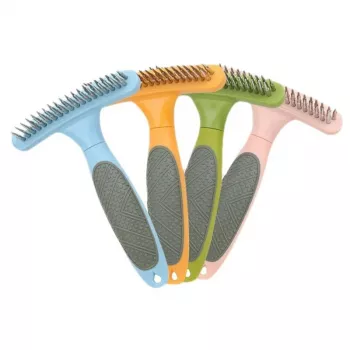
For everyday coat maintenance, try the Pet Hair Removal Comb for Cats & Dogs for quick, controlled passes that lift loose hair before it ends up around the house.
To keep grooming supplies organized in one spot between sessions, a vertical stand can help reduce clutter and make routines easier to stick with, such as the Hair Dryer Stand with Vertical Storage Rack.
FAQ
Can a hair removal comb help with mats and tangles?
It can help prevent mats and work through small tangles, especially when you comb in small sections and start at the ends. If a mat is tight to the skin or feels dense, don’t pull—professional grooming is safer than forcing a comb through.
How often should cats and dogs be combed for shedding?
Short-haired pets often do well with quick combing 2–3 times per week, while long-haired or double-coated pets may need more frequent sessions—especially during seasonal shedding. Keep sessions short and stop if you see redness or your pet becomes uncomfortable.
Is brushing safe for pets with sensitive skin?
Yes, when you use very light pressure, avoid irritated areas, and keep sessions brief during calm moments. If redness, scabs, or persistent itching continues, pause grooming and ask a veterinarian for guidance.
Recommended for you












Leave a comment