What are the disadvantages of a GaN charger?
GaN (gallium nitride) chargers are popular for being compact and powerful, but they’re not perfect. The downsides usually come down to price, heat behavior in a smaller body, and compatibility expectations—especially when you’re charging multiple devices at once.
Potential drawbacks to know before buying
Higher cost than basic chargers
GaN chargers typically cost more than standard silicon chargers with similar wattage. The smaller size and newer components often raise the price, which may not be worth it if you only need a slow, single-device charger.
They can run warm (sometimes very warm)
GaN is efficient, but high-wattage fast charging still creates heat—especially in compact enclosures. It’s normal for a GaN wall charger to feel hot during heavy use (like charging a laptop), which can be uncomfortable in tight spaces or warm rooms.
Advertised wattage may not match real-world multi-port use
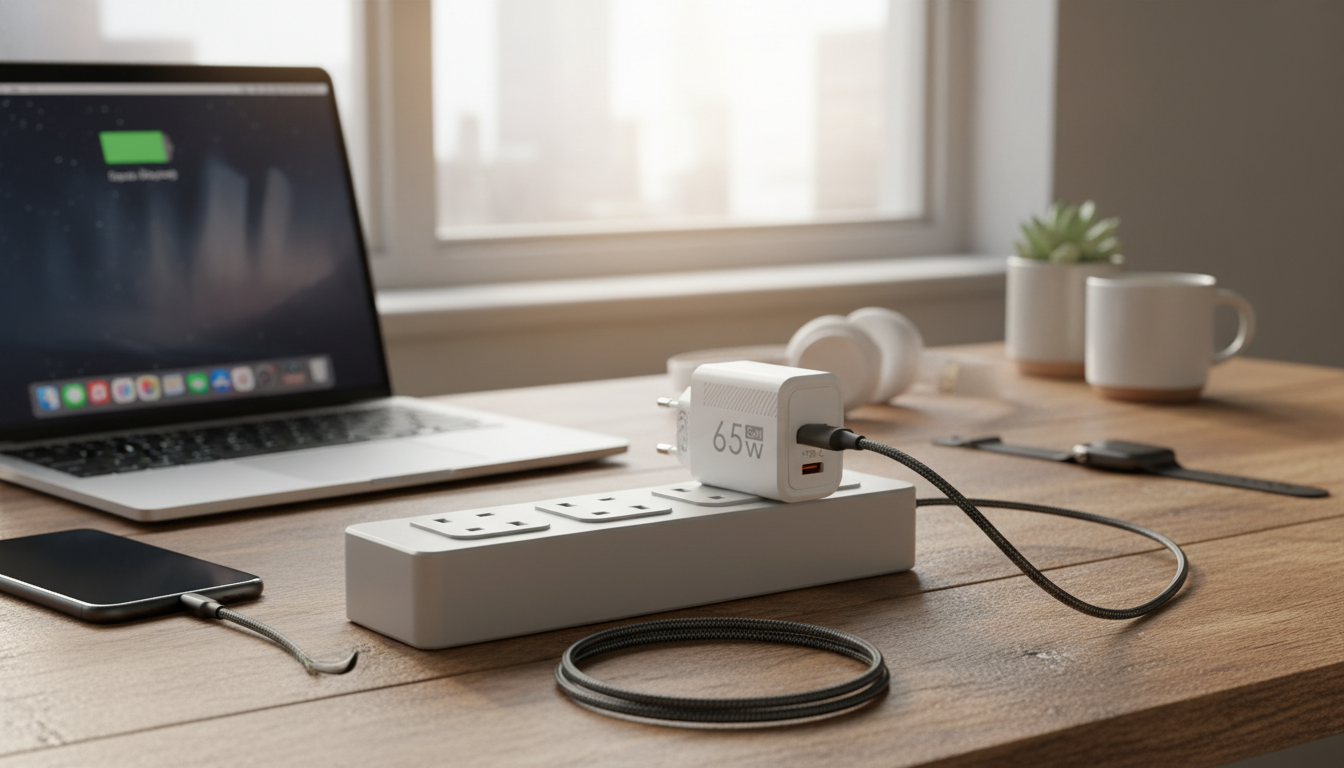
Many GaN chargers share total output across ports. For example, a “65W” model may only provide the full 65W on one port; plug in a second device and the power can split, slowing one or both devices.
Charging behavior can be unpredictable with certain devices
Fast charging depends on USB-C Power Delivery (PD), Quick Charge, cables, and device requirements all lining up. Some devices may charge slower than expected, refuse to fast charge, or repeatedly renegotiate power when another device is plugged in.
More features can mean more complexity
Extra ports, PPS support, foldable prongs, and smart power distribution are useful—but they also add variables. A simpler, single-port charger can sometimes be more straightforward for travel or a dedicated setup.
If you’re comparing sizes, charging standards, and what “65W” actually means in daily use, see the detailed guide here: 65W GaN USB-C wall charger guide.
FAQ
Is a GaN charger safe to leave plugged in?
Quality GaN chargers from reputable brands are generally safe to leave plugged in, but they can still draw a small amount of standby power. If it gets unusually hot at idle or shows damage, unplug and replace it.
Recommended for you












Leave a comment