A leather strap can change how an Apple Watch feels and looks from morning commute to evening plans. The right leather, fit, and hardware make the difference between a band that breaks in beautifully and one that feels stiff, slips, or wears out early.
Why Leather Works So Well on an Apple Watch
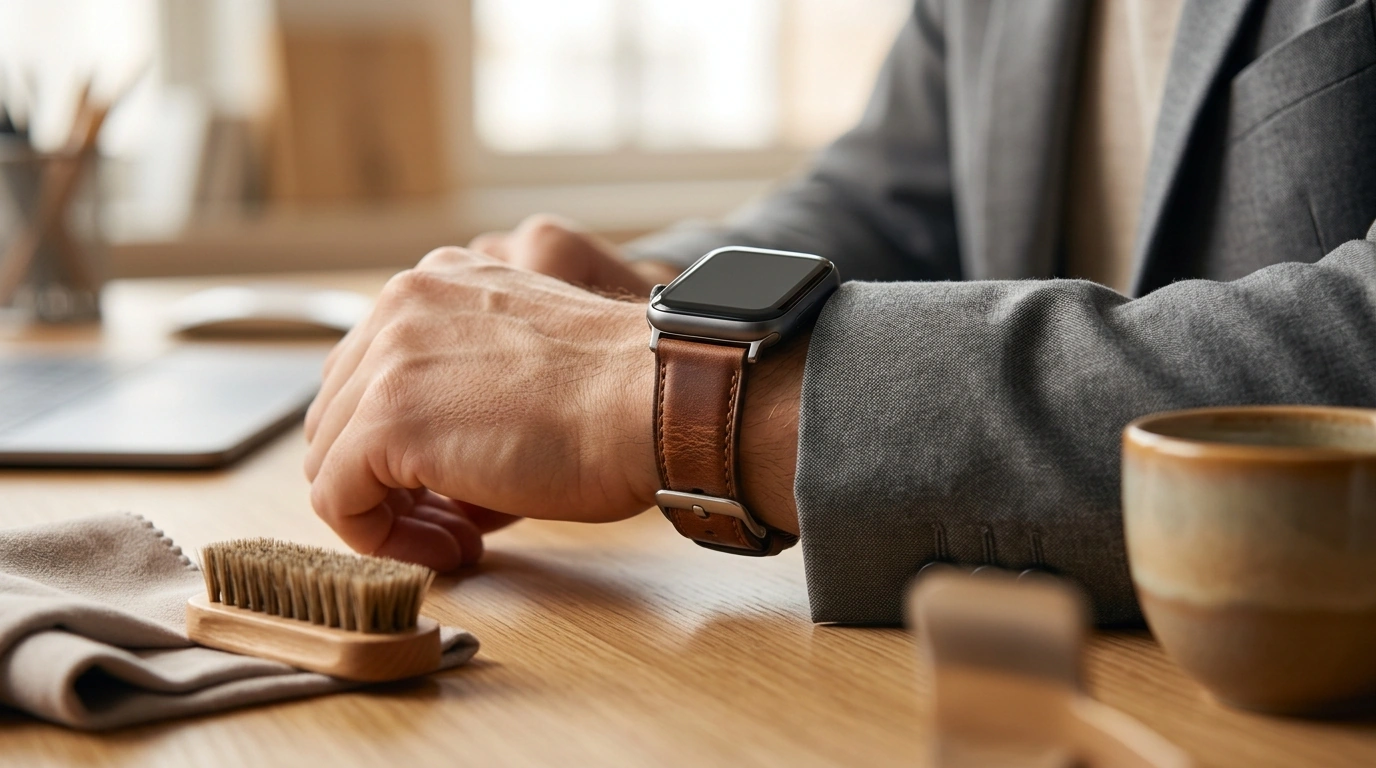
Leather is one of the easiest ways to make an Apple Watch feel more like a traditional timepiece while staying practical for everyday wear. It starts out structured, then gradually adapts to your wrist for a more personal fit.
- Soft, skin-friendly feel that becomes more comfortable as it breaks in
- A classic look that pairs easily with business wear, casual outfits, and dressier settings
- Natural patina over time adds character instead of looking “worn out”
- Easy to swap for different occasions without changing the watch itself
Leather Types and Finishes to Know
Not all leather straps age the same way. The hide quality, surface finish, lining, and edge treatment all influence how the strap feels after a month of wear—and how it looks after a year.
- Full-grain leather: durable surface, develops the most noticeable patina, often best for long-term wear
- Top-grain leather: smoother and more uniform appearance, typically more resistant to visible blemishes
- Genuine leather: broad category; quality varies, so construction and stitching matter
- Finish matters: matte feels understated; glossy looks dressier but may show scuffs more easily
- Lining and edge paint: influence comfort and longevity, especially where the band contacts skin
Common leather strap options and what to expect
| Option |
Best for |
Typical feel over time |
Watch-outs |
| Full-grain |
Everyday wear + aging nicely |
Softens and darkens with patina |
Can show water spots; avoid soaking |
| Top-grain |
Clean, consistent look |
Breaks in evenly |
May not patina as dramatically |
| Suede/nubuck |
Soft, casual texture |
Very comfortable, absorbs oils |
Stains easier; not ideal for rain/sweat |
| Smooth finished leather |
Dressy, polished outfits |
Holds shape well |
Scuffs can be more visible |
Fit and Compatibility: Getting the Right Size
Comfort starts with the right match between your Apple Watch case and the band connectors. Apple Watch sizes are commonly grouped into case “families” (38/40/41 mm and 42/44/45/49 mm depending on model), and a strap designed for one family typically won’t sit correctly on the other.
- Match the strap size to the watch case size family for a secure fit
- Choose a length that allows the buckle to sit centered under the wrist rather than on the side
- A proper fit should allow a finger to slide under the band without leaving deep marks
- Consider wrist swelling during heat or long days; leather feels best when not over-tightened
- Connector quality matters: secure lugs reduce wobble and help prevent accidental release
If you’re unsure about band changes, Apple provides step-by-step guidance on safe swapping in Apple Support: Change your Apple Watch band.
Comfort Details That Matter Day to Day
Two leather straps can look similar on day one and feel completely different by week two. Small build details tend to show up most during all-day wear at a desk, during commutes, or when typing.
- Stitching: tight, even stitches resist fraying and keep edges from lifting
- Edge finishing: sealed edges reduce irritation and help prevent cracking
- Buckle and hardware: smoother underside reduces pressure points; finish should resist scratches
- Thickness: thinner straps feel lighter; thicker straps can feel more premium but may be stiff at first
- Breathability: leather can trap heat; rotating straps helps if you wear a watch all day in hot weather
Care and Longevity: Keeping Leather Looking Good
Leather rewards simple habits. Keep it clean, keep it dry, and avoid “quick fixes” like harsh cleaners that strip oils and accelerate cracking. Apple also shares general cleaning best practices in Apple Support: Clean and care for your Apple Watch.
- Avoid water exposure when possible; remove the watch band for swimming, showers, and heavy rain
- If damp, pat dry with a soft cloth and air-dry away from heat sources
- Wipe down weekly to remove oils and dust that can darken high-contact areas
- Condition occasionally with a leather conditioner suited to the finish (use sparingly)
- Store flat or gently curved; avoid tight bends that can crease the leather
For broader leather sustainability and materials guidance, the Leather Working Group is a widely recognized industry resource.
Style Pairings: Making One Strap Work Harder
If you want an easy way to shift your Apple Watch toward a classic look for workdays, dinners, and everyday errands, the Premium Leather Strap for Apple Watch is a straightforward option. The best results come from correct sizing, a comfortable fit (snug but not tight), and basic leather care—especially keeping the band away from heavy moisture.
More In-Stock Everyday Upgrades
FAQ
Can a leather strap be worn during workouts?
Leather absorbs sweat and moisture, so it’s better for light activity. For intense workouts or water exposure, swap to a sport band and let the leather fully dry before wearing it again.
How should a leather Apple Watch strap fit?
It should be snug enough to keep sensors stable, but not tight; a finger should slide under the band. The buckle should sit comfortably under the wrist without twisting to the side.
How can leather be cleaned without damaging it?
Wipe it with a soft, slightly damp cloth, then dry immediately. Avoid soaking and harsh soaps, and condition lightly only when the leather starts to look dry.
Recommended for you











Leave a comment