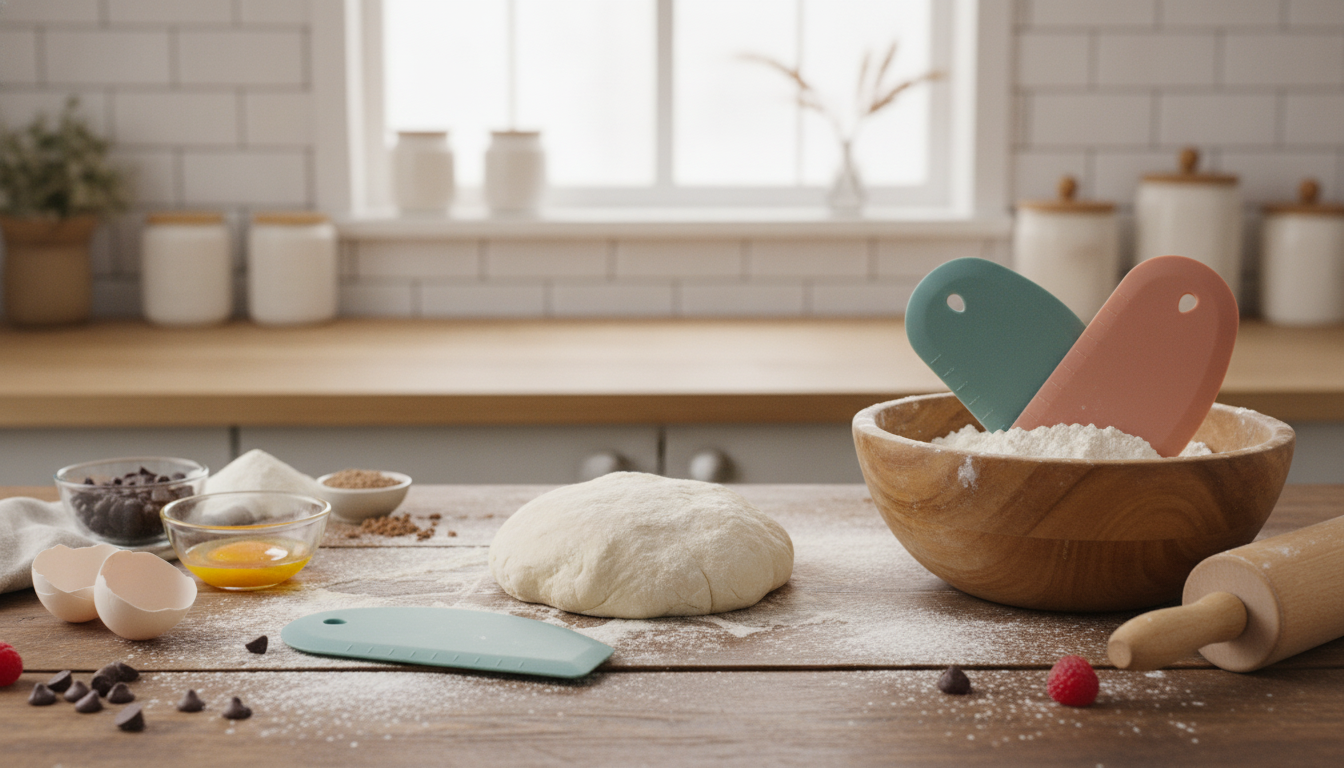
A flexible, food-safe silicone scraper that also works as a dough cutter makes everyday baking faster and cleaner—helping lift, portion, and transfer dough while protecting bowls, counters, and nonstick surfaces. Instead of switching between a rubber spatula, a bench knife, and your hands, this all-in-one tool handles the “sticky parts” of baking with less waste and less cleanup.
For anyone who bakes bread, pizza, cookies, or pastries (or simply wants tidier meal prep), a soft silicone edge can make mixing and bench work feel more controlled—especially when you’re dealing with wet dough, thick batter, or butter-heavy mixtures.
What It Does in the Kitchen
- Scrapes sticky dough and batter from bowls with minimal waste.
- Cuts and portions dough for rolls, biscuits, and pastry prep.
- Lifts chopped ingredients and transfers them to pans or mixing bowls.
- Smooths frosting, spreads fillings, and tidies up work surfaces quickly.
Unlike rigid scrapers that can leave “pockets” of flour or batter behind, soft silicone bends into the curve of a bowl, helping you chase down the last streaks of butter or the last ribbon of cake batter. On the counter, it acts like a gentle bench tool for gathering dough, pulling it together, and portioning it into more consistent pieces.
Why Soft Silicone Makes a Difference
- Flexible edge conforms to curved bowls and corners for cleaner scraping.
- Gentle on nonstick cookware and bakeware compared with metal tools.
- Comfortable control for pressing, folding, and turning dough during mixing and bench work.
- Quick rinsing between steps helps keep flour, butter, and batter from building up.
Silicone is popular in modern kitchens for a reason: it’s grippy, flexible, and less likely to damage delicate finishes. If you mix in nonstick bowls, use coated sheet pans, or prep on surfaces you want to protect, a soft silicone cutter can feel like the safer daily driver. For more context on materials used for food contact, the U.S. FDA maintains information on food contact substances.
Everyday Uses: Baking, Cooking, and Prep
- Bread and pizza: divide dough portions and lift sticky dough off the counter.
- Cookies and brownies: scrape batter into a pan and level the surface.
- Pastry: gather flour-butter mixtures and tidy the bench without scratching it.
- Savory prep: scoop chopped veggies, herbs, or minced garlic and transfer cleanly.
- Meal prep: portion soft foods (mashed potatoes, hummus) and smooth into containers.
This tool shines when ingredients want to cling—think enriched doughs, thick cookie dough, or brownie batter. It also works as a quick “scoop” for moving chopped onions or diced peppers from the cutting board to the skillet, minimizing stray pieces and reducing how often you need to wipe the counter.
Quick Start: Better Results with Simple Techniques
- Scrape bowls smartly: use the edge at a low angle and rotate the bowl instead of forcing the tool.
- Divide dough cleanly: dust the edge lightly with flour to reduce sticking.
- Fold with control: scoop from the bottom and turn dough over the top; repeat for gentle kneading.
- Smooth frosting neatly: use long, light strokes rather than short, heavy passes.
When portioning dough, press down with steady pressure and “rock” slightly to complete the cut. For very wet doughs, a lightly dampened edge can prevent dragging. During pastry work, use the scraper like a tidy-up tool: gather flour, pull butter pieces back to center, and keep your bench clear so your dough stays manageable.
Care and Food-Safety Tips
- Wash with warm soapy water after use; rinse thoroughly to remove oils and flour.
- Dry completely before storing to help prevent odors.
- Avoid exposing silicone tools to direct flame or high-heat broiler conditions.
- If discoloration occurs from spices or sauces, soak briefly in warm water with mild detergent.
Silicone is low-fuss, but good habits keep it fresher longer. If you’re switching between sweet and savory tasks, a quick wash or thorough rinse helps prevent flavor transfer. For broader guidance on cleaning and sanitizing in the kitchen, the USDA FSIS offers practical tips on kitchen cleaning and sanitizing.
Silicone Scraper vs. Metal Bench Scraper
Metal bench scrapers are classic for a reason: they’re sharp and decisive. But for many home kitchens, soft silicone is the better everyday choice—especially when you want one tool that can work in bowls and on counters without worrying about scratches.
At-a-Glance Comparison
| Feature |
Soft Silicone Scraper & Cutter |
Metal Bench Scraper |
| Bowl scraping |
Excellent |
Limited |
| Countertop protection |
High |
Varies; can scratch |
| Cutting firm dough |
Good for portioning |
Excellent for sharp cuts |
| Nonstick-safe |
Yes |
Not always |
| Cleanup |
Easy |
Easy to moderate (sharp edge) |
Product Snapshot
- Title: Soft Silicone Baking Scraper & Dough Cutter
- Typical use: scraping bowls, portioning dough, and transferring ingredients
- Why it earns a spot: a value-friendly kitchen essential suited for beginners and frequent bakers alike
More In-Stock Home Finds
FAQ
Can a silicone dough cutter be used on nonstick pans and bowls?
Yes. Silicone is generally nonstick-safe and helps reduce scratch risk compared with metal tools; use gentle pressure and wash off any gritty flour or sugar that could rub against coatings.
How do you keep sticky dough from clinging to the scraper?
Lightly flour the edge, use a quick lift-and-release motion, and rinse/dry the tool between steps when buildup starts. For very wet dough, a lightly dampened scraper can help reduce sticking.
What’s the best way to clean and remove odors from silicone tools?
Wash with warm soapy water, rinse thoroughly, and let it dry completely before storing. If odors linger, soak briefly in warm water with mild detergent and avoid exposing the tool to very high heat, which can set smells.
Recommended for you












Leave a comment