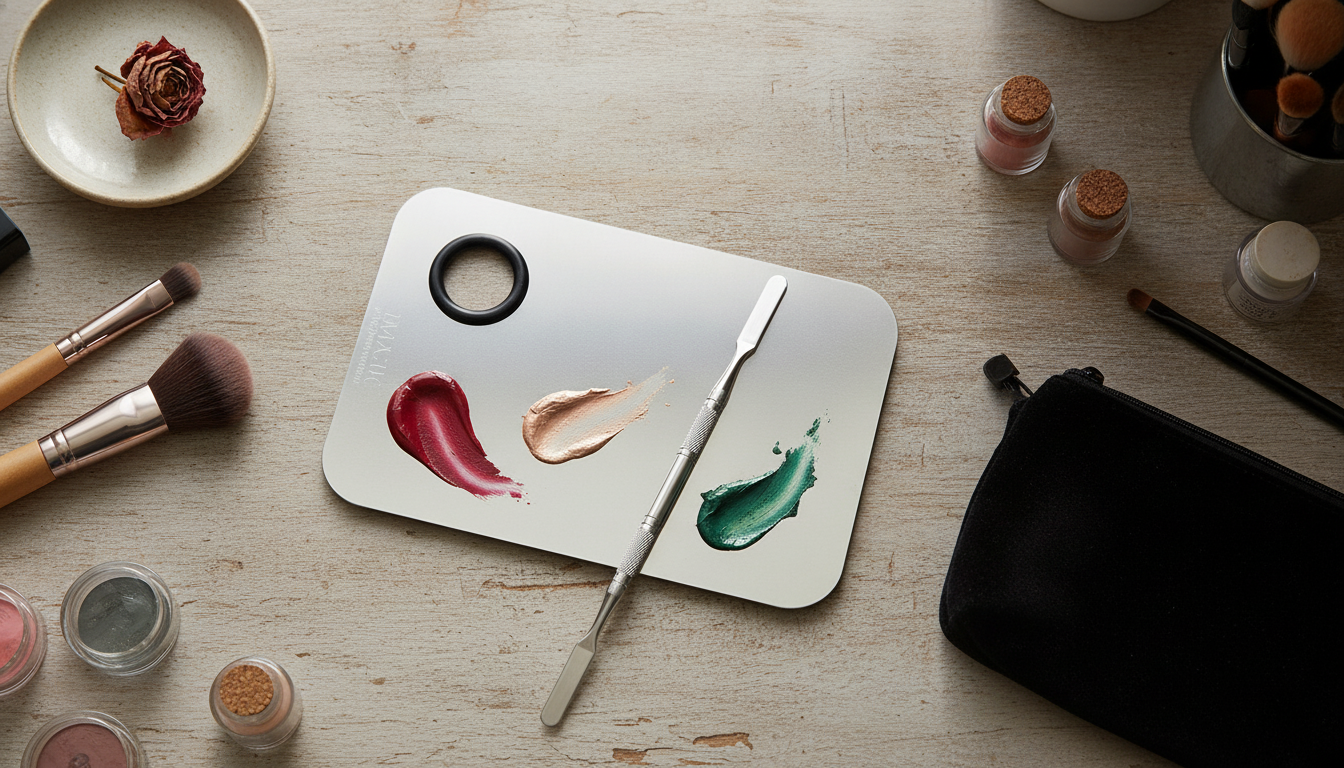
A stainless steel mixing palette tray keeps custom shades clean, consistent, and easy to work with—whether blending foundation, concealer, cream blush, lip colors, or pigments. Its smooth, non-porous surface helps prevent product waste and supports hygienic, repeatable color mixing for everyday makeup and pro kit use.
Why a stainless steel mixing tray belongs in a makeup kit
Mixing on the back of the hand may feel convenient, but it can make color control and hygiene harder than it needs to be. A dedicated stainless steel tray creates a neutral workspace that supports better results and a cleaner routine.
- Creates a dedicated surface for blending liquids and creams instead of using the back of the hand
- Helps achieve consistent shade matching by mixing measured amounts side-by-side
- Non-porous metal surface is less likely to absorb product or stain compared with some plastics
- Supports cleaner workflow for clients: separate mixing area from application tools and skin
- Speeds up application by keeping custom mixes ready and accessible during a routine
For anyone who adjusts shade seasonally, corrects undertone with mixers, or likes more controlled application, a mixing tray quickly becomes one of those tools that makes everything feel more organized.
What makes stainless steel a practical mixing surface
Stainless steel is popular in pro kits because it performs predictably under daily use. It’s not about being fancy—it’s about having a surface that behaves the same way every time you blend.
- Smooth finish encourages even blending with spatulas and brushes without catching or tearing product
- Non-reactive surface works well with most foundations, concealers, creams, and pigments
- Easy wipe-down between shades to avoid muddy color results
- Durable material resists warping and cracking from daily use and frequent cleaning
- Cool-to-the-touch feel can help keep cream products from getting overly warm during mixing
Because the surface doesn’t “grab” product the way porous materials can, you’ll usually find it easier to spread a mix thinly, check the undertone, then gather it back up without wasting as much.
Common uses: what can be mixed on the tray
A stainless steel palette isn’t limited to foundation. It’s a flexible mixing station for the products that benefit most from micro-adjustments.
- Foundation: adjust undertone (warm/cool/neutral) by blending mixers or neighboring shades
- Concealer: customize brightness for under-eye vs spot concealing
- Cream blush/bronzer: create gradient tones and soften intensity before placement
- Lip color: blend pigments or lipsticks for custom shades and ombré looks
- Pigments and creams: combine for editorial effects while keeping the main containers clean
- Nail or body-safe color products: create small batches for controlled application (always follow product labeling)
One underrated benefit: keeping the main bottle or pot cleaner. Dispensing onto a tray helps reduce repeated brush-dipping, which can introduce oils, skin contact, or airborne debris into product containers over time.
How to mix colors cleanly and efficiently
A good tray helps most when you use it with a simple, repeatable system—especially if you’re matching multiple people, working under time pressure, or trying to replicate a mix you loved last week.
For general consumer hygiene guidance around cosmetics and safe use, the FDA’s cosmetics tips for consumers are a helpful reference point.
Quick comparison: mixing tray vs other surfaces
Mixing surface options at a glance
| Surface |
Best for |
Pros |
Trade-offs |
| Stainless steel tray |
Daily mixing of creams and liquids; pro or home use |
Non-porous, easy to sanitize, durable, smooth blending |
Can feel cool; needs wiping to remove oily residue |
| Plastic palette |
Occasional mixing |
Lightweight, inexpensive, often comes in multi-well designs |
May stain or hold odor over time; can scratch |
| Acrylic palette |
Color mixing with visibility underneath (some styles) |
Smooth surface, lightweight, often transparent |
Can scratch; may cloud with harsh cleaners |
| Disposable paper palettes |
Single-use hygiene and travel |
Fast cleanup, no sanitizing between uses |
Ongoing replacement cost; less stable; not as smooth for blending |
Cleaning and hygiene basics for a stainless steel palette
For broader disinfection principles and why contact time matters, the CDC’s guideline on disinfection and sterilization provides useful context that can inform better cleaning routines.
Who benefits most from a mixing tray
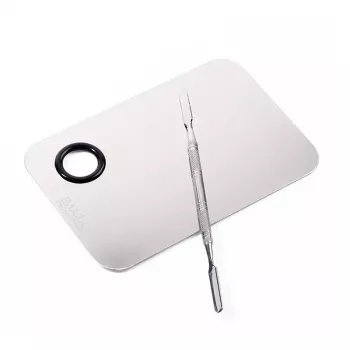
If you want a simple, dedicated surface that’s easy to wipe down and comfortable to use at a vanity or in a travel bag, Professional Stainless Steel Makeup Palette Tray for Mixing Colors is designed for controlled blending of creams, liquids, and pigments.
Shop tools for a cleaner vanity setup
FAQ
Can liquid foundation and cream products be mixed together on the same tray?
Yes in most cases, as long as the formulas are compatible. Mix a small amount first and watch for separation or texture changes, and clean the tray between different product types to keep results true-to-color.
How should a stainless steel mixing palette be sanitized between clients?
Remove product residue, wash with mild soap and warm water, and dry completely. Then apply an appropriate disinfectant according to the label directions and required contact time, avoiding abrasive tools that could scratch the surface.
Will stainless steel stain or hold onto pigment?
Stainless steel generally resists staining because it’s non-porous. Wiping promptly after use and cleaning with gentle soap typically removes pigment and oils; for heavier residue, clean thoroughly before your next mix.
Recommended for you











Leave a comment