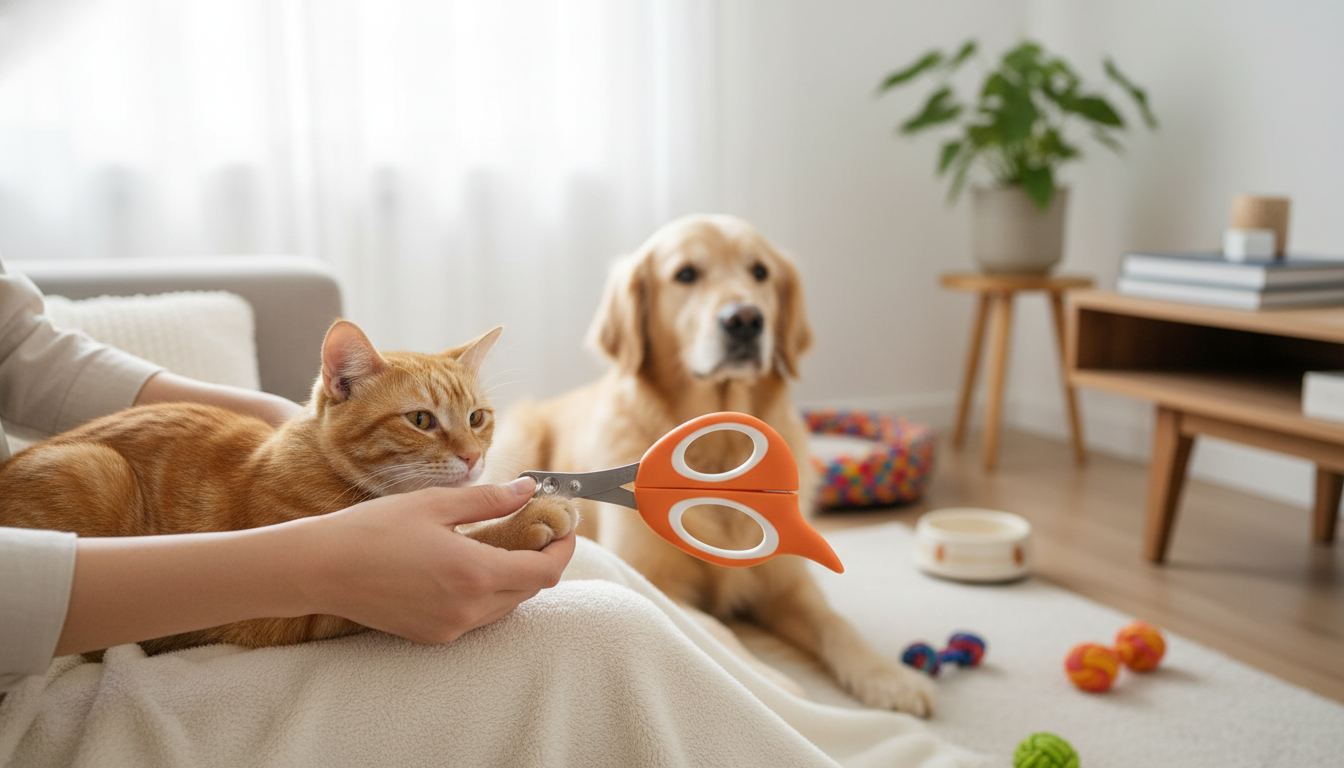
Regular nail trims help pets move comfortably, protect floors and furniture, and reduce the risk of painful splitting or snagging. A well-designed clipper makes the job quicker and safer, especially for small paws, dark nails, and wiggly pets. With a simple routine and the right tool, most households can keep nails neatly maintained between grooming or vet visits.
Why routine nail care matters
Nails that grow too long don’t just “look overdue”—they can change how your pet stands and walks. Keeping a consistent trimming schedule supports comfort and prevents common nail issues that can snowball into bigger problems.
- Supports natural posture and gait by preventing overgrown nails from pushing toes out of alignment
- Reduces cracking, splitting, and snagging on carpets or blankets
- Helps avoid scratches during play and handling
- Makes grooming visits less stressful when nails are maintained between appointments
For broader pet-care basics and handling guidance, reliable references like the American Veterinary Medical Association (AVMA) and VCA Animal Hospitals are helpful starting points.
What to look for in a quality nail clipper
A good nail clipper should feel predictable in your hand—steady, sharp, and easy to control. The goal is a clean slice that minimizes nail fraying and keeps you from needing to “squeeze harder,” which can make pets flinch.
- Sharp cutting edges for a clean slice instead of crushing the nail
- Comfortable, non-slip grip for better control with one hand
- A safety guard or stop to help limit how much nail is removed at once
- A secure hinge and smooth action to prevent sudden jumps during cutting
- A size that fits the pet’s nail thickness (cats and small dogs typically need smaller jaws than large dogs)
Clipper options and when they work best
| Tool type |
Best for |
Pros |
Watch-outs |
| Scissor-style clippers |
Most dogs; many cats with thicker nails |
Strong leverage and stability; easy to see the cutting line |
Choose the right size—oversized jaws can feel clumsy on small paws |
| Guillotine-style clippers |
Small dogs and some cats |
Compact; can feel less bulky in tight spaces |
Blades can dull faster; alignment matters to avoid crushing |
| Nail grinder |
Finishing edges; pets sensitive to clipping |
Rounds edges smoothly; good for small incremental removal |
Noise/vibration may bother some pets; avoid heat buildup by using short bursts |
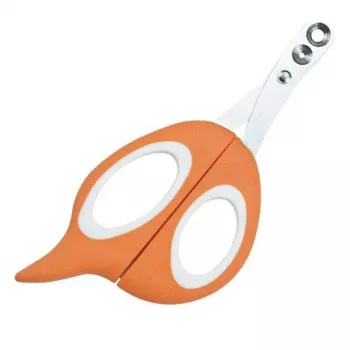
If you’re building a simple at-home grooming kit, the Professional Dog and Cat Nail Clipper is designed for controlled trimming on both dog and cat nails. A clipper that feels stable in your grip makes it easier to take small, careful cuts—especially when you’re working with tiny paws or nails that are dark and harder to read.
- Designed for controlled trimming on both dog and cat nails
- Helps create cleaner cuts to reduce fraying and splitting
- Works well as a home grooming essential for quick touch-ups between full grooming sessions
- Pairs well with styptic powder and a simple handling routine for safer trims
Shop a few helpful extras
Keeping grooming calm is easier when you’re comfortable and prepared. Along with your clipper and a little treat stash, these in-stock items can be nice add-ons for a home routine:
How to trim nails safely (step-by-step)
A calm setup and small, consistent cuts are the two biggest factors for safer trims. Plan for a few minutes—then stop while things are still going well.
- Prepare the space: bright lighting, a towel or non-slip mat, and treats ready before bringing the pet in.
- Handle the paw first: gently press the toe to extend the nail; reward calm behavior.
- Identify the quick: in light nails it appears pink; in dark nails, trim tiny amounts and watch the center—stop when a gray/black dot appears.
- Trim small increments: aim for multiple small cuts rather than one large cut.
- Cut at a slight angle: follow the nail’s natural curve; avoid cutting straight across into the quick.
- Smooth edges if needed: use a file or grinder, especially for cats or brittle nails.
- Finish positively: treat, praise, and a short play break to prevent dread next time.
Reducing stress for anxious or wiggly pets
Some pets don’t mind nail trims; others act like the clipper is a personal insult. If you have a squirmy pup or a cat that turns into a spinning top, focus on “low drama” progress rather than finishing all nails in one sitting.
If a nail bleeds: what to do
Cleaning, storage, and blade care
FAQ
How often should dog or cat nails be trimmed?
Most pets need trims every 2–6 weeks depending on growth rate, activity level, and the surfaces they walk on. Nails shouldn’t click loudly on hard floors, and they shouldn’t curl under toward the paw pad.
Can a dog and cat use the same nail clipper?
Yes, as long as the clipper size and cutting jaws match the nail thickness. Cats and small dogs typically need smaller, more precise jaws, while large dogs often need a sturdier, larger clipper.
What’s the safest way to trim black nails?
Use bright light and trim very small amounts at a time. Watch the cut surface for a small dark center dot and stop before reaching it, or switch to a grinder for extra control.
Recommended for you










Leave a comment