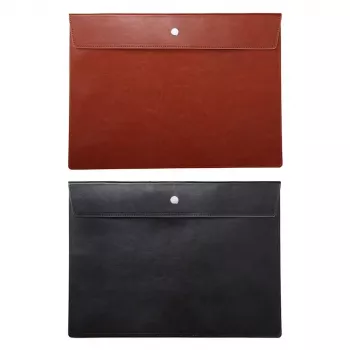
Large Capacity A4 Leather Document Pouch for Office and School
A4 papers, tablets, and daily paperwork stay easier to manage when they have a dedicated place. A large-capacity leather-look document pouch is built for a clean professional appearance, faster access during meetings or classes, and dependable organization for files that need to travel without bending, curling, or disappearing into the bottom of a bag. If your day includes printed reports, class handouts, forms, or travel documents, a structured pouch can help you move from “paper pile” to “ready-to-go” in one step.
What This Document Pouch Helps With
- Keeps A4 sheets, contracts, and class handouts together in one portable folder
- Supports a tidy work bag by separating paperwork from chargers, pens, and small accessories
- Reduces corner bends and crumpled pages compared with loose papers in a backpack
- Works as a simple meeting folder for notes, agendas, and printed presentations
- Useful for exam prep, tutoring sessions, interviews, and client visits
Paper sizes can be surprisingly specific—A4 is a global standard defined under the ISO 216 system, which is why many schools and offices outside North America default to it (ISO 216 paper size standard). When your pouch matches the documents you actually receive, you avoid quick folds that turn into permanent creases.
Design and Everyday Carry Features
A well-made A4 document pouch aims for structure without bulk. Instead of acting like a thin sleeve, the “large-capacity” idea is about holding real-life stacks—multiple packets, several sets of meeting notes, or a small tablet paired with paperwork—while still staying flat enough to slide into a tote or backpack.
- A4-friendly format for standard office and school documents
- Leather-look exterior for a polished appearance in professional settings
- Large-capacity interior to hold multiple documents at once instead of a thin sleeve
- Folder-style structure that keeps items stacked flat for easier retrieval
- Lightweight option for commuting, campus walking, and quick errands
Where It Fits Best
| Use case |
What to carry |
Why it works |
| Office meetings |
Agenda, printed reports, notepad |
Everything stays together and presentable |
| School or college |
Handouts, worksheets, assignments |
Prevents loose pages from getting wrinkled |
| Interviews and auditions |
Resume copies, portfolio pages |
Clean look and quick access |
| Travel paperwork |
Itineraries, tickets, forms |
Keeps important papers in one place |
| Home organization |
Bills, warranties, certificates |
Creates a single grab-and-go file set |
How to Use It for Better Organization
A pouch works best when it supports a simple routine. The goal isn’t to carry everything—it’s to carry what you’ll actually reference today, in an order that makes sense when you’re standing at a counter, in a hallway, or at a conference table.
- Create simple sections: “To review,” “To sign,” and “To file” using thin dividers or labeled sheets
- Keep a dedicated page at the front for a running checklist of tasks tied to the documents inside
- Store frequently referenced items (schedule, reference sheet) in the same spot for consistent access
- Pair with a slim pen or small sticky-note pad so quick notes stay attached to the right paperwork
- Empty and reset weekly to avoid carrying outdated papers and to maintain quick findability
If you sometimes carry U.S. Letter documents too, remember that Letter and A4 are close but not identical; knowing the dimensions helps you predict fit before you buy (North American paper size dimensions reference).
Care Tips for a Leather-Look Document Folder
Leather-look materials are designed for everyday use, but a few habits keep the exterior neat and the folder structure crisp. Good care also protects the paper inside, since dirt and moisture often travel from the outside surface inward.
For general paper-care best practices—especially for certificates, important forms, or documents you need to keep clean—standard preservation guidance emphasizes avoiding excess moisture, heat, and pressure (Library of Congress: care and handling guidance).
What to Check Before Buying
Quick Buying Checklist
| Check |
Why it matters |
Simple test |
| A4 fit |
Prevents folding or trimming documents |
Place an A4 sheet inside and close it without bending |
| Room for stacks |
Avoids tearing edges when inserting packets |
Try a thick handout bundle or multiple reports |
| Ease of access |
Speeds up meetings and classes |
Open/close one-handed while holding other items |
| Exterior resilience |
Helps it stay neat longer |
Lightly rub with fabric—surface should resist snagging |
| Bag compatibility |
Reduces bulk and awkward packing |
Slide into the compartment used most often |
In-Stock Picks for Everyday Organization
If you want a straightforward option for keeping paperwork flat and ready to present, this in-stock folder is a practical daily carry for both professional and academic settings: Large Capacity A4 Leather Document Pouch – Professional File Folder for Office & School.
For at-home organization that complements a tidy routine—especially if mornings start with getting ready fast—this storage solution is also in stock: Hair Dryer Stand with Vertical Storage Rack.
FAQ
Will an A4 leather document pouch fit standard letter-size paper too?
Often, yes, but it depends on the pouch’s internal width and how full it is. Letter-size paper is slightly shorter and a bit wider than A4, so a snug A4 pouch may fit Letter loosely in length but feel tight across the width when carrying thick stacks.
How many sheets can a large-capacity document pouch hold?
A practical range is typically a moderate stack up to a thick meeting packet, but the exact number depends on paper weight and whether you’re adding booklets or sleeves. To keep pages flat and corners protected, avoid overstuffing past the point where the folder stops closing comfortably.
How do you clean and maintain a leather-look file folder used daily?
Wipe it with a soft, slightly damp cloth and use a small amount of mild soap if needed, then dry fully at room temperature. Avoid harsh solvents and high heat, and store it flat without overloading it so the structure holds its shape.
Recommended for you











Leave a comment