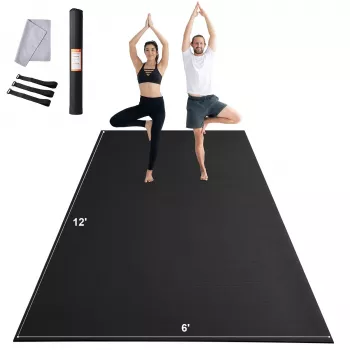
12×6 FT Non-Slip High Density Exercise Mat with Bag for Yoga and Home Workouts
A full-length, extra-wide exercise mat changes how home training feels: more room to move, better grip for transitions, and more cushioning for knees, elbows, and hips. A 12×6 ft non-slip, high density mat also helps define a dedicated training zone—especially useful when your “gym” is a corner of the living room or a shared family space. With an included carry/storage bag, it’s easier to roll up, store neatly, and bring out again without turning setup into a chore.
Whether sessions lean toward yoga flows, stretching, HIIT circuits, or bodyweight strength, a larger mat can make workouts feel smoother because hands and feet stay on one consistent surface from warmup to cooldown. For general activity guidance and balanced weekly routines, reputable resources like the CDC and ACSM offer practical frameworks you can apply at home.
Who This Extra-Large Mat Fits Best
- Home gyms that need one surface for multiple activities (mobility work, strength circuits, cardio intervals) without constantly repositioning smaller mats.
- Yoga practitioners who want room to breathe in wide stances, transitions, and floor sequences without stepping off the mat mid-flow.
- Taller users or anyone who prefers full-body coverage for planks, hollow holds, prone back work, and long-hold stretches.
- Households sharing a workout area—one large mat can define a clean training zone and help protect flooring from daily wear.
Size, Thickness, and Floor Coverage
A 12×6 ft footprint can eliminate the “patchwork” feeling of combining smaller mats or interlocking tiles—especially for lateral warmups, bear crawls, or mobility flows that travel side to side. The extra coverage also helps keep hands and feet on the same material when moving quickly between exercises (for example: burpees to lunges to mountain climbers), which can make transitions feel more predictable.
Before ordering, measure the intended area and leave a buffer around the edges for safe movement and ventilation. If the space is tight, consider how the mat will roll and where the bag will live between sessions (closet, under a couch, behind a door).
Quick Specs at a Glance
| Feature |
What to Expect |
Why It Matters |
| Overall size |
12×6 ft |
Room for wide stance work, full-body stretching, and multi-exercise circuits |
| Surface |
Non-slip grip |
More stable footing and hand placement during transitions |
| Core material |
High density |
Better comfort on joints and improved shock absorption |
| Includes |
Carry/storage bag |
Easier to store, transport, and keep clean when not in use |
Grip and Stability for Yoga and Fitness
Grip is more than a nice-to-have: it directly affects how confident movements feel when bodyweight shifts quickly. A non-slip surface can help reduce micro-sliding in poses and exercises where hands bear load—think downward-dog variations, push-ups, plank holds, or fast step-backs.
For high-sweat sessions, pairing the mat with a towel can improve traction and comfort while keeping the surface drier. Also, traction depends on what’s underneath: place the mat on a clean, flat floor, since dust and grit can reduce grip and wear down the surface over time.
Comfort, Cushioning, and Joint Support
High density construction is often the difference between “tolerable” floor work and sessions you’ll actually repeat. It can help distribute pressure during kneeling sequences, hip-openers, floor core work, and longer stretches—especially when knees, elbows, or hips contact the mat repeatedly.
For jumping or dynamic workouts, cushioning can reduce perceived impact on hardwood or concrete, though supportive footwear may still feel better for high-impact intervals. If workouts include heavy equipment (such as loaded racks, sharp-edged benches, or heavy dumbbells dropped from height), consider a separate protective layer or a designated equipment zone to reduce dents or tears.
Best Uses: Workouts That Benefit From Extra Space
- Yoga flows: sun salutations, warrior sequences, wide-legged folds, and transitions that travel forward/back without stepping onto bare floor.
- Strength circuits: lunges, bear crawls, plank variations, glute bridges, ab work, and mobility drills that need room for limb extension.
- Cardio intervals: low-impact HIIT, shadowboxing footwork, or agility-style steps (within safe limits and with adequate ceiling clearance).
- Family movement: partner stretching, kids’ activity time, or shared recovery sessions where one surface keeps everyone off slick flooring.
Carry Bag, Storage, and Setup Tips
Cleaning and Care
When a 12×6 FT Mat May Be Too Much
Product Options (In Stock)
FAQ
Is a 12×6 ft exercise mat good for yoga?
Yes—extra area supports wide stances and flowing transitions, and it’s especially helpful for taller users or sequences that travel forward and back. For sweaty sessions, adding a towel can improve comfort and traction.
How do you clean a high density exercise mat without making it slippery?
Use a gentle soap-and-water wipe-down and avoid harsh cleaners, strong solvents, or oily residues that can reduce grip. Let it dry completely and regularly remove dust from the surface to help maintain traction.
Will a large non-slip mat protect hardwood floors?
It can help reduce scuffs and absorb some impact from bodyweight training and low-impact cardio. For heavy equipment or sharp-edged items, add extra protection and keep grit off the underside to avoid scratching.
Recommended for you











Leave a comment