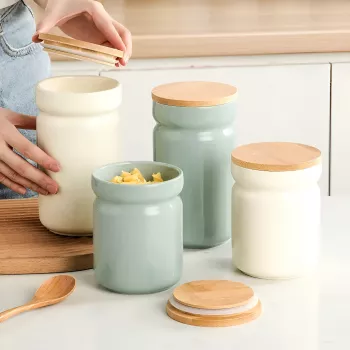
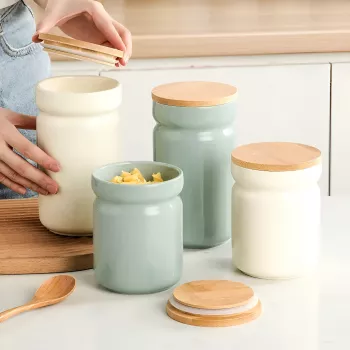
A ceramic storage jar topped with a bamboo lid brings together everyday practicality and a calm, natural look. It helps keep pantry essentials organized, reduces visual clutter on open shelves, and offers a simple way to store frequently used ingredients within reach. If the goal is a countertop that feels “put together” without looking precious, this kind of jar earns its spot quickly—especially for the foods you reach for every single day.
What Makes a Ceramic Jar with a Bamboo Lid Different
Compared with lightweight plastic containers or thin metal tins, a ceramic jar tends to feel more stable on the counter and can help block light—a helpful trait for items like coffee or tea that don’t love bright sun. The bamboo lid brings a warmer, softer contrast to either glossy or matte ceramic finishes, which is why these jars often work equally well in modern, farmhouse, and minimalist kitchens.
Just as important, a dedicated jar encourages better pantry routines: one ingredient per container, clearly labeled, and easy to refill. Many people use these as a countertop “daily driver” for coffee, tea, sugar, flour, or snacks rather than long-term deep pantry storage.
If you’re refreshing your setup, the Ceramic Food Storage Jar with Bamboo Lid is a simple upgrade that looks intentional on open shelving or a coffee station.
Best Uses Around the Kitchen
Ceramic jars with bamboo lids shine when they hold ingredients that benefit from easy access and a tidy container. A few high-impact ways to use them:
- Coffee beans or ground coffee: Keep it near the grinder, but avoid direct sun or storing right next to a heat source like a toaster oven.
- Loose-leaf tea and tea bags: Helps contain aromas and cuts down on packaging clutter.
- Sugar, salt, and baking staples: Creates a mini baking station that stays cleaner and easier to maintain.
- Snacks and treats: Portion-friendly storage for cookies, nuts, or candy—especially when the jar is opened often.
- Non-food uses: Cotton rounds, bath salts, or small items where a clean look matters.
For a cohesive kitchen corner, pairing functional storage with warm ambient lighting can make the whole area feel calmer. The Handmade Wabi Sabi Rattan Pendant Light complements ceramic-and-bamboo textures particularly well, especially over a coffee bar or open shelf run.
Freshness and Lid Fit: What to Look For
When it comes to keeping ingredients tasting fresh, lid fit matters more than the lid material itself. A well-seated lid helps slow moisture and odor exchange, which is typically what causes clumping, staleness, or unwanted scent transfer.
- Check the fit: The lid should sit flat and feel snug without rocking.
- Silicone gasket (if included): A gasket usually improves sealing for foods sensitive to humidity—think coffee, brown sugar, and cookies.
- Dry goods are forgiving: For salt and white sugar, a basic snug lid is often enough for everyday countertop use.
- Leave headspace: Avoid overfilling; a little room at the top helps the lid sit properly and reduces crumbs caught at the rim.
- Prevent scent transfer: If storing strong aromas (coffee, spices), keep one ingredient per jar and resist mixing refills.
For broader guidance on food storage timelines and best practices, the USDA’s FoodKeeper resource is a helpful reference for common pantry items.
Material and Food-Safety Notes
Ceramic is generally considered non-reactive, which makes it a popular choice for storing dry foods. That said, glaze quality still matters in daily use: a smooth, intact glaze is easier to clean and less likely to hold odors or stains over time. To keep the finish looking good, avoid abrasive scrubbers that can dull the surface and create micro-scratches.
Bamboo lids do best with gentle care. Keep them as dry as possible, wipe them clean rather than soaking, and dry promptly to help prevent warping. If you’re concerned about ceramic foodware safety, the U.S. Food & Drug Administration provides background on ceramics and potential contaminants here: Lead in Foodware, Dishes, and Ceramicware.
As a general rule, use ceramic jars for dry foods (not liquids) unless the product instructions explicitly support liquid storage.
Quick Guide to Choosing the Right Size and Set-Up
The right jar size depends less on aesthetics and more on how quickly you use what’s inside.
At-a-Glance: Features That Matter
| Feature |
Why it matters |
Practical tip |
| Ceramic body |
Blocks light and feels sturdy on counters |
Use for coffee/tea to reduce light exposure |
| Bamboo lid |
Adds warmth and keeps contents covered |
Wipe dry; avoid soaking to prevent warping |
| Gasket (if included) |
Improves sealing for humidity-sensitive foods |
Best for coffee, brown sugar, cookies |
| Wide mouth |
Easier scooping and refilling |
Choose wide openings for flour/sugar |
| Smooth glazed interior |
Simplifies cleaning and reduces odor retention |
Avoid abrasive pads to protect the finish |
Care and Cleaning for Long-Lasting Use
Styling Ideas for a Calm, Coordinated Counter
FAQ
Is a ceramic jar with a bamboo lid airtight?
Airtightness depends on how well the lid fits and whether it includes a silicone gasket. Many are great for everyday dry storage, but they aren’t a substitute for vacuum sealing when you need maximum freshness control.
Can the bamboo lid be washed in the dishwasher?
It’s best to hand-wash and dry the bamboo lid promptly. Dishwashers can cause swelling, cracking, or warping due to heat and prolonged moisture exposure.
What foods store best in ceramic storage jars?
Dry goods like coffee, tea, sugar, flour, oats, nuts, and cookies are great choices. Avoid liquids unless the product instructions specifically say the jar is designed for liquid storage.
Recommended for you








Leave a comment