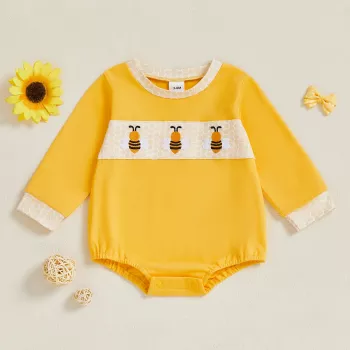
A long-sleeve romper with sweet bee embroidery is an easy, one-piece outfit for cooler days, layering, and everyday play. It keeps the diaper area covered while babies wiggle, crawl, and nap, and the embroidered detail adds a cheerful touch that looks great in quick photos without feeling “too dressed up.” Below are practical tips on comfort, closures, sizing, outfit pairings, and care so your little one stays cozy and the stitching stays neat.
What Makes This Bee-Embroidered Romper a Go-To Outfit
- One-piece simplicity: fewer items to coordinate and faster outfit changes when you’re juggling bottles, bags, and a busy baby.
- Long-sleeve coverage: helpful for breezy mornings, air-conditioned stores, and those in-between seasons when temperatures swing.
- Playful embroidery: the bee detail creates a focal point that feels special for everyday wear and pictures alike.
- Bodysuit-style fit: helps keep the diaper area covered when baby kicks and scoots, reducing shirt ride-up.
- Layering flexibility: works as a standalone outfit or as a base under pants, leggings, or a sweater.
If you’re shopping for a simple, ready-to-wear option, see the Baby Romper Long Sleeve Bee Embroidery Bodysuit Outfit for a cute one-and-done look that’s easy to build outfits around.
Material and Comfort Checklist
Comfort comes down to how the fabric feels, how it stretches, and what touches baby’s skin on the inside—especially around embroidery.
- Skin feel: choose soft, breathable materials that stay comfortable through play, stroller time, and naps.
- Stretch and recovery: a little give helps during wriggly changes; good recovery helps prevent sagging after washing.
- Embroidery backing: check that the inside behind the bee stitching is smooth so it doesn’t feel scratchy on the chest or tummy.
- Cuffs and leg openings: gentle elasticity helps keep sleeves and legs in place without leaving deep red marks.
- Layering comfort: when it’s chilly, add a lightweight cardigan or an undershirt rather than bulky layers that limit movement.
Closures and Diaper-Change Ease
When a diaper change happens at the worst possible moment, closure design matters more than almost anything else.
- Bottom snaps: let you change diapers quickly while keeping the top half mostly undisturbed.
- Neck opening: a wider or more flexible neckline makes pull-on changes easier, especially after spills.
- Even snap placement: helps reduce gaps so the diaper area stays neatly covered.
- Real-life convenience: for daycare bags, road trips, or quick errands, prioritize outfits you can manage fast.
- Comfort check: confirm snaps lie flat and don’t press into baby’s skin when seated in a car seat or stroller.
Sizing and Fit: Getting It Right the First Time
Baby sizing can be inconsistent across brands, so it helps to think in terms of movement, diaper room, and how quickly your baby is growing.
- Age labels vary: when available, use weight and length as your more reliable guide.
- Room to move: the torso should allow kicking and crawling without pulling at the shoulders.
- Diaper space: snaps should close easily over a diaper without strain.
- Sleeve length: cuffs should sit near the wrist while keeping hands mostly free for grabbing and play.
- Between sizes: sizing up often extends wear time and makes layering easier during cooler months.
Quick Fit Check for a Long-Sleeve Romper
| Fit area |
Looks right |
Too small signs |
Too big signs |
| Shoulders |
Sleeve seam sits at shoulder |
Pulling or digging at shoulder |
Drooping off shoulder |
| Torso length |
Snaps close easily without tugging |
Snaps strain or pop open |
Extra fabric bunches at waist |
| Leg openings |
Gentle seal without marks |
Red lines or pinching |
Gapping around thighs |
| Sleeves |
Ends near wrist, hands mostly free |
Rides up noticeably |
Covers hands and bunches |
Outfit Ideas for Different Weather and Occasions
A bee-embroidered romper pairs easily with basics, so you can keep the look simple and still feel put-together.
For a cozy nursery vibe that complements warm, honey-toned outfits, consider soft ambient lighting like the Handmade Wabi Sabi Rattan Pendant Light.
Care Tips to Protect Embroidery and Keep Fabric Soft
Embroidery can last wash after wash when you reduce friction and avoid high heat. For general laundry hygiene and best practices, the CDC offers helpful guidance on cleaning and laundry basics at CDC – Laundry and Hygiene Guidance.
Safety and Practical Checks for Baby Clothing
Beyond comfort, small details—threads, trim, and overall fit—matter for daily safety and ease of use. For broader consumer safety education, see U.S. Consumer Product Safety Commission – Safety Education.
When planning quick routines (bath to pajamas, post-meal cleanup, getting out the door), a tidy setup can help. A parent-friendly organizer like the Hair Dryer Stand with Vertical Storage Rack can keep styling tools contained and out of the way while you focus on baby.
FAQ
Is a long-sleeve romper comfortable for sleep and naps?
Many babies nap comfortably in a soft, breathable one-piece outfit. Keep an eye on temperature to avoid overheating, and follow safe-sleep guidance for a clear sleep space from the American Academy of Pediatrics.
How should embroidery be washed so it stays neat?
Wash the romper inside out on a gentle cycle with mild detergent to reduce friction on the stitching. Avoid high heat in the dryer, and check the inside for loose threads that could snag.
Should sizing be chosen by age or by measurements?
Age labels can vary, so measurements (weight/length when available) are more reliable. Make sure snaps close without strain over a diaper, and consider sizing up if your baby is between sizes or you plan to layer.
Recommended for you










Leave a comment