A well-rounded home tool kit helps handle common repairs without scrambling for the right bit, driver, or fastener. A 160-piece home repair set bundles frequently used hand tools and accessories in a portable toolbox, making it a smart fit for apartments, dorms, first homes, and even as a backup kit for a car, RV, or vacation cabin.
If you want one grab-and-go box that covers the “little things” that pop up week after week—loose screws, wobbly furniture, quick installs, and basic adjustments—this style of kit is designed to keep you moving without turning every small fix into a hardware-store trip.
What This Tool Set Is Best For
- Quick household repairs: tightening cabinet pulls, assembling furniture, hanging frames, swapping batteries in devices, and basic adjustments.
- Light maintenance tasks: measuring, marking, opening packages, and minor hardware replacements.
- Shared spaces: a single organized kit reduces lost tools and keeps essentials in one place.
- On-the-go readiness: the toolbox format is easy to store in a closet, trunk, or utility shelf.
For many homes, the best tool kit isn’t the biggest—it’s the one that’s easy to find, easy to carry, and complete enough to handle common hardware and fasteners around the house.
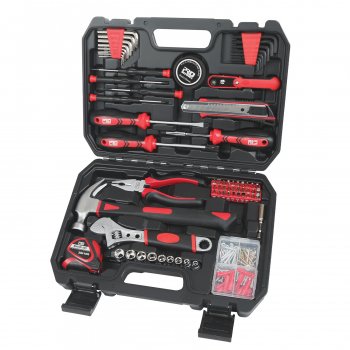
What’s Typically Inside a 160-Piece Home Repair Kit
- Core hand tools: commonly includes screwdrivers or a driver handle with interchangeable bits, pliers, and a small hammer for light-duty tasks.
- Measuring and marking: a tape measure or similar measuring tool is often included for fitting shelves, curtain rods, or furniture spacing.
- Fasteners and accessories: assortments of screws, nails, anchors, or small hardware can help complete small jobs without a store run.
- Bit variety: multiple bit types and sizes expand coverage for household hardware (flat, Phillips, hex, and other common profiles).
- Storage layout: molded slots or trays reduce rattling and make it easier to see what’s missing after a job.
Common DIY Tasks and the Tools That Help
| Task |
Tools to Look For |
Notes |
| Assemble flat-pack furniture |
Driver handle, Phillips/hex bits, measuring tool |
Use the correct bit size to avoid stripping screws |
| Hang a picture or shelf |
Hammer, measuring tool, fasteners/anchors |
Match anchors to wall type and load |
| Tighten loose handles/hinges |
Screwdriver or bit driver, assorted bits |
Retighten gently; overtightening can strip wood or screws |
| Replace a light switch plate |
Screwdriver/bit driver |
Turn off power at the breaker before working near electrical components |
| Basic plumbing adjustments |
Pliers (light duty) |
For major leaks or seized fittings, use proper plumbing tools or call a pro |
Toolbox Design: Organization, Portability, and Durability
- Carry handle and latch: a secure closure prevents tools from spilling during transport.
- Compartment visibility: clear organization speeds up small repairs and reduces duplicates.
- Space efficiency: a compact box stores easily in small homes while still holding a broad selection.
- Cleanup routine: returning each piece to its slot makes it obvious if a bit or fastener is missing.
Organization isn’t just about neatness—it’s about results. When bits, fasteners, and small tools live in consistent slots, it’s faster to start a repair and easier to finish the job without leaving pieces behind.
How to Put the Set to Work: A Simple First-Week Checklist
Safety and Care Tips for Hand Tools
For general tool guidance and maintenance expectations, review OSHA’s overview of hand and power tool requirements at OSHA — Hand and Power Tools (General Requirements). For projects that involve climbing (like mounting curtains or high shelves), follow basic ladder practices from CPSC — Ladder Safety.
When a Home Repair Kit Isn’t Enough
Product Snapshot
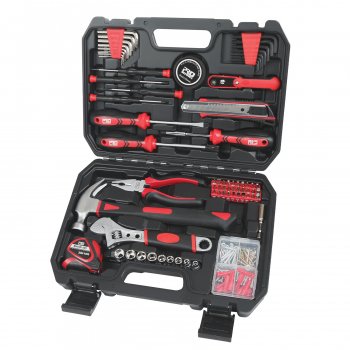
If you want one organized kit for routine home fixes, the 160-Piece Home Repair Tool Set with Toolbox is built around broad coverage: a mix of hand tools, multiple bit profiles and sizes, and accessories that help you complete small jobs in one session. Toolbox storage keeps pieces easier to carry from room to room and simpler to put away after use.
Helpful add-ons for a “new home” setup
FAQ
Is a 160-piece tool set enough for most household repairs?
It’s enough for many light-duty tasks like assembling furniture, tightening hardware, hanging décor, and basic adjustments. For major plumbing, advanced electrical work, or large bolts that need higher torque, you may need specialty tools or a dedicated socket set.
How should a home tool set be stored to prevent rust or missing pieces?
Store the toolbox in a dry place, wipe tools after use, and return each piece to its slot so missing items are obvious. In humid climates, adding a small desiccant pack and checking bits and fasteners occasionally can help reduce corrosion and keep the kit complete.
What should be added to a basic home tool kit for emergencies?
A flashlight or headlamp, spare batteries, tape, zip ties, work gloves, and a small assortment of wall anchors are practical upgrades. The best additions depend on your home (apartment vs. house), the types of walls you have, and the repairs you run into most often.
Recommended for you











Leave a comment