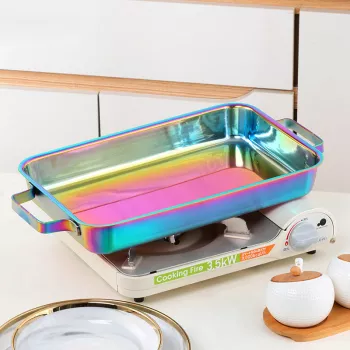
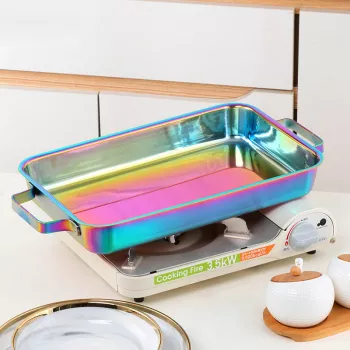
A rectangular stainless steel grill plate adds a steady, easy-to-control surface when grilling foods that would otherwise slip through grates or break apart during flipping. It’s especially handy for seafood, cut vegetables, and saucy sides—anything that benefits from high heat but needs containment. Because it can move from grill to oven-style cooking with ease, it’s also a practical way to handle “sheet-pan” favorites outdoors while keeping cleanup straightforward.
What This Grill Plate Is Best For
Open grates are great for big cuts, but smaller, delicate, or glazed foods often cook better on a solid, shallow surface. A rectangular plate gives room to spread food out, turn pieces cleanly, and keep butter or marinades where they belong.
- Seafood that can stick or fall apart on open grates (shrimp, scallops, fish pieces, squid)
- BBQ sides and vegetables (mushrooms, onions, peppers, asparagus, sliced zucchini)
- Baked dishes that benefit from a shallow, open pan (nachos, roasted garlic, baked feta-style appetizers)
- Finishing sauced foods without flare-ups (glazed shrimp, teriyaki vegetables, buttery garlic mixes)
- Keeping small items contained while still getting high-heat cooking
Why Stainless Steel Works Well Over High Heat
Stainless steel is a reliable choice for grill-and-oven cooking because it holds up to heat swings, stays neutral with acidic ingredients, and cleans up without special seasoning routines. While it doesn’t retain heat like cast iron, it performs exceptionally well for quick-cooking foods—especially seafood and thin vegetables—where control matters more than maximum thermal mass.
- Durable under grill and oven temperatures and resistant to warping with normal use
- Non-reactive surface for acidic ingredients like citrus, tomatoes, vinegar-based marinades, and wine sauces
- Good heat tolerance for searing and quick cooking, especially for seafood and thin-cut vegetables
- Naturally resistant to rust and staining when dried after washing
Stainless Steel Grill Plate vs. Other Common Options
| Material |
Strengths |
Trade-offs |
Best uses |
| Stainless steel |
Durable, non-reactive, easy to clean, good for sauces |
Can stick without oil/preheat; less heat retention than cast iron |
Seafood, vegetables, saucy BBQ sides |
| Cast iron |
Excellent heat retention, strong sear, naturally nonstick when seasoned |
Heavier; needs seasoning; can react with acids |
Steaks, burgers, high-heat searing |
| Aluminum (uncoated) |
Lightweight, heats quickly |
Can react with acidic foods; may warp more easily |
Quick veggies, light grilling tasks |
| Nonstick coated |
Easy release, gentle on delicate items |
Coatings can degrade at very high heat |
Lower-heat cooking, delicate items with careful temperature control |
Tips for Better Results on the Grill
Stainless steel rewards a simple routine: heat first, oil lightly, then let the food release when it’s ready. With seafood and glazed items, steady heat usually wins over maximum flame.
- Preheat the plate for a few minutes so food starts cooking immediately instead of steaming
- Lightly oil the surface (or toss food with oil) to reduce sticking; seafood benefits from a thin, even film
- Use medium to medium-high heat for shrimp and scallops; overly high heat can scorch marinades
- For sauced foods, add sauce near the end to avoid burning sugars
- Give food space: crowding traps moisture and reduces browning
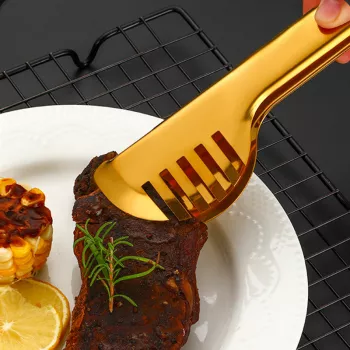
- Use a thin metal spatula or tongs to turn items cleanly without tearing
For food-safety guidance—especially when grilling seafood—follow established handling and temperature recommendations from authoritative sources like the USDA Food Safety and Inspection Service and the USDA safe minimum internal temperatures chart.
Ideas for BBQ Baked Dishes and Seafood
A rectangular plate is a natural fit for “small pieces, quick cook time” meals. The goal is even contact with hot metal while keeping delicate items intact.
- Garlic-butter shrimp: Preheat the plate, cook shrimp 2–3 minutes per side, then finish with butter, garlic, and lemon.
- Scallops with herbs: Pat dry, oil lightly, sear quickly, and avoid moving until they release on their own.
- Vegetable medley: Start with onions and peppers, then add quick-cooking zucchini or asparagus near the end.
- Sheet-pan style nachos on the grill: Keep heat moderate and cover briefly to melt cheese without scorching chips.
- Lemon-dill fish bites: Use thicker pieces to prevent breaking; flip gently once and finish with citrus off-heat.
Cleaning and Care That Keeps It Looking New
Most messes come off stainless steel best with a short soak and gentle scrubbing. The sooner sugary glazes are loosened, the easier the cleanup stays.
Quick Specs and What to Expect
At a Glance
In-Stock Picks (Internal Links)
FAQ
Can a stainless steel grill plate go in the oven as well as on the grill?
Yes—stainless steel is generally oven-safe as long as the plate has no heat-sensitive coatings or attached parts. For even cooking, place it on a stable rack and preheat it briefly before adding food.
How can sticking be reduced when cooking seafood on stainless steel?
Preheat the plate, pat seafood dry, and use a thin, even layer of oil on the surface or on the food. Once the proteins sear, they’ll release more easily—avoid forcing a flip too early.
How should a stainless steel grill plate be cleaned after sugary marinades or sauces?
Soak the plate in warm water to soften cooked-on sugars, then use a non-abrasive scrubber. A baking-soda paste can help lift stubborn spots; dry thoroughly after washing to prevent water marks.
Recommended for you










Leave a comment