A compact laser toy can turn short bursts of play into a reliable daily routine—especially for indoor cats that need extra movement and mental stimulation. The best results come from using it safely, varying the patterns, and ending each session with a “catch” your cat can bite or kick.
What makes a compact laser toy useful for everyday play
When a toy is small enough to keep within arm’s reach, it’s easier to turn downtime into meaningful movement. A compact laser toy is especially handy for quick sessions between meetings, after dinner, or whenever an indoor cat starts prowling for trouble.
- Encourages quick sprints and direction changes that mimic prey movement.
- Helps break up long periods of inactivity for indoor cats.
- Small footprint makes it easy to store, travel with, or keep by the couch for short sessions.
- Works well for multi-cat households when cats have enough space to spread out.
- Most cats stay interested longer when the dot moves unpredictably rather than in perfect circles.
For added guidance on responsible play, the American Veterinary Medical Association (AVMA) and enrichment resources from the ASPCA offer helpful safety and behavior context.
Quick facts
Use the summary below as a starting point; always confirm what’s included in the box on the product page before ordering.
How to use it so play feels satisfying (not frustrating)
Laser play is most successful when it feels like a complete “hunt,” not an endless chase. A few small adjustments can make sessions calmer, more athletic, and more rewarding for your cat.
- Keep sessions short: 5–10 minutes is often enough to get a good workout without overstimulation.
- Start slow to hook attention: once your cat is locked in, add quick darts, zigzags, and sudden pauses.
- Use the environment: run the dot up a cat tree, behind furniture edges, and along hallways to add variety.
- Build in wins: occasionally stop the dot on a real toy (ball, kicker, plush) so your cat can pounce and bite.
- End with a reward: a treat, a meal, or a favorite toy helps close the hunt sequence and reduces agitation.
One practical routine: start with a “warm-up” minute of slow creeping, switch to two minutes of bursts and freezes, then guide the dot onto a kicker toy for a final grab and bunny-kick. Finish with a small snack or part of a meal.
Safety and comfort guidelines for laser play
Laser toys can be safe and fun when used thoughtfully. The goal is to protect eyes, prevent slips, and keep your cat emotionally comfortable during and after play.
- Never aim the laser at eyes (human or pet); keep the beam pointed at floors and lower walls.
- Avoid reflective surfaces (mirrors, glossy tiles, glass) that can scatter the beam unpredictably.
- Watch for stress signals: tail lashing, vocal frustration, fixation, or searching after the dot disappears; shorten sessions if these appear.
- Provide traction: on slick floors, guide play to rugs or textured surfaces to reduce slipping.
- If a cat has mobility issues, keep movement low and slow and prioritize gentle engagement over intense sprints.
If your cat seems wound up after play, switch to calmer enrichment (window perch time, a food puzzle, or a short cuddle) and try a shorter laser session next time.
Play patterns that keep cats engaged longer
Many cats lose interest when the dot moves in a predictable loop. Prey-like movement—with pauses and “mistakes”—often keeps engagement higher while reducing frantic behavior.
- Prey-style pacing: slow creep → quick burst → freeze → quick burst.
- Hide-and-reveal: disappear the dot behind a chair leg and reappear from another angle.
- Vertical variety: brief climbs up a scratching post, then back down to the floor.
- Two-zone pacing for multi-cat homes: alternate between sides of the room to reduce crowding and swats between cats.
- Rotation strategy: mix laser sessions with wand toys, crinkle tunnels, and puzzle feeders across the week.
For multi-cat homes, consider “taking turns” by briefly pausing the dot on a plush toy so one cat can bite and kick while the other resets at the opposite side of the room.
Who this toy tends to suit best
- High-energy cats that need fast movement to feel “spent.”
- Indoor cats that benefit from short, frequent play breaks.
- Busy households that want an easy way to start a play session on demand.
- Cats that enjoy chase games but get bored with repetitive wand patterns.
- Owners who can supervise play and finish with a physical toy or treat to complete the hunt cycle.
Common mistakes and easy fixes
For broader environmental enrichment ideas, the Cornell Feline Health Center is a strong reference point.
Product link
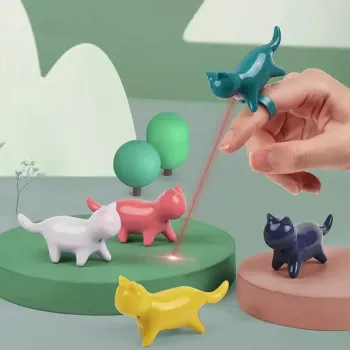
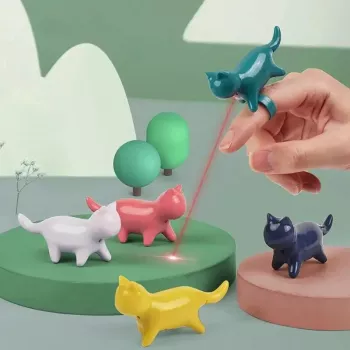
Compact Interactive Cat Laser Toy: a small, grab-and-go option for quick daily chase sessions.
More in-stock picks to consider
FAQ
Are laser toys safe for cats?
Yes, when used responsibly: never point the beam at eyes, avoid reflective surfaces, keep sessions short, and end with a physical toy or treat so your cat can “catch” something.
Why does my cat seem frustrated after chasing a laser dot?
Some cats feel unsatisfied without a tangible catch at the end. Shorten the session, add pauses, and finish by guiding the dot onto a real toy or offering a small reward.
How long should a laser play session be?
Often 5–10 minutes is enough. Multiple short sessions can work better than one long session, especially if your cat becomes fixated or searches after the dot disappears.
Recommended for you











Leave a comment