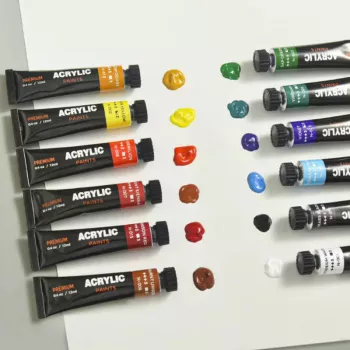
12/24 Colors Acrylic Paint Set for Canvas, Fabric, Glass, and Everyday DIY
Acrylics are a go-to medium for bold color, quick drying, and versatility across surfaces. A 12/24 colors acrylic paint set is designed for painters and makers who want dependable pigment for everything from canvas work to craft projects on fabric, glass, wood, paper, and more—without the fuss of slow cure times or complicated cleanup. Whether you’re building a small mixing palette for studies or stocking up for weekend DIY, acrylic paint is one of the easiest ways to get strong results fast.
What This Acrylic Paint Set Is Best For
- Canvas painting: smooth coverage for studies, layered work, and mixed-media techniques.
- Fabric crafts: decorating totes, apparel accents, and textile panels (with proper heat-setting practices).
- Glass and ceramics: decorative pieces, jars, ornaments, and non-food-contact display items.
- Wood, paper, and cardboard: classroom projects, hobby builds, and home decor details.
- Beginner to advanced use: suitable for practice, palettes, and color exploration in a single kit.
If you like the idea of one set that can move from a sketchbook to craft night without switching mediums, consider the 12/24 Colors Acrylic Paint Set – Professional Artist Pigment for Canvas, Fabric, Glass, and More.
Color Range Options: 12 vs 24 Colors
Choosing between 12 and 24 colors mostly comes down to how often you want to mix versus paint straight from the set.
- 12-color sets: a practical core palette for mixing most hues; ideal for travel kits and smaller workspaces.
- 24-color sets: broader ready-to-use variety for gradients, decorative painting, and reducing mixing time.
- Mixing benefit: both options allow warm/cool combinations for cleaner secondary colors and neutrals.
- Project planning: choose based on how often specific accents (turquoises, violets, earth tones) are used.
Choosing Between the 12-Color and 24-Color Set
| Need |
12 Colors |
24 Colors |
| Basic palette for learning and mixing |
Strong fit |
Strong fit |
| More ready-made shades for crafts and gradients |
Limited |
Best fit |
| Compact setup for storage or travel |
Best fit |
Moderate fit |
| Less time mixing, more time painting |
Moderate fit |
Best fit |
| Frequent multi-surface projects (canvas + crafts) |
Good fit |
Best fit |
How Acrylic Paint Behaves: Coverage, Finish, and Dry Time
- Coverage: opaque layers typically build best in 1–3 coats depending on surface texture and color contrast.
- Dry time: acrylics set quickly; thin layers dry faster than thick applications.
- Finish: results can vary from matte to satin depending on thickness, surface absorbency, and any topcoat.
- Layering: allow each layer to dry to avoid lifting or muddy color when glazing or blending.
- Brushmarks vs smooth fields: use softer brushes and slightly thinned paint for smoother coverage; use thicker paint for texture.
For a deeper look at the difference between “dry to the touch” and fully cured acrylic film, GOLDEN’s technical guidance is a helpful reference: GOLDEN Artist Colors — Acrylics: Drying Time and Curing.
Using the Set on Different Surfaces
- Canvas: prime if needed; use thin base layers for blocking-in and thicker paint for highlights and texture.
- Fabric: pre-wash fabric (no softener) for better adhesion; apply in thin coats; consider heat-setting after fully dry for improved durability.
- Glass: clean thoroughly (remove oils); apply thin coats; allow longer cure time before handling; consider sealing for scratch resistance.
- Wood: lightly sand and dust; seal or prime for more even color and reduced absorption.
- Paper/cardboard: use lighter layers to reduce warping; consider thicker paper or a backing board.
On slick or non-porous surfaces like glass, patience pays off: multiple thin coats tend to grip better than one heavy coat, and sealing helps when an item will be handled.
Color Mixing Basics for Cleaner Results
If you paint indoors often, good ventilation is still a smart habit, especially when adding sealers or mediums; Cleveland Clinic’s overview of indoor air and VOC basics is a useful primer: Cleveland Clinic — VOCs and indoor air quality basics.
Simple Techniques That Work Especially Well with Acrylics
Care, Storage, and Safety Notes
For general art material safety labeling, ACMI’s overview of the AP seal is a solid reference point: ACMI — The AP (Approved Product) Seal and art material safety.
When This Set Makes Sense to Buy
For a straightforward, multi-surface option, see the 12/24 Colors Acrylic Paint Set – Professional Artist Pigment for Canvas, Fabric, Glass, and More.
More In-Stock Picks for Home & Creative Spaces
FAQ
Can acrylic paint from this set be used on fabric and will it wash out?
Acrylic can adhere to fabric, but wash durability depends on good prep (pre-wash, no softener), applying thin layers, and letting it dry fully. Heat-setting after it’s completely dry can improve longevity, and gentle washing (inside-out, cold water) helps reduce fading and cracking.
Does acrylic paint work on glass, and how can it be made more durable?
Yes—acrylic can work on glass if the surface is thoroughly cleaned and degreased first, then painted in thin coats. Let it cure longer before handling and consider a compatible clear sealer to improve scratch resistance for decorative use.
How long does acrylic paint take to dry before adding another layer?
Thin layers can be touch-dry within minutes, while thicker areas may need significantly longer. A practical rule is to wait until the layer is fully touch-dry plus a little extra time before repainting, and allow longer curing time before sealing or heavy handling.
Recommended for you












Leave a comment