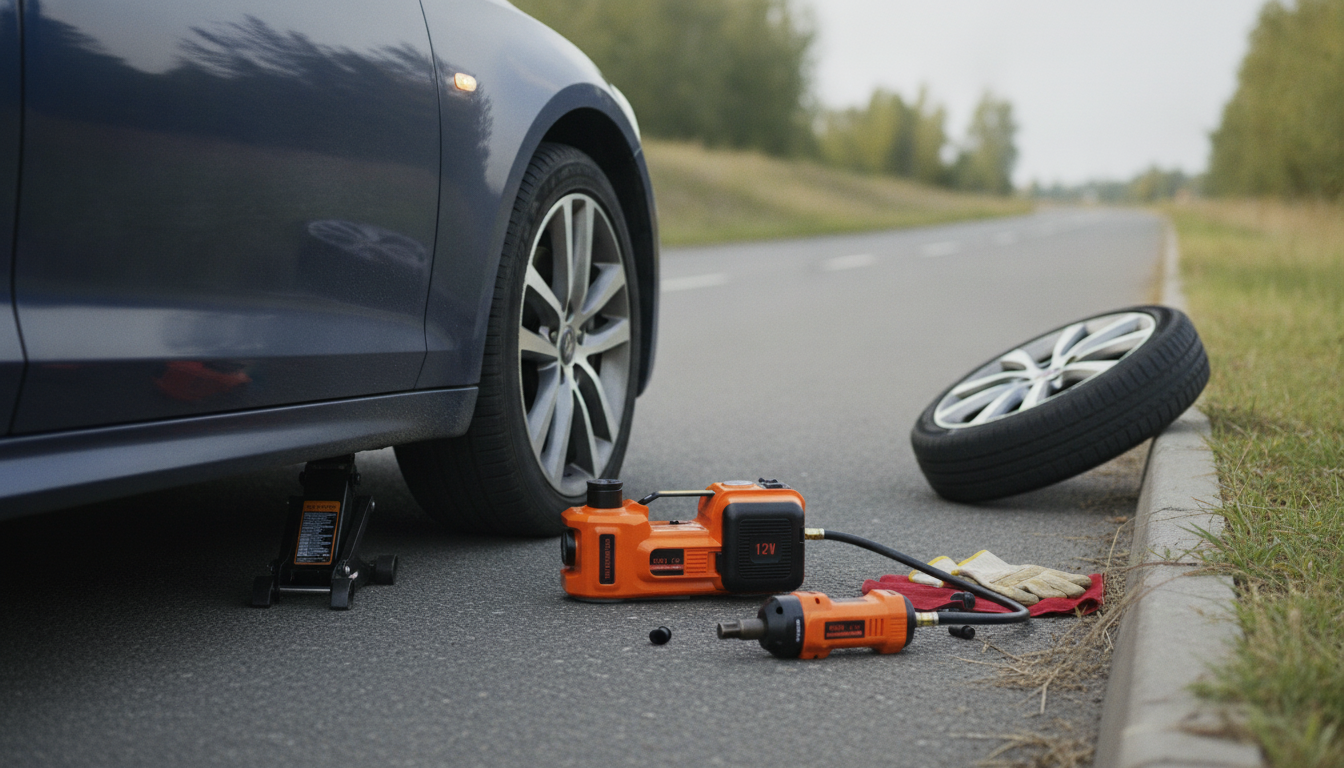
A flat tire on the shoulder is stressful; the right tools turn it into a manageable, repeatable process. A 5-ton electric hydraulic jack kit pairs lifting power with an electric impact wrench and a tire inflator, covering the core steps of a roadside wheel change—lift, remove, replace, and reinflate—without relying on a manual scissor jack or a separate compressor.
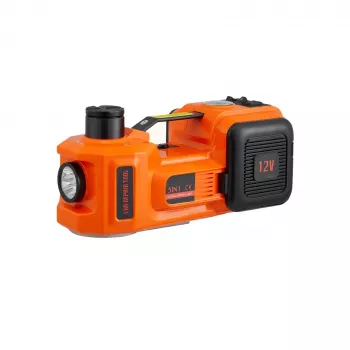
For drivers who prefer a single, organized case instead of a patchwork of tools, the 5-Ton Electric Hydraulic Car Jack Kit with Impact Wrench & Tire Inflator is designed to streamline the process while keeping common safety steps front and center.
What the kit is designed to solve
- Reduces physical effort compared with manual jacks by using electric hydraulic lifting.
- Speeds up lug nut removal and installation with an included impact wrench.
- Supports post-repair inflation checks and top-offs using the included tire inflator.
- Helps keep a consistent roadside routine: stabilize, lift, remove wheel, reinstall, torque-check, inflate, and stow.
- Fits common use cases like sedans, crossovers, SUVs, and light trucks when the vehicle weight and lift points are compatible.
What’s included and how each piece is used
Electric hydraulic jack
The jack is used at the manufacturer-approved jacking point to lift the vehicle enough to remove the wheel. Electric hydraulic lifting is meant to reduce strain and maintain steadier lifting compared with a hand-cranked scissor jack—assuming the ground is firm and the lift point is correct.
Impact wrench
The impact wrench loosens lug nuts and can snug them down during installation. For best practice, final tightening should follow your vehicle’s torque specification using a torque wrench when possible, since impacts can over-tighten and stress studs.
Tire inflator
The inflator restores pressure after installing a spare or after repairing a puncture with a plug kit (a plug kit is not assumed included). It’s also useful for correcting a spare that’s a few PSI low—something that can happen slowly over months.
Power leads/adapters and storage case
Many kits are designed around vehicle power. Confirm connector type, cable reach, and fuse rating before the first roadside use. A storage case helps prevent missing sockets or accessories when it matters most.
Key features to evaluate before using it roadside
- 5-ton capacity: Capacity should exceed the portion of the vehicle’s weight supported at a single lift point. Always verify your vehicle’s curb weight and safe lift points.
- Lift range and clearance: Ensure the jack fits under the vehicle at its lowest clearance—especially with a fully flat tire.
- Stability and base footprint: Use on firm, level ground whenever possible; soft shoulders may require a jack base plate or a solid leveling block.
- Impact wrench fitment: Confirm socket sizes match your lug nuts and that the tool can handle factory torque and corrosion.
- Inflator accuracy: Plan to verify final pressure with a known-good tire gauge before highway speeds.
- Heat management and duty cycle: If you’re doing multiple wheels or long inflations, pause as needed to prevent overheating.
Setup checklist for a safer, faster tire change
Quick reference: typical specs and compatibility checks
Routine pressure checks matter, too. NHTSA’s tire guidance and general safety reminders are a solid baseline (NHTSA — Tires), and tire-pressure basics are well covered by major tire manufacturers (Bridgestone — Tire pressure basics). For roadside awareness, practical reminders from a motor club can help keep the sequence calm and safe (AAA — Flat tire tips).
Compatibility checklist for common vehicle types
| Vehicle type |
What to verify first |
Common pitfalls |
Best practice |
| Sedan/compact |
Ground clearance with a flat tire |
Jack won’t fit under rocker panel |
Carry a small leveling block or base plate |
| Crossover/SUV |
Weight and jacking point access |
Plastic cladding blocks the lift point |
Confirm lift point location in the manual |
| Light truck |
Capacity margin and lift height |
Not enough lift range for larger tires |
Test-fit at home; confirm lift height needed |
| Performance/low-profile |
Minimum height and wheel torque |
Very tight clearance; high factory torque |
Use correct low-profile positioning and torque-check |
Safety notes that matter with electric jacks and impacts
When this kit is a good fit
Care, storage, and readiness checks
Common issues and quick troubleshooting
More in-stock picks
FAQ
Can a 5-ton electric hydraulic jack be used on a sedan or small SUV?
Yes, as long as the jack fits under the vehicle (even with a flat tire) and you lift at the correct manufacturer-approved jacking point. Higher capacity is generally fine; clearance, lift range, and stability are usually the real constraints.
Is it safe to tighten lug nuts with the included impact wrench?
Use the impact wrench to remove lug nuts and to snug them during installation, then finish tightening to the vehicle’s specified torque with a torque wrench when possible. If you can, recheck lug tightness after a short drive.
Will the tire inflator be accurate enough for highway driving?
It can inflate effectively, but it’s best to verify final pressure with a dedicated tire gauge before driving at highway speeds. Inflate to the pressure on the driver-door placard and avoid fast driving on an underinflated tire.
Recommended for you












Leave a comment