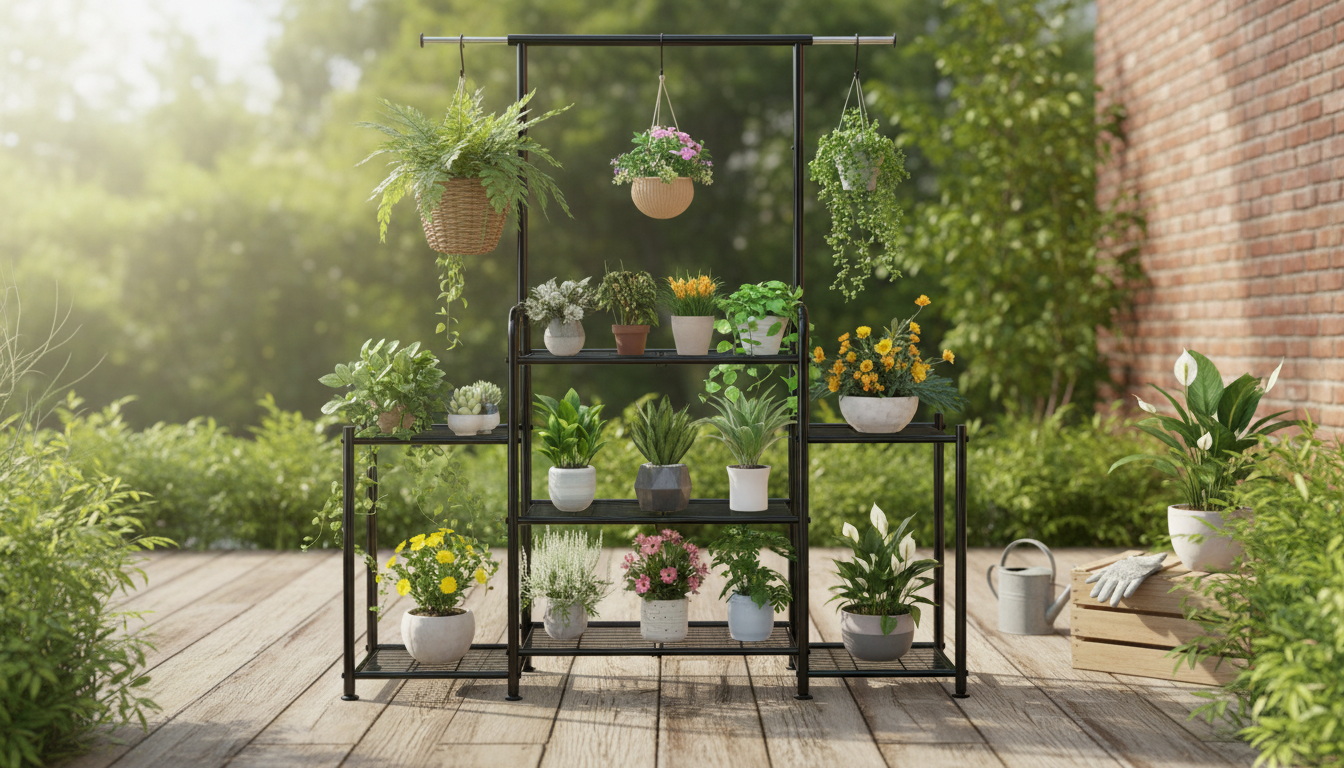
A compact plant display can feel cluttered fast when pots, trays, and hanging planters compete for space. A 3-tier metal stand with an expandable hanging rod helps organize multiple plants vertically, improves light exposure, and keeps floors and windowsills clearer—indoors or on a covered patio.
What This Stand Adds to a Plant Setup
When plant collections grow, the challenge usually isn’t the number of plants—it’s the lack of organized, usable space. A 3-tier metal plant stand creates a structured home for different sizes and styles of greenery without turning a corner into a crowded pile of pots.
- Three tiered surfaces create a clear “top/middle/bottom” layout for grouping plants by light needs, size, or watering frequency.
- An expandable hanging rod introduces a second display style for trailing plants, baskets, or small lantern-style decor.
- Vertical storage reduces crowding on shelves and windowsills and helps separate plants to improve airflow.
- Metal framing offers a stable feel for clustered pots compared with lightweight multi-piece organizers.
Better spacing also makes basic care simpler: it’s easier to see dry soil, spot yellowing leaves, and rotate plants for more even growth. For houseplant fundamentals like consistent light and watering routines, the University of Maryland Extension offers a helpful overview of houseplant care basics.
Quick Specs and Fit Check
Before assembling any stand, it helps to do a quick “fit check” so the final setup feels intentional rather than squeezed in.
- Confirm placement area first: measure floor footprint plus clearance for leaves and hangers to swing without hitting walls.
- Plan for watering logistics: space under pots for saucers, liners, or drip trays to protect floors.
- Decide whether the rod will be used for plants (heavier) or light decor (lighter) and arrange accordingly.
- Keep frequently watered plants on the lower tier to reduce lifting and dripping during maintenance.
Placement Checklist (Before Assembly)
| Check |
Why it matters |
Quick tip |
| Footprint fits the room |
Avoid blocking walkways and doors |
Leave a few inches around edges for leaf growth |
| Light is consistent per tier |
Plants on different levels receive different intensity |
Place sun-loving plants higher and shade-tolerant lower |
| Floor protection planned |
Water and soil can stain floors |
Use saucers and a washable mat for indoor use |
| Rod clearance above |
Hanging items need vertical space |
Allow extra height for hook + chain + plant |
Expandable Hanging Rod: Practical Ways to Use It
The expandable hanging rod is the detail that turns a basic tiered stand into a mixed-display station. It lets you add movement and softness (especially with trailing vines) while keeping shelves free for upright plants.
- Balance the look: hang a trailing plant on one side and a lighter basket or decor piece on the other to reduce visual lopsidedness.
- Reduce tangles and damage: keep trailing plants away from shelves so stems don’t snag on pot rims or corners.
- Rotate for even growth: hanging plants can be turned periodically without disturbing tiered pots.
- Plan for drainage: use liners or drip saucers for hanging planters to avoid dripping onto plants below.
If you like the layered look of greenery plus warm lighting in the same corner, pairing a plant stand with a natural-fiber ceiling fixture can add texture overhead. The Handmade Wabi Sabi Rattan Pendant Light works especially well in living rooms and dining nooks where you want a softer, organic feel to contrast the stand’s metal lines.
Stability and Safety in Everyday Use
A vertical plant display should feel secure, especially in busy households. Stability is largely about weight placement and location—two things that are easy to control with a little planning.
- Place heavier pots on the bottom tier to lower the center of gravity and reduce wobble.
- Avoid overloading the hanging rod with multiple heavy baskets; distribute weight between tiers and the rod.
- If used in a home with kids or pets, position the stand away from running paths and consider anchoring solutions where appropriate.
- On patios or balconies, keep the stand in a sheltered spot to reduce wind-driven tipping risk and to protect plants from sudden temperature swings.
For general household tip-over safety guidance, review the U.S. Consumer Product Safety Commission’s recommendations on furniture tip-over prevention, especially if you’re placing tall items in high-traffic areas.
Where It Works Best: Room-by-Room Ideas
This style of stand is easiest to love when it’s placed where the vertical shape solves a real space issue—tight corners, bright windows, or awkward gaps between furniture pieces.
Care Tips for Metal Plant Stands
A Simple Styling Formula (Tier + Texture + Trail)
Product Option in Stock
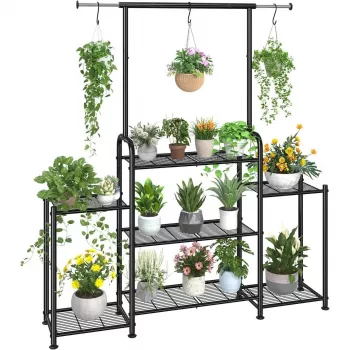
If you’re ready to consolidate pots, reduce windowsill crowding, and add a hanging element without adding another piece of furniture, the 3-Tier Metal Plant Stand with Expandable Hanging Rod is an easy way to build a vertical plant corner in one footprint.
FAQ
Can the hanging rod hold a heavy planter?
Check the manufacturer’s load guidance for the safest limit. For everyday use, lighter hanging baskets are a better match, while heavier pots are best placed on the lower tier to keep the stand stable.
Is a metal plant stand safe for wood floors?
Yes, with basic floor protection. Use felt pads or rubber feet under the legs, keep drip trays under pots, and wipe any spills quickly to help prevent stains or warping.
How should plants be arranged across three tiers?
Put heavier plants on the bottom tier, place sun-loving plants higher where light is stronger, and use the hanging rod for trailing varieties. Leave a little space between pots to improve airflow and make watering access easier.
Recommended for you








Leave a comment